Commercial automated gate repair in Sydney usually starts the same way: a truck waiting at a gate that will not open, or a gate that will not close at the end of the day. The question is whether to fix the fault you have today, or whether the gate is telling you it needs something bigger.
Commercial automated gate repair in Sydney usually starts the same way: a truck waiting at a gate that will not open, or a gate that will not close at the end of the day. The question is whether to fix the fault you have today, or whether the gate is telling you it needs something bigger.
This guide covers the common faults on commercial sliding and swing gates, what to check before you call anyone, and when replacing the motor or the gate makes more sense than another repair.
The faults we see most
Most commercial gate failures fall into a short list:
- Safety beams out of line or dirty. The gate stops or reverses for no obvious reason. This is the single most common call.
- Motor overheating. The gate works early in the day and stops at the busiest time. Usually the motor is not rated for the traffic.
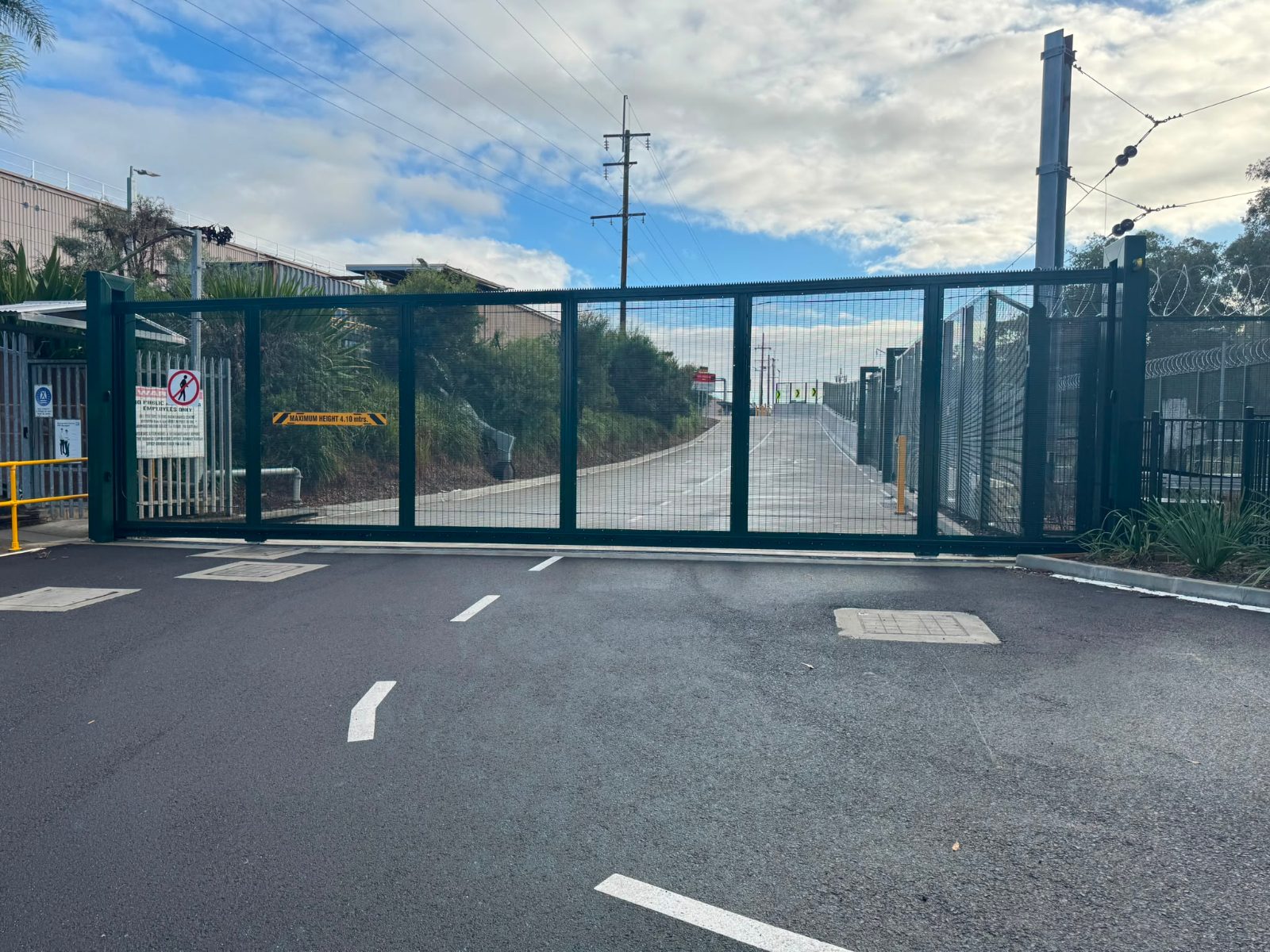
- Worn track, wheels or rollers on a sliding gate. The gate is noisy, jerky or jams at the same point every time.
- Sagging swing gates. Hinges or posts have moved, the gate drags and the motor strains.
- Damage from vehicles. A truck clips the gate or the post, bending the frame or the rack.
- Access control faults. Keypads, card readers, remotes or induction loops stop talking to the gate controller.
- Power and battery backup. The gate fails in a storm or after a power cut because the backup battery is flat.
What to check before you call
A few checks can save a call-out:
- Clean the lenses of the safety beams and check nothing is blocking them, including weeds and parked bins.
- Check the gate is not in manual mode. Someone may have released it with the key and not reset it.
- Look along the track of a sliding gate for stones, debris or a bent section.
- Check the power supply and any circuit breaker for the gate.
- Try a different remote or the keypad to rule out a flat remote battery.
Do not try to open the motor housing or the controller. Gate operators run on mains power and commercial gates are heavy. Electrical work in NSW must be done by a licensed electrician, as set out by NSW Fair Trading.
When repair is the right answer
Repair makes sense when the gate and the motor are basically sound and the fault is a part that wears out or gets damaged. Beams, remotes, wheels, rollers, hinges, a section of rack or a controller board can all be replaced at a fraction of the cost of a new gate.
It also makes sense when the site's traffic has not changed since the gate went in. If it worked well for years and then failed, a repair usually puts it back where it was.
When to upgrade the motor instead
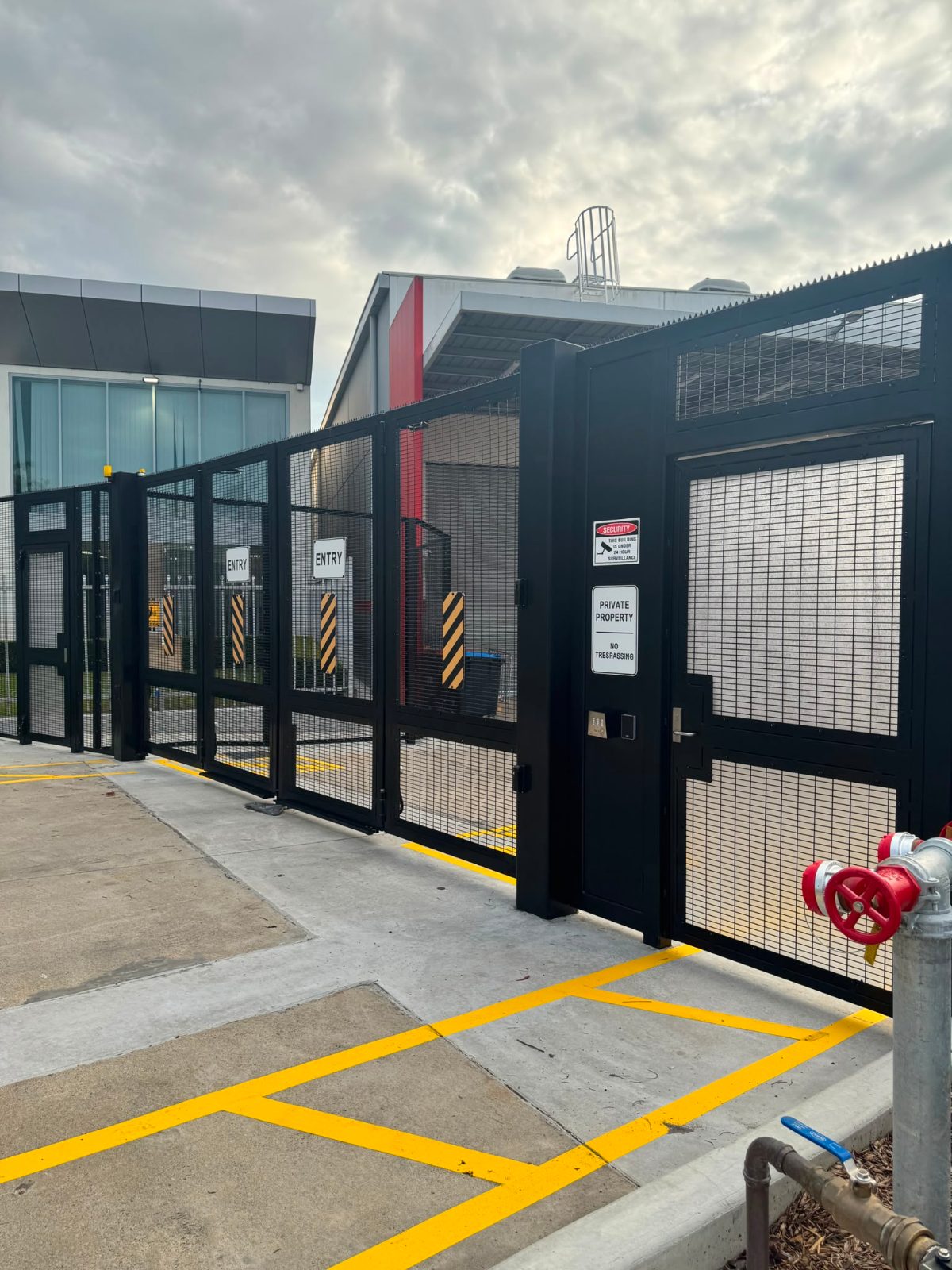
If the gate keeps failing at the same time of day, the motor is probably undersized. This is common when a site grows. A warehouse that had 10 trucks an hour when the gate was installed may now have 40.
A gate operator has a duty cycle, which is the share of time it can run without overheating. A 9 metre sliding gate on a 70 percent duty cycle motor manages roughly 30 operations an hour. Push past that and the motor's thermal protection shuts it down, often in the middle of the peak. Repairing that motor again does not fix the problem. A correctly rated operator does. Our gate automation page explains how operators are sized.
When to replace the gate
Replacement is worth considering when:
- The gate frame is bent, rusted through or has been hit more than once
- The opening is now too narrow for the vehicles using it
- A swing gate is fighting the wind or the slope every day
- Parts for the motor are no longer available
- The gate does not meet current safety expectations, such as having no safety beams or edges
A new sliding gate or swing gate with a correctly sized operator often costs less over five years than a run of repairs on a gate that was never right for the site.
The honest caveat: a cheap repair can hide the real fault
The quickest fix for a gate that keeps stopping is to turn down the safety settings or bypass the beams. Some technicians do it to get the gate moving. Never accept it. A gate with its safety devices disabled can crush a person or a car, and the liability sits with the site owner. If a repair involves turning off a safety feature, it is not a repair.
A servicing schedule worth having
Commercial gates that are serviced regularly fail far less often. A sensible schedule includes:
- A visual check of the track, hinges, beams and signage every month by site staff
- A full service of the motor, controller, safety devices and backup battery at least once or twice a year, more often on busy gates
- A record of each service and fault, so patterns show up early
Workplace health and safety duties also apply to automated gates on a work site. SafeWork NSW has guidance on managing plant and machinery risks.
The next step
If your gate keeps failing, write down when it fails and what it does, then get it assessed against the site's real traffic. LS Fencing Services supplies, installs and commissions commercial sliding and swing gates with automation across Sydney and NSW. Call 1800 572 878 or use our contact page.
Specifying or pricing a perimeter?
Send the drawings or a brief and LS Fencing Services will come back with a detailed proposal.