Transport security fencing covers a wide range of sites: bus and truck depots, rail corridors and stabling yards, motorway compounds, interchanges and the pedestrian fencing that keeps people off a road or track.
Transport security fencing covers a wide range of sites: bus and truck depots, rail corridors and stabling yards, motorway compounds, interchanges and the pedestrian fencing that keeps people off a road or track. What they share is a mix of vehicles, people and valuable plant, and an asset owner with its own rules about how the fence is built.
This guide covers the main site types, who sets the standard, and the details that decide whether a transport perimeter works.
Who sets the standard on a transport site
On most transport work, the fence specification is not the contractor's choice. Transport for NSW, Sydney Trains, Sydney Metro and the motorway operators publish their own requirements, and the Transport for NSW standards site holds many of the documents that apply to fencing, barriers and access on its network.
That means three things for anyone buying fencing for a transport project:
- Get the client's standard and the project specification before you price anything.
- Expect requirements for materials, heights, earthing near overhead wiring and inspection records.
- Expect the people on site to need rail or road safety inductions on top of general construction ones.
Bus and truck depots
Depots hold expensive vehicles, fuel, tools and spare parts, and they run around the clock. The perimeter needs to stop theft and vandalism without slowing down the fleet.
What usually works:
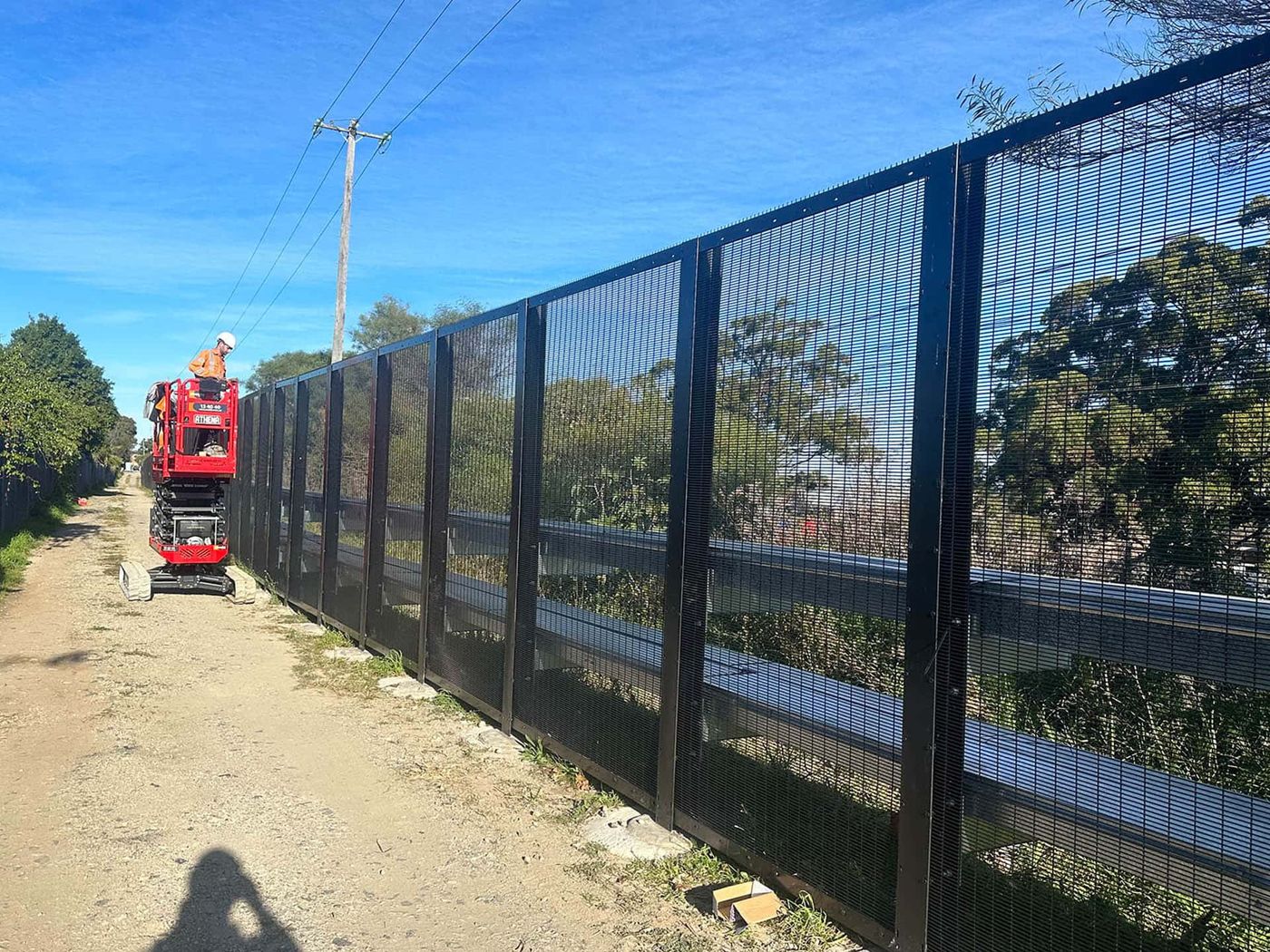
- 358 anti-climb mesh or palisade on the boundary, typically 2.4 metres or higher where the depot backs onto quiet streets or bushland.
- Wide automated sliding gates at the vehicle entry, with a motor rated for the number of movements in the morning and evening peaks.
- Separate pedestrian access with a card reader or keypad, so drivers and mechanics are not walking through the vehicle gate.
- Internal compounds for fuel, batteries and parts, which deserve a tougher fence than the boundary.
Electric bus depots add charging infrastructure and battery risk, which brings fire access into the fence design. Gates need to open quickly for emergency services, even if the power is off.
Rail corridors and stabling yards
Rail corridor fencing keeps people off the track and stops graffiti and theft in stabling yards. LS Fencing Services has written a detailed guide to security fencing for rail yards in NSW, but the main points are:
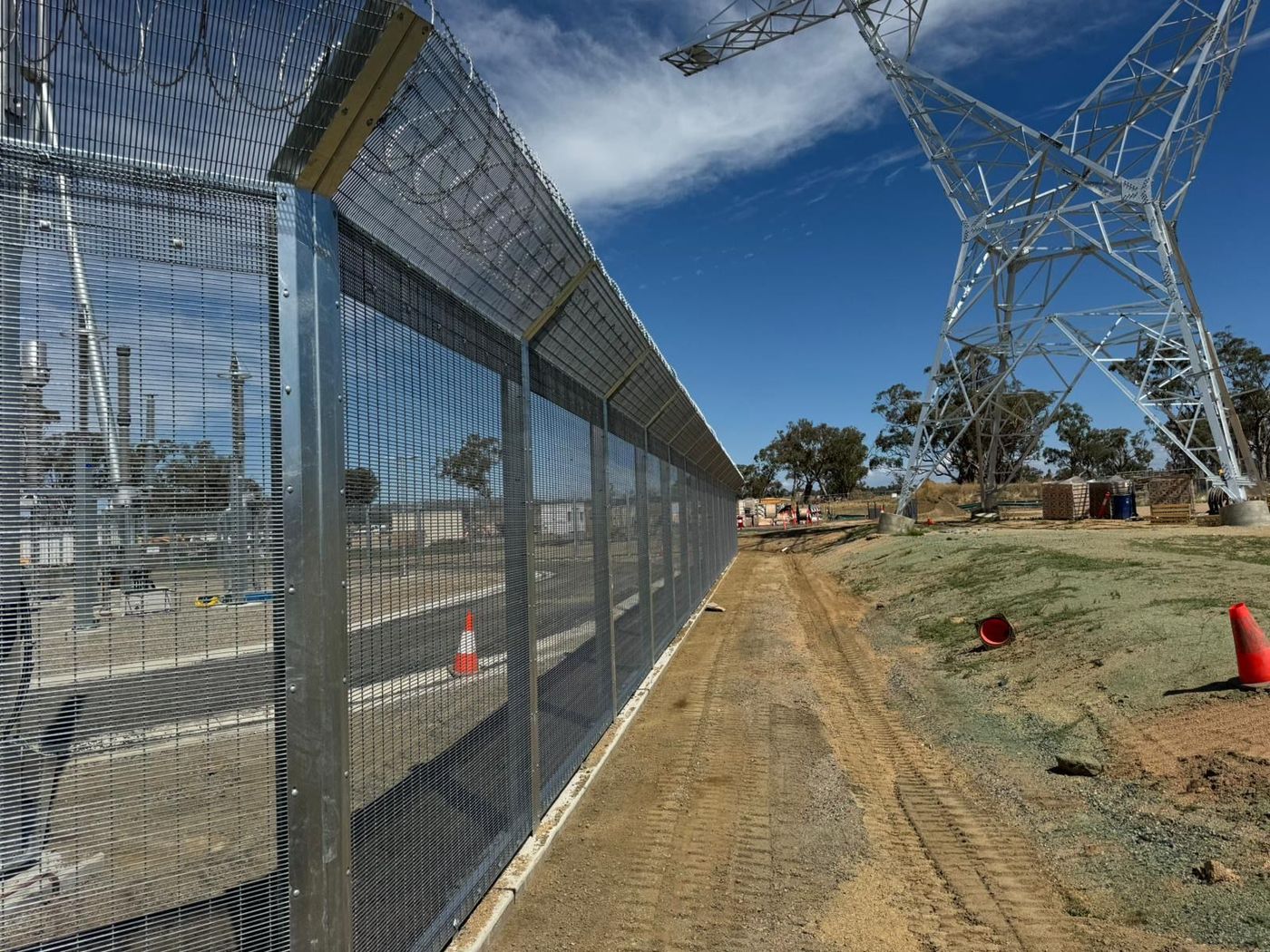
- Fences near overhead wiring must be earthed and bonded to the electrical design. This is set by the rail operator, not decided on site.
- Work inside the rail corridor usually happens in possessions, short windows when trains are stopped. Fencing has to be planned so each section can be finished inside that window.
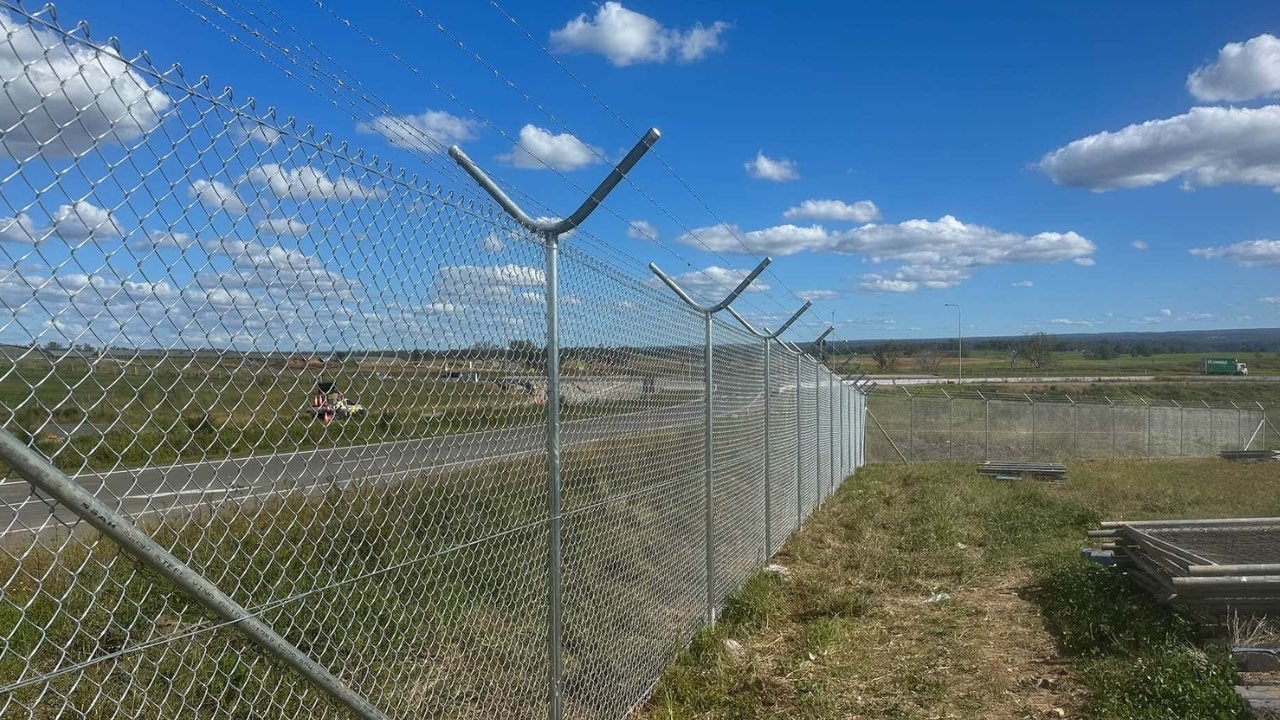
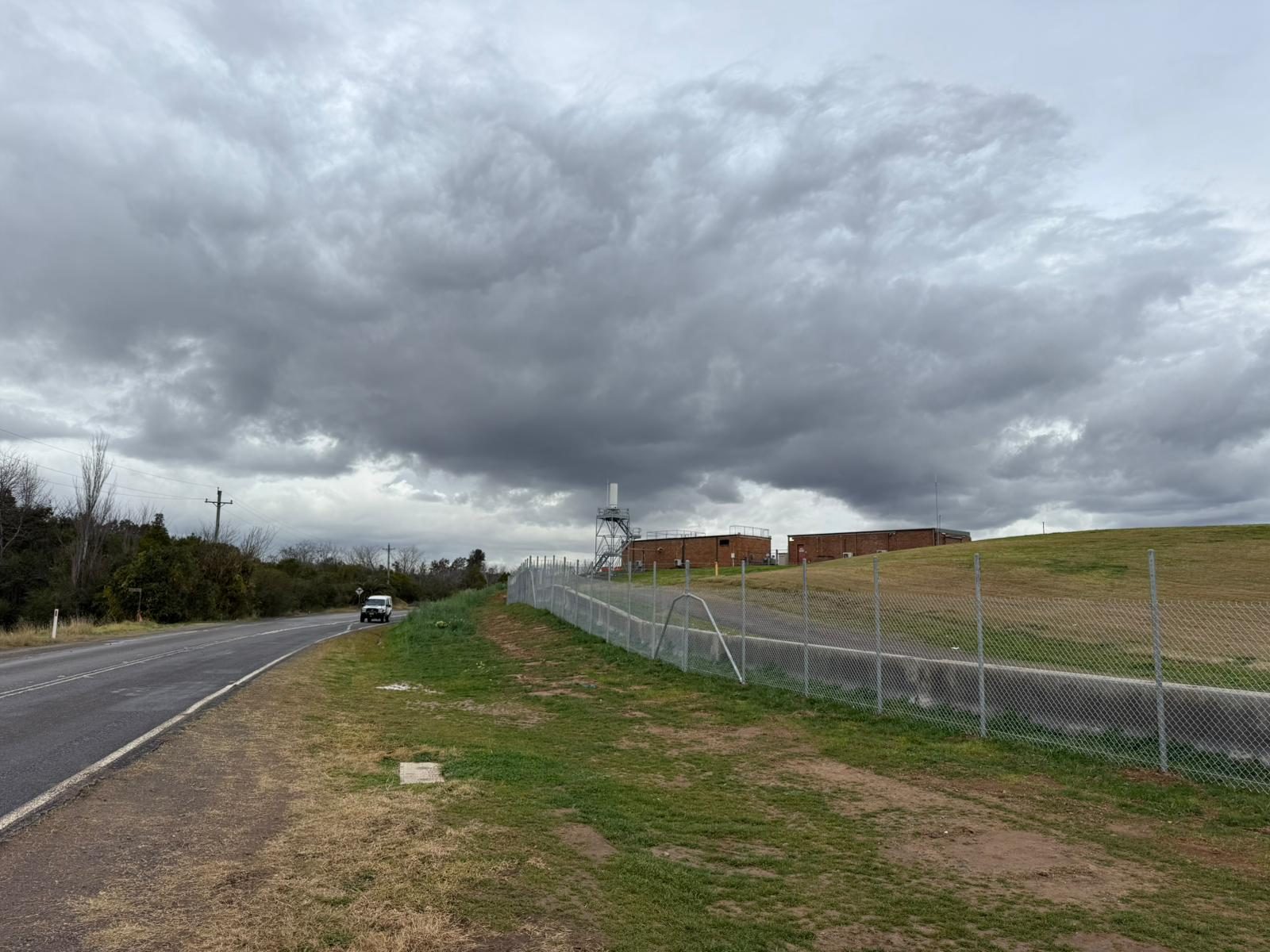
- Anti-climb mesh is common in stabling yards, where graffiti crews are the main threat. Chainwire still suits many long corridor boundaries.
Road reserves and pedestrian fencing
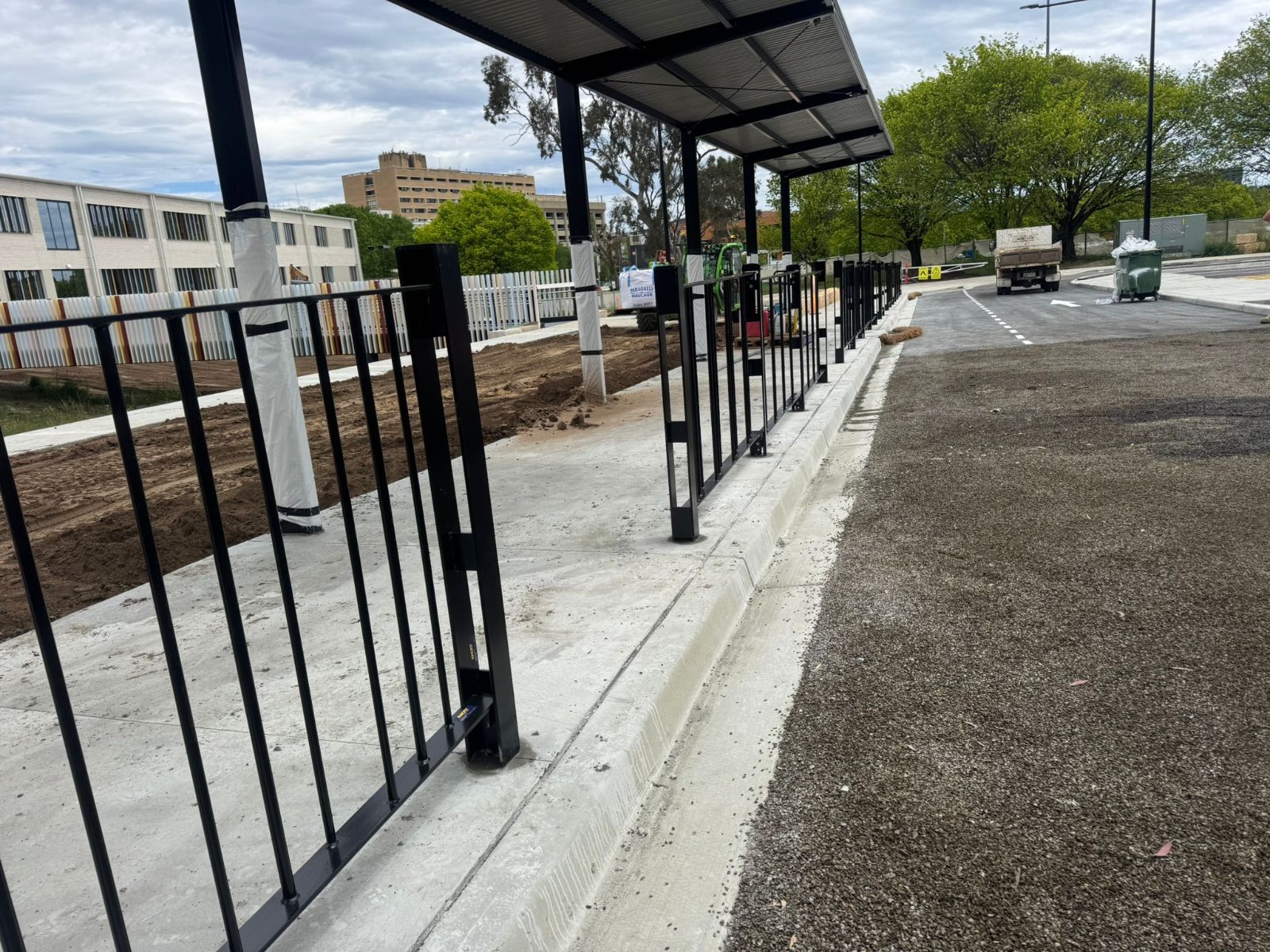
Not all transport fencing is about security. Pedestrian fencing in medians, at bus stops and near intersections guides people to safe crossing points. In NSW this is often built to the RMS pedestrian fence design, which LS Fencing Services supplies and installs as RMS pedestrian fencing.
On road jobs, traffic control is often the biggest cost after materials. A crew that can install quickly behind a lane closure saves more than a cheaper panel does.
The honest caveat: the cheapest fence can cost the most
On transport projects, the fence that wins on price per metre is often the one that costs the most overall. Rail possessions and road lane closures are booked months in advance and are expensive. If a crew cannot finish its section inside the window because the wrong posts arrived or the earthing detail was not resolved, the next window may be weeks away.
So the question to ask a fencing contractor is not just the rate. Ask how they plan work inside possessions or closures, how they handle earthing details, and what happens if a window is lost.
What to check before you tender
- Which asset owner's standard applies, and which version?
- Does the fence need earthing or bonding near overhead wiring or high voltage equipment?
- How many vehicle movements will each gate see in the peak hour?
- Are there separate pedestrian routes, and do they need access control?
- Will work happen inside a rail possession or a road closure, and how long is each window?
- What inspection and test records does the client want at handover?
Projects that answer these early tend to run on time. Projects that leave them to the install crew rarely do. Work on operating transport sites also needs a safe work method statement and controls that meet SafeWork NSW requirements.
The next step
Get the asset owner's standard and the possession or closure plan first, then ask for a priced scope against them. LS Fencing Services works on tier 1 transport and infrastructure projects under ISO 9001, 14001 and 45001 certified systems. Send the drawings to us on 1800 572 878, including any sliding gates and automation the depot needs.
Specifying or pricing a perimeter?
Send the drawings or a brief and LS Fencing Services will come back with a detailed proposal.