Guides

Top High Security Fencing for Utility Substations Sydney

A substation perimeter isn’t just a fence line. It’s the first and most visible layer of protection between live high-voltage equipment and everything that can go wrong: vandals, animals, extreme weather, and deliberate

ISO 9001, 14001, 45001 4.9 from 19+ reviews Tier 1 and government sites

12 min read · Published 25 July 2026, updated 1 September 2026

In short

A substation perimeter isn’t just a fence line. It’s the first and most visible layer of protection between live high-voltage equipment and everything that can go wrong: vandals, animals, extreme weather, and deliberate sabotage. Across Sydney and greater NSW, the firms chosen for this work share one quality that matters more than a long certification list , a proven record on the right projects. Here are the top fen

A substation perimeter isn’t just a fence line. It’s the first and most visible layer of protection between live high-voltage equipment and everything that can go wrong: vandals, animals, extreme weather, and deliberate sabotage. Across Sydney and greater NSW, the firms chosen for this work share one quality that matters more than a long certification list , a proven record on the right projects. Here are the top fencing options and providers for utility substations in Sydney, ranked by what actually counts on site.

1. LS Fencing, Sydney’s Specialist in Substation-Grade Perimeter Security

LS Fencing is a Sydney-based commercial fencing contractor with a documented track record on Tier 1 builder and government infrastructure projects. That pedigree matters more than almost anything else when specifying perimeter security for a live substation.

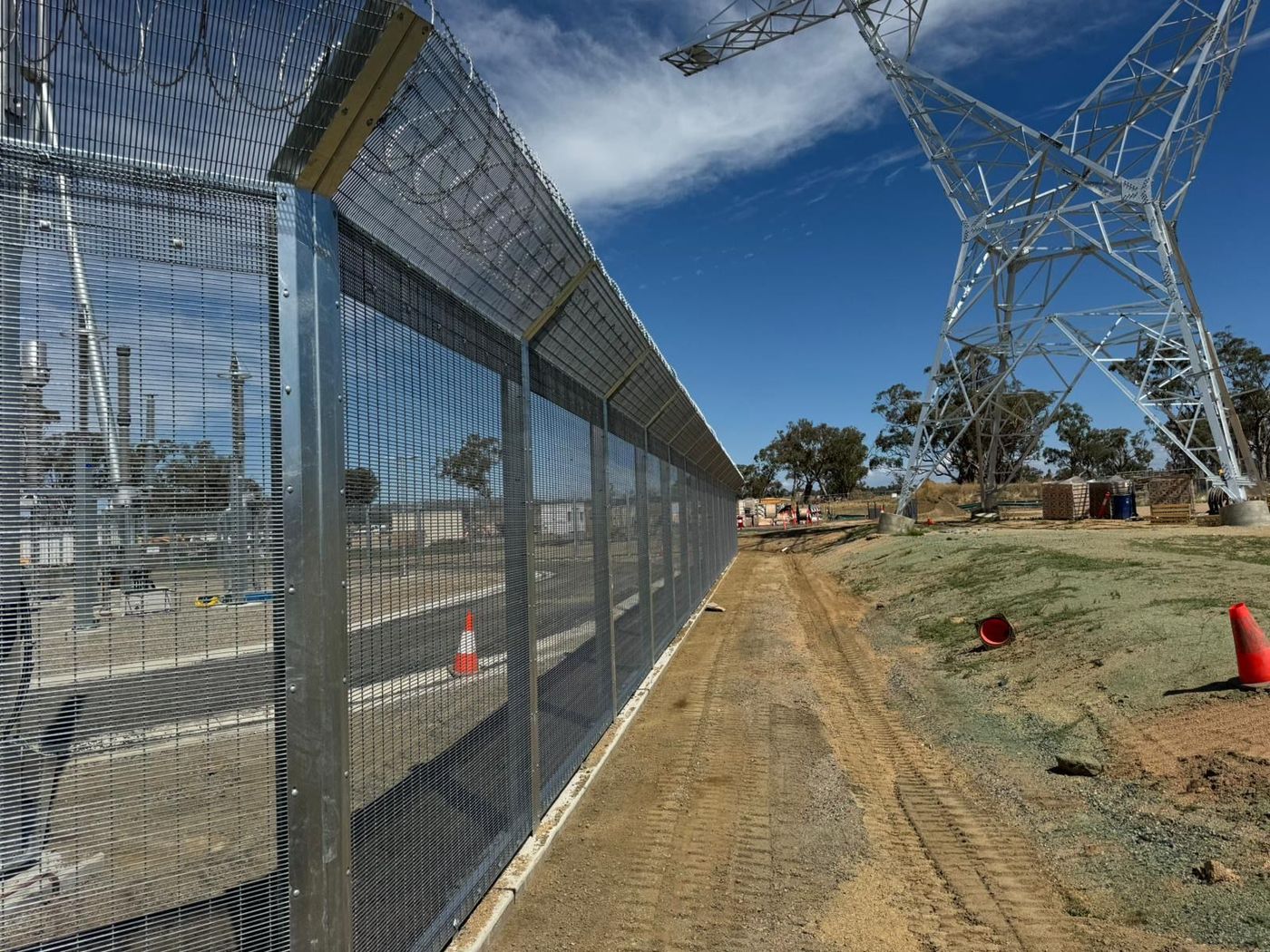
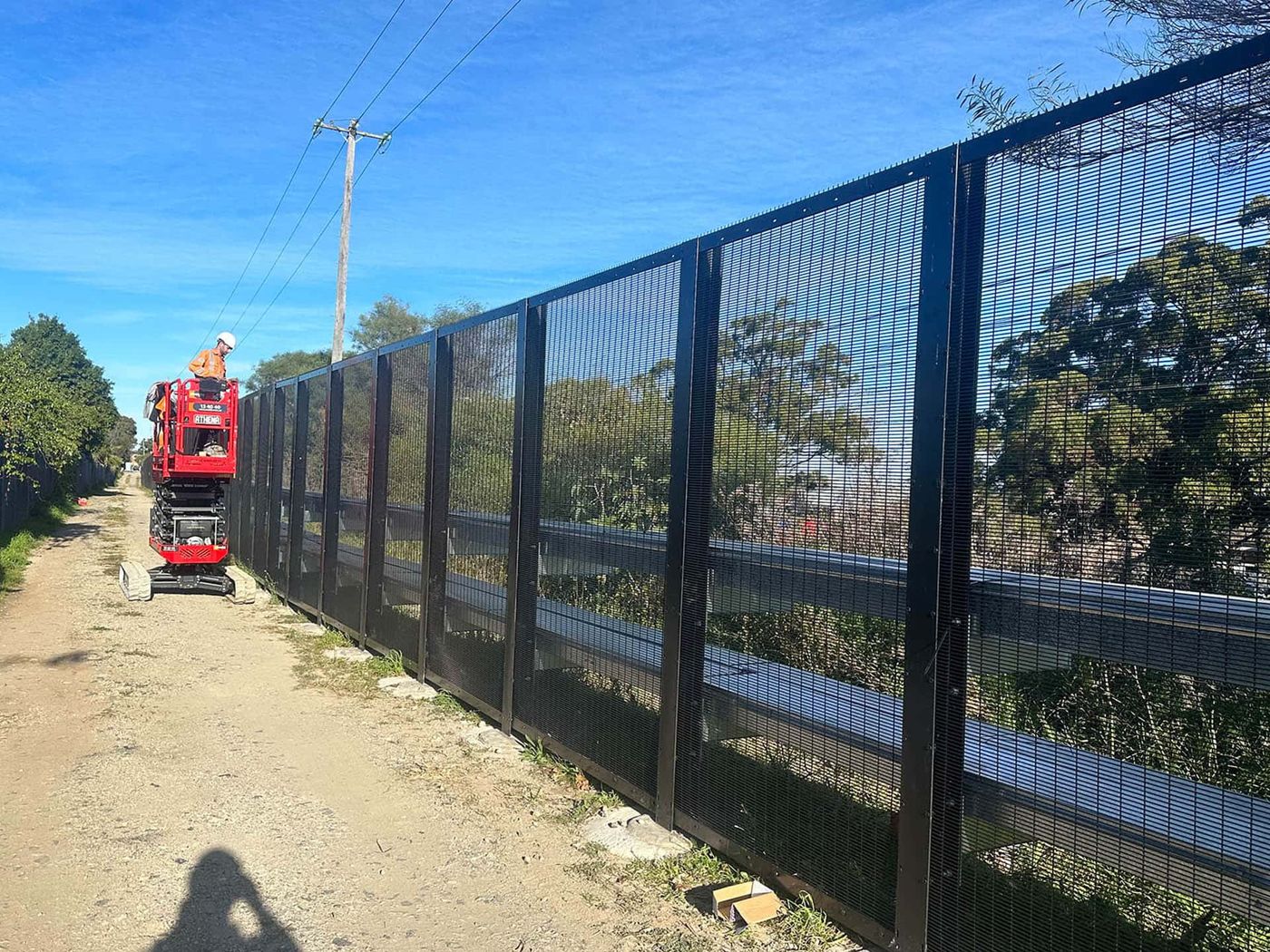
The firm covers the full scope of what a utility site needs: 358 anti-climb mesh panels for Ausgrid substations, palisade fencing, automated access-controlled gates, razor wire topping, and gate automation systems. Each solution is sized and installed for commercial and government-grade compliance, not residential performance.

LS Fencing discloses the least technical detail publicly, yet it holds the strongest project references. Tier 1 builders and government procurement teams repeatedly select them over competitors who publish longer certification lists. In the substation sector, that project record is the real proof of capability.

For project managers who need a single contractor across supply, fabrication, and installation, LS Fencing’s in-house capacity removes the coordination risk that comes from splitting those scopes. Site-specific design input early in the project also reduces costly specification changes during construction.

One honest caveat: LS Fencing does not publish material specification sheets or certification numbers on its website. Procurement teams should request this documentation directly at tender stage, which any serious contractor should be prepared to provide.

Key Takeaway: LS Fencing’s Tier 1 and government project history makes it the most credible first call for substation fencing in Sydney, even without a public certification disclosure.

2. 358 Anti-Climb Mesh Panels, The Go-To for Electrical Substation Perimeters

358 mesh is the most widely specified product for electrical substation perimeters across Australia. The name refers to the aperture dimensions: 76.2mm x 12.7mm (roughly 3 inches x 0.5 inches x 8 gauge wire). Those small openings make the panel almost impossible to grip, climb, or cut with standard tools.

For Ausgrid substation applications in NSW, the standard configuration uses 100UC structural steel posts with 50x50mm equal-angle rails at the top and bottom. Panel heights vary by site classification, and top treatments, croc-top, bulldog-spike, or razor-barb rail, can be added where the threat profile demands it.

The finish matters as much as the gauge. AS/NZS 4534 covers wire mesh fencing for security applications, and a zinc-aluminium or hot-dip galvanised coating is the right choice for Sydney’s coastal and industrial environments where salt air accelerates corrosion on bare steel.

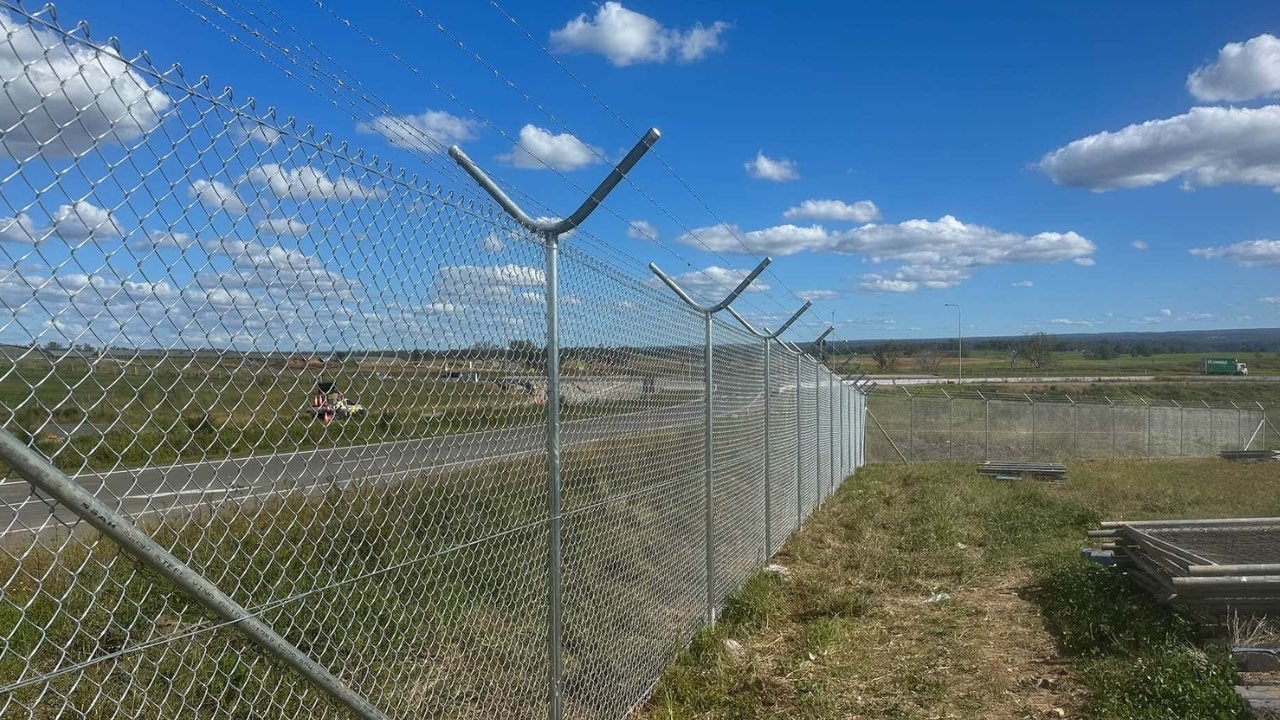
358 mesh is not the cheapest perimeter option. But for a live substation where a breach can trigger an outage affecting thousands of customers, the uplift in cost over standard chainwire pays back quickly in reduced incident risk and lower insurance exposure.

Specifiers should confirm the mesh wire diameter (4mm is standard; heavier gauges are available for higher threat classifications) and ensure posts are set to the manufacturer’s minimum embed depth for the panel height selected.

3. Palisade Fencing, Visible Deterrence for High-Risk Substation Sites

Palisade fencing does something 358 mesh alone can’t: it signals threat before anyone gets close. The upright steel pales with pointed or triple-point tops are a recognised high-security visual deterrent, and that deterrence value is real. A fence that looks difficult to scale gets tested less often.

In the substation context, palisade works best on the outer boundary of a multi-layer perimeter, with 358 mesh or welded panel systems forming the inner line around critical equipment. The combination gives you two physical barriers and two visual warnings.

LS Fencing’s palisade product uses a straight steel pale profile with a curved pale top on the attack side, available in triple-point, single-point, or flat-top configurations. Hot-dip galvanised steel that meets AS 3950 is the standard finish for corrosion resistance in NSW conditions, including coastal substations near Port Botany or Newcastle where salt spray is a regular factor.

The structural advantage of palisade over mesh is resistance to vehicle impact. A properly designed palisade line with correctly embedded posts offers meaningful resistance to low-speed ram attacks, which is increasingly relevant as threat assessments for critical infrastructure are updated. Profence has also used palisade with their Razorback® spiked rail on substation projects, including work associated with the Sydney Metro.

Height is a key specification decision. Most substation applications call for 2.1m to 2.4m palisade as a minimum, with taller profiles for sites with an improved public intrusion risk.

4. Non-Conductive and Composite Fencing Options, Protecting Live Electrical Environments

Standard steel fencing conducts electricity. At a live substation, that creates a real risk: if a conductor or busbar fault energises nearby metalwork, a steel perimeter fence can become a path to ground through anyone touching it. Non-conductive fencing materials break that path.

Fibreglass-reinforced polymer (FRP) panels and composite post systems are the main options for internal fencing around live substation equipment. They carry no electrical charge, require no earthing, and resist the UV degradation and moisture that break down lower-grade plastics over time.

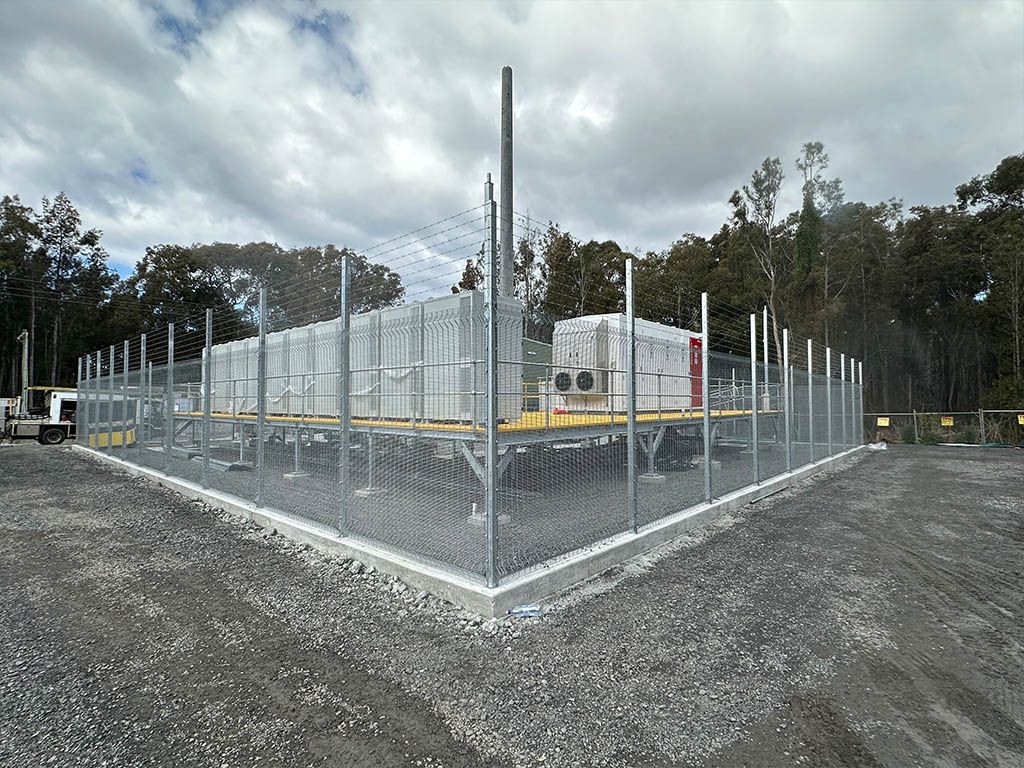
These materials are typically used for secondary internal barriers, not the main perimeter line. A common configuration pairs a steel outer perimeter (358 mesh or palisade) with non-conductive fencing around the transformer pad or switchyard interior. This is consistent with what utilities in the US and Europe have adopted when separating access zones within the substation boundary.

Design input at the early project stage is critical here. Specifying the wrong material for the wrong zone , steel where non-conductive is required, or polymer where impact resistance is needed , creates both a safety hazard and a compliance problem. Contractors with documented substation experience will flag this split at design review; those without that background sometimes miss it entirely.

For Sydney-based substation projects, the applicable safety design requirements are set by the relevant network service provider. Obtain the substation design guidelines from the applicable network operator at tender stage and match material specifications to the correct zone classifications before committing to a product.

5. Automated Access-Controlled Gates, Regulating Entry to Restricted Substation Areas

A perimeter fence is only as secure as the gate in it. Automated access-controlled gates regulate who enters a substation and create an audit trail of every access event , information that is increasingly required under critical infrastructure security frameworks.

For substation applications, the typical configuration is a heavy-duty sliding gate with an anti-climb mesh infill panel matching the perimeter fence specification. The gate operator connects to an access control system: key fob, PIN, card reader, or intercom, depending on the site’s staffing model and visitor frequency.

LS Fencing supplies and installs automated gate systems with motorised options that meet the same compliance standards as the perimeter fencing. Sliding gates are the preferred choice for most substation entry points because they operate within the fence line without requiring a swing clearance zone, which matters on tight sites with proximity to roads or equipment.

Integration with surveillance cameras and monitoring systems is a growing requirement for high-value transmission substations. Gate automation is the access layer that ties those systems together , logs entry times, triggers camera recording on gate activation, and locks out after repeated failed attempts.

Gate operators need to be specified for the gate weight, duty cycle, and power supply available on site. Substations with remote or unmanned operation require fail-safe or fail-secure logic in the operator, so access defaults correctly if power fails or the network connection drops.

Pro Tip: Specify gate automation and perimeter fencing from the same contractor. Coordination between the gate operator, locking hardware, and fence post positions is tighter, and there is a single point of accountability for commissioning and compliance sign-off.

6. Welded Mesh with Integrated Surveillance, Layered Security for Sydney Substations

Welded mesh panels , distinct from 358 mesh by their larger aperture and heavier wire gauge , are a cost-effective outer perimeter option for substations where the primary threat is opportunistic trespass rather than deliberate forced entry. Paired with camera surveillance, they form a detection-and-deter system that covers large perimeters without the cost of full 358-grade mesh throughout.

The surveillance integration matters. Cameras mounted on fence posts at regular intervals reduce the blind spots that exist in any large perimeter. Motion-triggered recording linked to a monitored control room converts the fence from a passive barrier into an active alert system. United Illuminating’s approach to protecting coastal substations in Connecticut after storm surges involved adding monitoring cameras with water sensors , evidence that perimeter surveillance is increasingly treated as part of the fencing specification, not an add-on.

For Sydney substations, the same logic applies. Ausgrid’s network spans coastal, suburban, and semi-rural sites, each with different intrusion vectors. Welded mesh with integrated camera mounting brackets and conduit channels for cabling gives the network operator flexibility to upgrade the surveillance layer without disturbing the structural fence.

CLD Fencing Systems has applied high-security welded mesh to major international substation projects, including the Walney Substation (2018) and Mersey Gateway in Cheshire. Their work demonstrates that welded mesh at commercial specification can meet demanding substation security requirements when correctly designed and installed.

This option suits large-footprint transmission substations where full 358-grade mesh would be prohibitively expensive, and where the surveillance layer fills the gap in physical resistance.

7. Doogood Australia, Certified High-Security Fencing for Critical Infrastructure

Doogood Australia holds the most extensive certification disclosure of any substation fencing contractor in this category. Their listed certifications include AS1725-2010 (parts 1-5), BS1722-12:2006, PS68, ISO22343-1:2023, and ASTM F2656/F2656M. That is a meaningful credentials set for procurement teams working under formal compliance frameworks.

Doogood Australia: visual reference for 7. Doogood Australia, Certified High-Security Fencing for Critical Infrastructure

The product range covers 358 anti-cut, finger-proof, and anti-climb mesh panels, plus palisade fencing and a range of specialty hardware for high-security electrical infrastructure. ISO22343-1:2023 certification, which covers vehicle security barriers, positions Doogood for sites requiring crash-rated perimeter protection , a specification that applies to the most critical transmission substations in the national grid.

The honest limitation: Doogood Australia’s certification list does not translate into documented substation project references in publicly available information. For procurement teams who weight certified compliance heavily, this contractor is worth including in the tender shortlist. For those who prioritise demonstrated project delivery on comparable infrastructure, LS Fencing’s Tier 1 reference portfolio is the stronger signal.

A useful rule of thumb when evaluating any substation fencing contractor: certifications confirm a product meets a standard in a controlled test environment. A project record confirms the contractor can deliver that product correctly in the field, on schedule, and within the constraints of a live operational site. Both matter. Neither replaces the other.

What to Look for When Specifying Substation Fencing in Sydney

Before shortlisting any contractor or product, confirm the following against your project’s specific site conditions and the relevant network service provider’s substation design guidelines.

Specification Factor What to Check Why It Matters
Compliance standard AS/NZS 4534, AS 1725, or specific NSP requirements Non-compliant materials may fail regulatory audit
Material conductivity Steel vs. FRP/composite by zone Wrong material in live zones creates an electrocution risk
Perimeter height 2.1m minimum; 2.4-3.0m for improved threat sites Height is the primary anti-climb deterrent
Finish and coating Hot-dip galvanised or zinc-aluminium for coastal/industrial sites Corrosion shortens service life and increases maintenance cost
Top treatment Croc-top, bulldog-spike, razor-barb, or razor wire topping Adds secondary deterrence and increases climb difficulty
Gate specification Matching infill panel, rated operator, access control integration Gates are the most targeted point of entry
Project references Comparable substation or critical infrastructure sites Live substation sites require specific handling capability
Certification disclosure Request at tender; do not rely on website claims alone Certifications should match the product being installed, not a generic range

Two factors that most vendors don’t publish , project capacity and warranty terms , are universal gaps in the Sydney market. Ask every contractor directly: what concurrent project commitments do they currently hold, and what are the warranty and maintenance terms for the installed system? A fence that fails within the warranty period on a live substation creates both a safety and an operational problem.

For government project managers working on substation upgrades, verifying site ownership and easement documentation before the fencing design is finalised avoids costly boundary disputes mid-project. Land records access services illustrate the kind of documentation that commercial developers and infrastructure teams typically need before breaking ground.

FAQ

What type of fencing is required for electrical substations in NSW?

NSW substations typically require high-security perimeter fencing that meets the relevant network service provider’s design guidelines, usually Ausgrid or other network operator specifications. 358 anti-climb mesh is the most commonly specified product for the main perimeter, with non-conductive composite or fibreglass panels used for internal zones around live equipment. Height minimums, post specifications, and top treatment requirements vary by substation classification and threat rating.

Does substation fencing need to comply with Australian Standards?

Yes. The primary references are AS/NZS 4534 for wire mesh security fencing and AS 1725 for chain link fencing. Additional standards apply depending on the product type , palisade fencing, for example, has its own specification requirements. Some contractors also hold certifications to international standards including BS1722, ISO22343-1:2023, and ASTM F2656/F2656M for crash-rated barriers. Always confirm the specific standard required by your network service provider at the design stage.

Why is 358 mesh the preferred option for substations?

358 mesh panels have an aperture too small to provide a meaningful grip or foothold for climbing, and resistant to cutting with standard tools. The small opening also prevents most animals from entering the substation, which is a real cause of equipment faults and outages. Combined with a hot-dip galvanised finish for corrosion resistance, 358 mesh offers a service life that justifies the higher upfront cost compared to chainwire or standard welded mesh.

Can animals really cause substation outages, and does fencing help?

Yes. Animal-related faults at substations are a documented cause of power outages. Some US utilities have installed secondary electric fencing , known as Trans Gard systems , inside the outer perimeter and around major equipment to deter animals that breach the outer fence. In Australian conditions, 358 mesh with no bottom gap and a concrete plinth or ground rail prevents most small animal ingress at the perimeter level, which addresses the majority of animal-contact fault events.

What should I ask a substation fencing contractor before awarding a contract?

Ask for three things that most contractors don’t volunteer publicly: documented project references on comparable substation or critical infrastructure sites, current project capacity and lead times, and warranty plus maintenance terms for the installed system. Also request the specific certification documents for the products being installed , not generic range certifications. A contractor who can answer all four clearly is worth shortlisting. One who deflects on project references or warranty terms is a risk on a live substation site.

Is palisade or 358 mesh better for a substation perimeter?

They serve different functions and work best in combination. Palisade provides a strong visual deterrent and better resistance to low-speed vehicle impact at the outer boundary. 358 mesh provides superior anti-climb and anti-cut performance for the inner perimeter around equipment. For sites where budget or space limits you to one product, 358 mesh at the correct height with an appropriate top treatment is the more technically capable perimeter solution for most substation threat profiles.

Conclusion

For utility substations in Sydney, the perimeter fencing specification is a safety-critical decision, not just a procurement line item. LS Fencing’s combination of substation-specific product capability and a verified Tier 1 project record makes it the strongest starting point for any substation perimeter project in NSW. Contact LS Fencing directly to discuss your site classification, get accurate product specifications, and request project references relevant to your substation type.

Specifying or pricing a perimeter?

Send the drawings or a brief and LS Fencing Services will come back with an engineered quote, usually within 5 business days.

FAQ

Questions this guide answers

Anything not covered here, the office answers on 1800 572 878 during business hours.

Table of Contents 1. LS Fencing, Sydney’s Specialist in Substation-Grade Perimeter Security 2. 358 Anti-Climb Mesh Panels, The Go-To for Electrical Substation Perimeters 3. Palisade Fencing, Visible Deterrence for High-Risk Substation Sites 4. Non-Conductive and Composite Fencing Options, Protecting Live Electrical Environments 5. Automated Access-Controlled Gates, Regulating Entry to Restricted Substation Areas 6. Welded Mesh with Integrated Surveillance, Layered Security for Sydney Substations 7. Doogood Australia, Certified High-Security Fencing for Critical Infrastructure What to Look for When Specifying Substation Fencing in Sydney FAQ Conclusion 1. LS Fencing, Sydney’s Specialist in Substation-Grade Perimeter Security LS Fencing is a Sydney-based commercial fencing contractor with a documented track record on Tier 1 builder and government infrastructure projects. That pedigree matters more than almost anything else when specifying perimeter security for a live substation. The firm covers the full scope of what a utility site needs: 358 anti-climb mesh panels for Ausgrid substations , palisade fencing, automated access-controlled gates, razor wire topping, and gate automation systems. Each solution is sized and installed for commercial and government-grade compliance, not residential performance. LS Fencing discloses the least technical detail publicly, yet it holds the strongest project references. Tier 1 builders and government procurement teams repeatedly select them over competitors who publish longer certification lists. In the substation sector, that project record is the real proof of capability. For project managers who need a single contractor across supply, fabrication, and installation, LS Fencing’s in-house capacity removes the coordination risk that comes from splitting those scopes. Site-specific design input early in the project also reduces costly specification changes during construction. One honest caveat: LS Fencing does not publish material specification sheets or certification numbers on its website. Procurement teams should request this documentation directly at tender stage, which any serious contractor should be prepared to provide. Key Takeaway: LS Fencing’s Tier 1 and government project history makes it the most credible first call for substation fencing in Sydney, even without a public certification disclosure. 2. 358 Anti-Climb Mesh Panels, The Go-To for Electrical Substation Perimeters 358 mesh is the most widely specified product for electrical substation perimeters across Australia. The name refers to the aperture dimensions: 76.2mm x 12.7mm (roughly 3 inches x 0.5 inches x 8 gauge wire). Those small openings make the panel almost impossible to grip, climb, or cut with standard tools. For Ausgrid substation applications in NSW, the standard configuration uses 100UC structural steel posts with 50x50mm equal-angle rails at the top and bottom. Panel heights vary by site classification, and top treatments, croc-top, bulldog-spike, or razor-barb rail, can be added where the threat profile demands it. The finish matters as much as the gauge. AS/NZS 4534 covers wire mesh fencing for security applications, and a zinc-aluminium or hot-dip galvanised coating is the right choice for Sydney’s coastal and industrial environments where salt air accelerates corrosion on bare steel. 358 mesh is not the cheapest perimeter option. But for a live substation where a breach can trigger an outage affecting thousands of customers, the uplift in cost over standard chainwire pays back quickly in reduced incident risk and lower insurance exposure. Specifiers should confirm the mesh wire diameter (4mm is standard; heavier gauges are available for higher threat classifications) and ensure posts are set to the manufacturer’s minimum embed depth for the panel height selected. 3. Palisade Fencing, Visible Deterrence for High-Risk Substation Sites Palisade fencing does something 358 mesh alone can’t: it signals threat before anyone gets close. The upright steel pales with pointed or triple-point tops are a recognised high-security visual deterrent, and that deterrence value is real. A fence that looks difficult to scale gets tested less often. In the substation context, palisade works best on the outer boundary of a multi-layer perimeter, with 358 mesh or welded panel systems forming the inner line around critical equipment. The combination gives you two physical barriers and two visual warnings. LS Fencing’s palisade product uses a straight steel pale profile with a curved pale top on the attack side, available in triple-point, single-point, or flat-top configurations. Hot-dip galvanised steel that meets AS 3950 is the standard finish for corrosion resistance in NSW conditions, including coastal substations near Port Botany or Newcastle where salt spray is a regular factor. The structural advantage of palisade over mesh is resistance to vehicle impact. A properly designed palisade line with correctly embedded posts offers meaningful resistance to low-speed ram attacks, which is increasingly relevant as threat assessments for critical infrastructure are updated. Profence has also used palisade with their Razorback® spiked rail on substation projects, including work associated with the Sydney Metro. Height is a key specification decision. Most substation applications call for 2.1m to 2.4m palisade as a minimum, with taller profiles for sites with an improved public intrusion risk. 4. Non-Conductive and Composite Fencing Options, Protecting Live Electrical Environments Standard steel fencing conducts electricity. At a live substation, that creates a real risk: if a conductor or busbar fault energises nearby metalwork, a steel perimeter fence can become a path to ground through anyone touching it. Non-conductive fencing materials break that path. Fibreglass-reinforced polymer (FRP) panels and composite post systems are the main options for internal fencing around live substation equipment. They carry no electrical charge, require no earthing, and resist the UV degradation and moisture that break down lower-grade plastics over time. These materials are typically used for secondary internal barriers, not the main perimeter line. A common configuration pairs a steel outer perimeter (358 mesh or palisade) with non-conductive fencing around the transformer pad or switchyard interior. This is consistent with what utilities in the US and Europe have adopted when separating access zones within the substation boundary. Design input at the early project stage is critical here. Specifying the wrong material for the wrong zone , steel where non-conductive is required, or polymer where impact resistance is needed , creates both a safety hazard and a compliance problem. Contractors with documented substation experience will flag this split at design review; those without that background sometimes miss it entirely. For Sydney-based substation projects, the applicable safety design requirements are set by the relevant network service provider. Obtain the substation design guidelines from the applicable network operator at tender stage and match material specifications to the correct zone classifications before committing to a product. 5. Automated Access-Controlled Gates, Regulating Entry to Restricted Substation Areas A perimeter fence is only as secure as the gate in it. Automated access-controlled gates regulate who enters a substation and create an audit trail of every access event , information that is increasingly required under critical infrastructure security frameworks. For substation applications, the typical configuration is a heavy-duty sliding gate with an anti-climb mesh infill panel matching the perimeter fence specification. The gate operator connects to an access control system: key fob, PIN, card reader, or intercom, depending on the site’s staffing model and visitor frequency. LS Fencing supplies and installs automated gate systems with motorised options that meet the same compliance standards as the perimeter fencing. Sliding gates are the preferred choice for most substation entry points because they operate within the fence line without requiring a swing clearance zone, which matters on tight sites with proximity to roads or equipment. Integration with surveillance cameras and monitoring systems is a growing requirement for high-value transmission substations. Gate automation is the access layer that ties those systems together , logs entry times, triggers camera recording on gate activation, and locks out after repeated failed attempts. Gate operators need to be specified for the gate weight, duty cycle, and power supply available on site. Substations with remote or unmanned operation require fail-safe or fail-secure logic in the operator, so access defaults correctly if power fails or the network connection drops. Pro Tip: Specify gate automation and perimeter fencing from the same contractor. Coordination between the gate operator, locking hardware, and fence post positions is tighter, and there is a single point of accountability for commissioning and compliance sign-off. 6. Welded Mesh with Integrated Surveillance, Layered Security for Sydney Substations Welded mesh panels , distinct from 358 mesh by their larger aperture and heavier wire gauge , are a cost-effective outer perimeter option for substations where the primary threat is opportunistic trespass rather than deliberate forced entry. Paired with camera surveillance, they form a detection-and-deter system that covers large perimeters without the cost of full 358-grade mesh throughout. The surveillance integration matters. Cameras mounted on fence posts at regular intervals reduce the blind spots that exist in any large perimeter. Motion-triggered recording linked to a monitored control room converts the fence from a passive barrier into an active alert system. United Illuminating’s approach to protecting coastal substations in Connecticut after storm surges involved adding monitoring cameras with water sensors , evidence that perimeter surveillance is increasingly treated as part of the fencing specification, not an add-on. For Sydney substations, the same logic applies. Ausgrid’s network spans coastal, suburban, and semi-rural sites, each with different intrusion vectors. Welded mesh with integrated camera mounting brackets and conduit channels for cabling gives the network operator flexibility to upgrade the surveillance layer without disturbing the structural fence. CLD Fencing Systems has applied high-security welded mesh to major international substation projects, including the Walney Substation (2018) and Mersey Gateway in Cheshire. Their work demonstrates that welded mesh at commercial specification can meet demanding substation security requirements when correctly designed and installed. This option suits large-footprint transmission substations where full 358-grade mesh would be prohibitively expensive, and where the surveillance layer fills the gap in physical resistance. 7. Doogood Australia, Certified High-Security Fencing for Critical Infrastructure Doogood Australia holds the most extensive certification disclosure of any substation fencing contractor in this category. Their listed certifications include AS1725-2010 (parts 1-5), BS1722-12:2006, PS68, ISO22343-1:2023, and ASTM F2656/F2656M. That is a meaningful credentials set for procurement teams working under formal compliance frameworks. The product range covers 358 anti-cut, finger-proof, and anti-climb mesh panels, plus palisade fencing and a range of specialty hardware for high-security electrical infrastructure. ISO22343-1:2023 certification, which covers vehicle security barriers, positions Doogood for sites requiring crash-rated perimeter protection , a specification that applies to the most critical transmission substations in the national grid. The honest limitation: Doogood Australia’s certification list does not translate into documented substation project references in publicly available information. For procurement teams who weight certified compliance heavily, this contractor is worth including in the tender shortlist. For those who prioritise demonstrated project delivery on comparable infrastructure, LS Fencing’s Tier 1 reference portfolio is the stronger signal. A useful rule of thumb when evaluating any substation fencing contractor: certifications confirm a product meets a standard in a controlled test environment. A project record confirms the contractor can deliver that product correctly in the field, on schedule, and within the constraints of a live operational site. Both matter. Neither replaces the other. What to Look for When Specifying Substation Fencing in Sydney Before shortlisting any contractor or product, confirm the following against your project’s specific site conditions and the relevant network service provider’s substation design guidelines. Specification Factor What to Check Why It Matters Compliance standard AS/NZS 4534, AS 1725, or specific NSP requirements Non-compliant materials may fail regulatory audit Material conductivity Steel vs. FRP/composite by zone Wrong material in live zones creates an electrocution risk Perimeter height 2.1m minimum; 2.4-3.0m for improved threat sites Height is the primary anti-climb deterrent Finish and coating Hot-dip galvanised or zinc-aluminium for coastal/industrial sites Corrosion shortens service life and increases maintenance cost Top treatment Croc-top, bulldog-spike, razor-barb, or razor wire topping Adds secondary deterrence and increases climb difficulty Gate specification Matching infill panel, rated operator, access control integration Gates are the most targeted point of entry Project references Comparable substation or critical infrastructure sites Live substation sites require specific handling capability Certification disclosure Request at tender; do not rely on website claims alone Certifications should match the product being installed, not a generic range Two factors that most vendors don’t publish , project capacity and warranty terms , are universal gaps in the Sydney market. Ask every contractor directly: what concurrent project commitments do they currently hold, and what are the warranty and maintenance terms for the installed system? A fence that fails within the warranty period on a live substation creates both a safety and an operational problem. For government project managers working on substation upgrades, verifying site ownership and easement documentation before the fencing design is finalised avoids costly boundary disputes mid-project. Land records access services illustrate the kind of documentation that commercial developers and infrastructure teams typically need before breaking ground. FAQ What type of fencing is required for electrical substations in NSW?

NSW substations typically require high-security perimeter fencing that meets the relevant network service provider’s design guidelines, usually Ausgrid or other network operator specifications. 358 anti-climb mesh is the most commonly specified product for the main perimeter, with non-conductive composite or fibreglass panels used for internal zones around live equipment. Height minimums, post specifications, and top treatment requirements vary by substation classification and threat rating.

Does substation fencing need to comply with Australian Standards?

Yes. The primary references are AS/NZS 4534 for wire mesh security fencing and AS 1725 for chain link fencing. Additional standards apply depending on the product type , palisade fencing, for example, has its own specification requirements. Some contractors also hold certifications to international standards including BS1722, ISO22343-1:2023, and ASTM F2656/F2656M for crash-rated barriers. Always confirm the specific standard required by your network service provider at the design stage.

Why is 358 mesh the preferred option for substations?

358 mesh panels have an aperture too small to provide a meaningful grip or foothold for climbing, and resistant to cutting with standard tools. The small opening also prevents most animals from entering the substation, which is a real cause of equipment faults and outages. Combined with a hot-dip galvanised finish for corrosion resistance, 358 mesh offers a service life that justifies the higher upfront cost compared to chainwire or standard welded mesh.

Can animals really cause substation outages, and does fencing help?

Yes. Animal-related faults at substations are a documented cause of power outages. Some US utilities have installed secondary electric fencing , known as Trans Gard systems , inside the outer perimeter and around major equipment to deter animals that breach the outer fence. In Australian conditions, 358 mesh with no bottom gap and a concrete plinth or ground rail prevents most small animal ingress at the perimeter level, which addresses the majority of animal-contact fault events.

What should I ask a substation fencing contractor before awarding a contract?

Ask for three things that most contractors don’t volunteer publicly: documented project references on comparable substation or critical infrastructure sites, current project capacity and lead times, and warranty plus maintenance terms for the installed system. Also request the specific certification documents for the products being installed , not generic range certifications. A contractor who can answer all four clearly is worth shortlisting. One who deflects on project references or warranty terms is a risk on a live substation site.

Is palisade or 358 mesh better for a substation perimeter?

They serve different functions and work best in combination. Palisade provides a strong visual deterrent and better resistance to low-speed vehicle impact at the outer boundary. 358 mesh provides superior anti-climb and anti-cut performance for the inner perimeter around equipment. For sites where budget or space limits you to one product, 358 mesh at the correct height with an appropriate top treatment is the more technically capable perimeter solution for most substation threat profiles.

Next step

Specifying or tendering a perimeter?

Send the drawings, the spec or a quick brief. LS Fencing Services returns an engineered quote, usually within 5 business days.

Send the scope 1800 572 878 Mon to Fri, 7am to 5pm
Call now Request a quote