On a commercial or high-security perimeter, the fence line is the first physical control between a controlled asset and everything outside it. For specifiers working on industrial yards, utilities sites, transport infrastructure and government facilities, the perimeter has to do more than mark a boundary. It has to deter, delay and withstand deliberate attack while keeping a clear sightline for surveillance. Palisade
On a commercial or high-security perimeter, the fence line is the first physical control between a controlled asset and everything outside it. For specifiers working on industrial yards, utilities sites, transport infrastructure and government facilities, the perimeter has to do more than mark a boundary. It has to deter, delay and withstand deliberate attack while keeping a clear sightline for surveillance. Palisade fencing has held its place on these sites for decades because its construction answers each of those requirements directly. This guide sets out what palisade fencing is, why it suits high-security applications, the configurations available, and how it sits alongside other security fence systems on a commercial project.
What Palisade Fencing Is
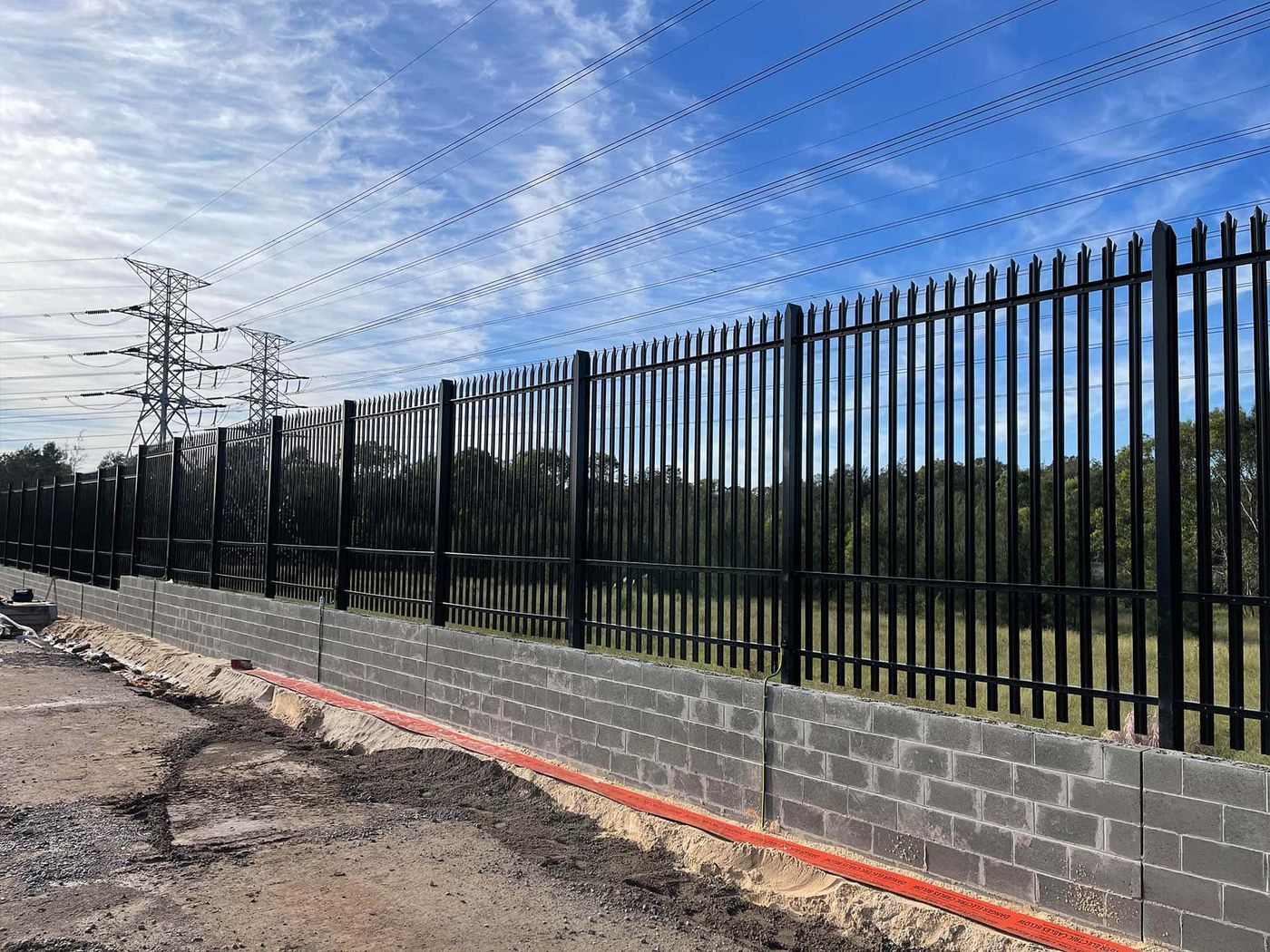
Palisade fencing is a steel fence system built from vertical pales fixed to horizontal rails. Each pale is a formed steel section, and the pales are bolted or welded to two or more rails that span between support posts. The posts are typically set into concrete footings, and the rails carry the load across each bay. The result is a rigid, open structure with consistent vertical lines and defined gaps between pales.
That open construction is deliberate. Unlike a solid barrier, palisade fencing preserves a clear line of sight through the fence, which matters where CCTV coverage, patrol visibility or natural surveillance form part of the security strategy. At the same time, the steel sections and the way they are fixed give the fence the strength to resist forced entry. The combination of visibility and physical resistance is what makes the system suited to perimeters where both qualities are required.
Why Palisade Suits Commercial and High-Security Sites
Security fencing earns its place through two functions: deterrence and delay. A perimeter that looks difficult to defeat discourages opportunistic intrusion, and a perimeter that genuinely resists attack buys time for detection and response. Palisade fencing performs on both counts.
The vertical pales present a tall, smooth face with no horizontal members within easy reach to use as footholds. The pales themselves are shaped to resist climbing, and the spacing is narrow enough to prevent a body or large tool passing through, while still allowing the sightline to remain open. Where pale tops are spiked or splayed, they add a further deterrent at the most likely point of attack. The steel sections also resist cutting and prying far better than lighter mesh or wire products, which extends the delay a determined intruder faces.
For a specifier, these characteristics translate into a perimeter that supports a layered security approach rather than standing alone. The fence delays entry; detection systems and response procedures do the rest.
Security Features in Detail
- Height - palisade is commonly specified at heights that put the top of the fence well beyond easy reach, removing the leverage an intruder needs to climb or vault.
- Pale profiles - W section and D section pales are the two common profiles. W section pales offer greater rigidity and resistance to bending under attack, while D section pales present a rounded outer face. Profile choice affects both strength and appearance.
- Anti-climb characteristics - the absence of accessible horizontal members and the narrow pale spacing make the face difficult to scale.
- Anti-cut characteristics - the gauge and shape of the steel sections resist hand and power tools longer than lighter systems.
- Pale tops - spiked or triple-pointed tops add an aggressive deterrent for higher-security perimeters; rounded or flat tops suit sites where a less hostile boundary is preferred, such as schools or public-facing facilities.
- Concealed or anti-tamper fixings - fixings can be specified to resist removal from the unsecured side, closing off a common point of attack.
Selecting between these options is a matter of matching the threat profile of the site to the configuration. A utilities substation and a school perimeter call for very different top details even though both may use palisade.
Configurations and Finishes
Palisade is a steel system, and the finish determines its service life in exposed commercial environments. Two finishing routes are standard.
Hot dip galvanising coats the steel inside and out with zinc, giving long-term corrosion protection that suits unpainted industrial perimeters and harsh or coastal exposures. Powder coating is applied over a galvanised base where a defined colour is required, for sites with visual amenity standards, branding requirements or a need to blend the perimeter into its surroundings. Galvanised-only and galvanised-plus-powder-coat are the two finishes most often specified on NSW commercial work.
Crimp Top and Tubular Variants
Beyond the standard formed pale, palisade is available in tubular variants. The palisade crimp top tubular profile uses tubular pales with a crimped top detail, producing a cleaner, more uniform appearance while retaining the strength and sightline of the palisade family. Tubular and crimp top configurations are well suited to perimeters where the fence is visible to the public or sits within a built environment that calls for a more considered finish, without giving up the security performance that defines palisade.
Across all of these options, the underlying logic stays consistent: vertical pales, horizontal rails, posts in footings, and a finish matched to the exposure and appearance the site demands.
Where Palisade Fits
Palisade is specified where strength and a clear sightline both matter. Typical applications include:
- Commercial yards and storage compounds holding plant, stock or vehicles
- Industrial sites and manufacturing facilities
- Utilities infrastructure such as substations, pump stations and water assets
- Transport and logistics perimeters
- Schools, colleges and education campuses
- Government and defence-adjacent facilities
- General site perimeters where visibility through the line supports surveillance
The common thread is a need to secure an asset while keeping the boundary visible. Where a site relies on patrols or camera coverage, the open palisade face works with the security system rather than blocking it.
How Palisade Compares to Other Security Fence Systems
Palisade is one of several systems a specifier can draw on, and the right choice depends on the site. The point is to match the system to the requirement, not to rank one above the others.
Palisade and 358 Mesh
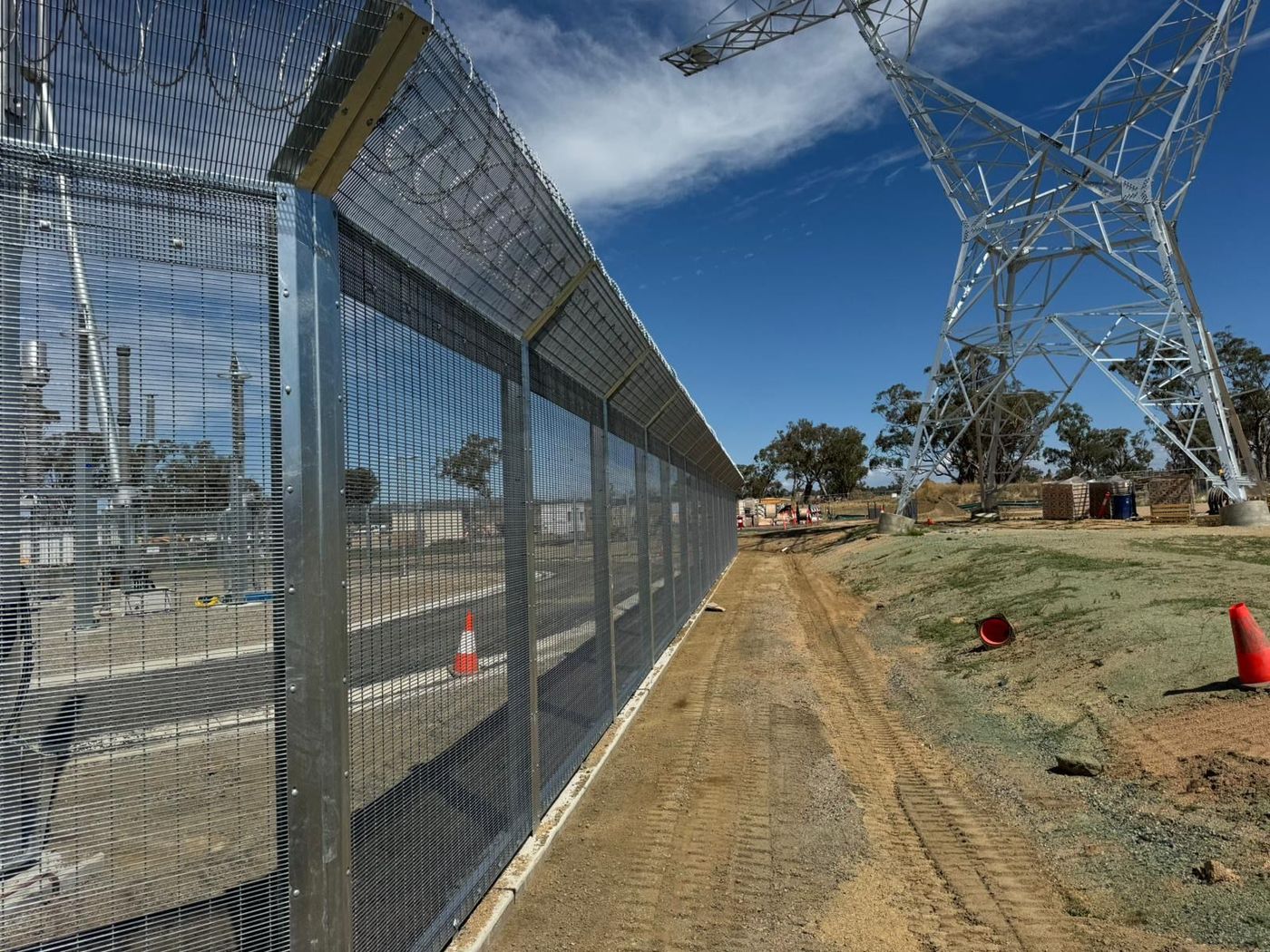
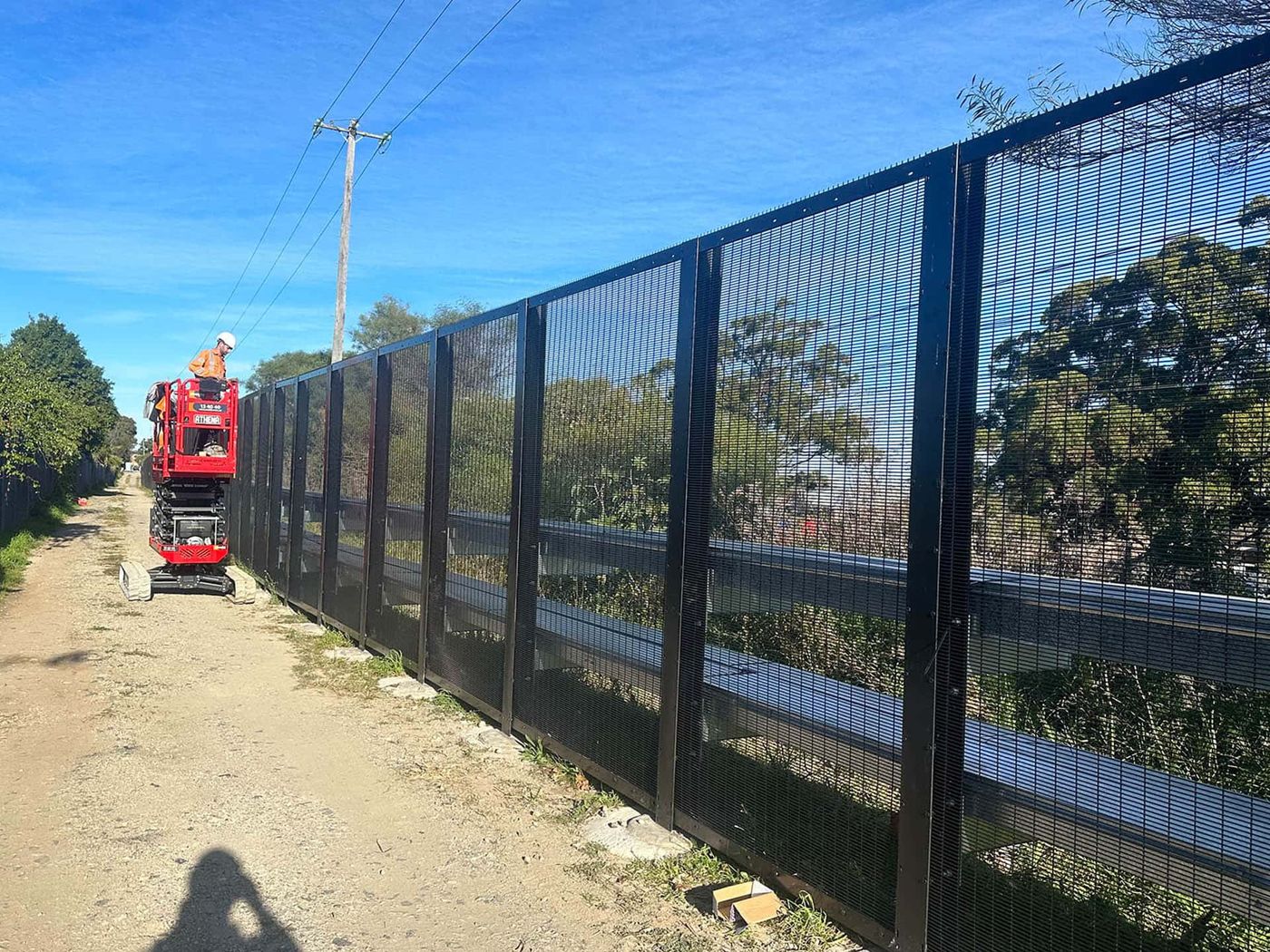
358 mesh, often described as prison mesh, uses a tight aperture that resists both climbing and the insertion of cutting tools. It presents a near-transparent barrier with a very fine grid, which suits sites that want maximum visibility combined with strong anti-cut and anti-climb performance. Palisade, by contrast, presents a heavier, more visually imposing vertical line and a stronger physical deterrent at the top of the fence. A specifier might select 358 mesh where surveillance visibility and a discreet appearance lead the brief, and palisade where a more overt deterrent and rigid vertical strength are the priority.
Palisade and Chain Wire
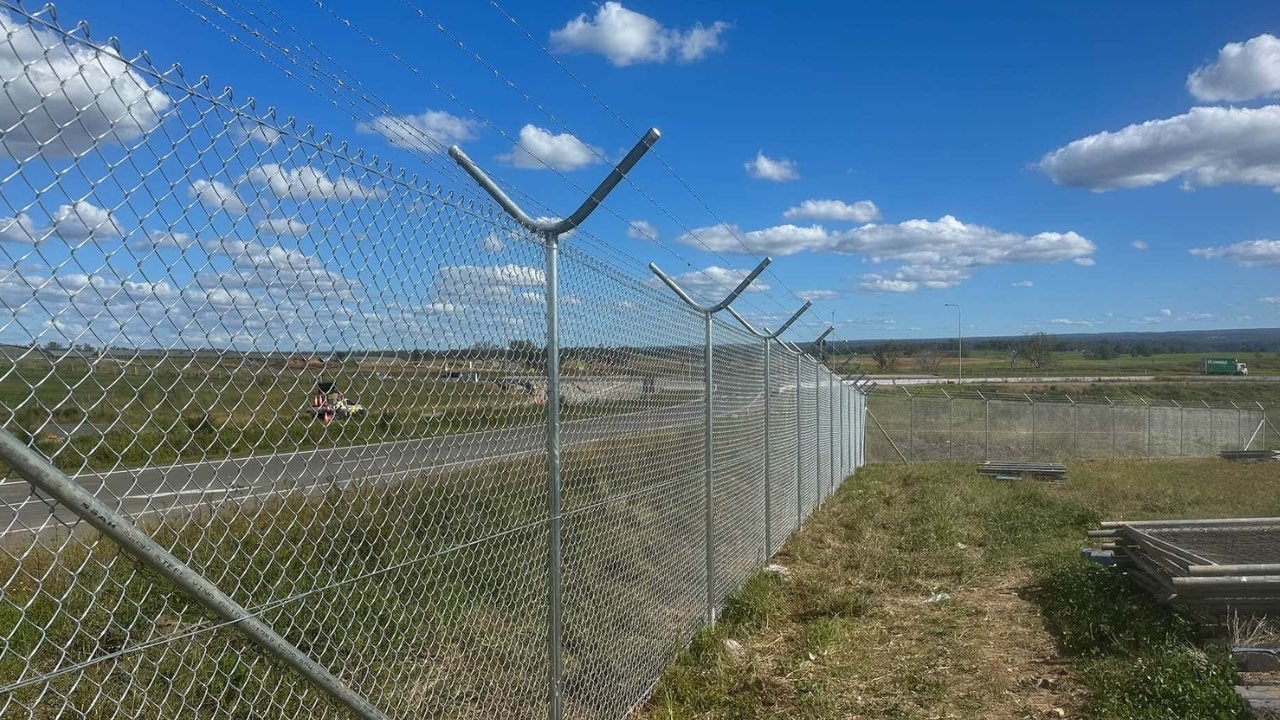
Chain wire is a flexible, economical perimeter system widely used to define boundaries and contain sites. It is well suited to large perimeters where the primary requirement is demarcation and basic containment. Palisade sits above chain wire in physical resistance and deterrent value, making it the choice where the perimeter must actively resist forced entry rather than simply mark a line. On many sites the two work together, with chain wire on lower-risk boundaries and palisade on the faces facing the highest threat or public exposure.
Across all three, the value lies in specifying the right system for each face of the perimeter. A considered security fencing strategy often combines systems rather than relying on a single product around the entire boundary.
Installation and Site Considerations
The performance of a palisade perimeter depends as much on installation as on the product. Several factors warrant attention on commercial projects:
- Footings and ground conditions - post footings must be sized for the fence height, wind loading and the soil conditions on site. Reactive soils, rock and made ground all influence footing design.
- Setting out and levels - sloping or undulating ground requires the fence to be stepped or raked so the line stays secure with no gaps opening up beneath the pales.
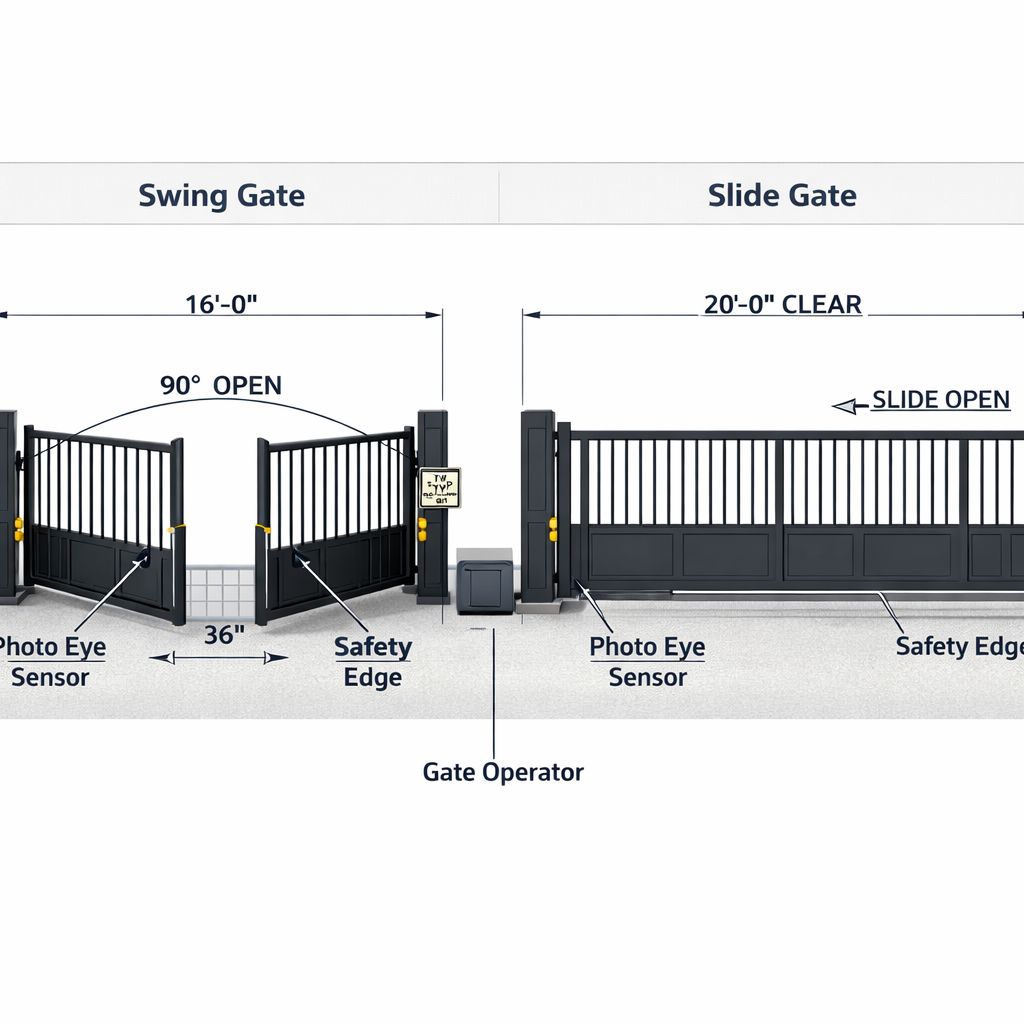
- Gates and access points - vehicle and pedestrian gates are the most worked parts of any perimeter and need to match the fence in height and resistance. Swing and sliding gate selection depends on the available swept area and traffic.
- Services and underground constraints - footing locations must account for buried services, drainage and easements identified before excavation.
- Integration with security systems - where detection, access control or CCTV are part of the brief, the fence layout should account for cable routes, mounting points and clear camera sightlines along the line.
- Staging and site access - on live commercial sites, the perimeter often has to be installed in stages to maintain security and operations throughout the works.
Addressing these points at the specification stage avoids problems on site and ensures the installed fence performs as intended for its full service life.
Frequently Asked Questions
What is the difference between W section and D section palisade pales?
W section pales have a profile that gives greater rigidity and resistance to bending, which suits higher-security perimeters where the pales may face deliberate attack. D section pales present a rounded outer face and a different appearance. Both use the same vertical-pale-and-rail construction; the choice comes down to the strength and look required for the site.
Which finish is appropriate for a coastal or harsh-exposure site?
Hot dip galvanising provides the baseline corrosion protection for exposed and coastal environments by coating the steel with zinc inside and out. Where a defined colour or visual standard also applies, a powder coat over the galvanised base gives both the appearance and the protection. The right specification depends on the exposure category and any amenity requirements for the site.
Can palisade fencing integrate with CCTV and access control?
Yes. The open vertical face of palisade preserves clear sightlines for cameras and patrols, which is one of its advantages on monitored perimeters. The layout can be set out to suit camera positions, cable routes and access-control points so the fence works as part of the wider security system rather than obstructing it.
Is palisade suitable for a school or public-facing perimeter?
It can be, with the configuration adjusted to suit. Rounded or flat pale tops give a secure boundary without the aggressive appearance of spiked tops, and a powder-coated finish lets the perimeter sit appropriately within a public setting. The same system that secures an industrial yard can be specified in a less hostile form for an education or community facility.
How does palisade perform against cutting and climbing attacks?
The gauge and shaped profile of the steel pales resist hand and power tools longer than lighter mesh or wire systems, and the absence of accessible horizontal members combined with narrow pale spacing makes the face difficult to scale. Spiked or splayed tops add a deterrent at the most likely climbing point. No fence is impenetrable, but palisade is designed to deter attack and to delay it long enough for detection and response.
Conclusion
Palisade fencing remains a sound choice for commercial and high-security perimeters because it combines physical strength, a clear sightline and a range of configurations that can be matched to the threat profile of each site. From pale profile and top detail to finish and gate selection, the specification can be tuned to industrial yards, utilities, transport, education and government applications alike. The right outcome comes from matching the system, and often a combination of systems, to each face of the perimeter.
LS Fencing Services supplies and installs palisade and security fencing for commercial and infrastructure projects across Sydney and greater NSW. To discuss a specification or arrange a site assessment for your project, contact LS Fencing.
Specifying or pricing a perimeter?
Send the drawings or a brief and LS Fencing Services will come back with a detailed proposal.