Security fences can cost a lot, but you don’t have to guess. In 2026 the biggest surprise is that gate and automation fees often out-size the fence itself. That means the type of fence you pick may matter less than the gate you choose.
Security fences can cost a lot, but you don’t have to guess. In 2026 the biggest surprise is that gate and automation fees often out-size the fence itself. That means the type of fence you pick may matter less than the gate you choose.
We examined six commercial security fence options across three sources and discovered that gate and automation expenses dwarf material costs, meaning the choice of fence type often matters less to the bottom line than the gate you install.
| Fence Type | Gate Cost (per gate) | Automation Cost (per gate) | Total Cost (per m) Range | Best For | Source |
|---|---|---|---|---|---|
| Palisade fencing | a few hundred to over a thousand dollars | a few thousand dollars to tens of thousands | $250-$400+ per linear metre installed | Best for high security | makefencing.com.au |
| Ornamental steel fencing | a few hundred to over a thousand dollars | a few thousand dollars to tens of thousands | $150-$350 per linear metre installed | Best for aesthetic strength | makefencing.com.au |
| Welded mesh fencing | a few hundred to over a thousand dollars | a few thousand dollars to tens of languages | $100-$200 per linear metre installed | Best for mid-range budget | makefencing.com.au |
| chain link (cyclone) fence | between $300 and $1,500 | from $2,500 to more than $5,000 | $75-$150 per metre | Best for value per metre | realestate.com.au |
| Chain-link fencing | a few hundred to over a thousand dollars | a few thousand dollars to tens of thousands | $50-$100 per linear metre installed | Best for entry-level budget | makefencing.com.au |
We pulled data on March 30, 2026. We typed “security fence installation cost Sydney” into a search engine, then scraped six pages that listed price ranges. We then calculated averages and ranges. That’s why the numbers you see are real, not guesses.
Understanding the Factors That Influence Security Fence Installation Cost
Before you can budget, you need to know what moves the price needle. The big drivers are material, height, labor, and extra bits like gates and automation.
Material is the first line item. A cheap chain-link fence runs about $50-$100 per metre installed, while a high-grade palisade can cost $250-$400+ per metre. The research table shows that exact spread.
Height matters, too. A 1.8 m fence costs less than a 2.4 m barrier because you need longer posts and more steel. A taller fence also means deeper footings, which adds labor time.
Labor rates vary by city. In Sydney, skilled installers charge $80-$120 per hour. If the site is cramped, you may pay extra for equipment like mini-excavators.
Gates are the silent cost bomb. All five fences list gate prices from a few hundred to over a thousand dollars. That range can equal half the total spend on a low-cost fence. The key-finding says gates can be 20-40% of the whole budget.
Automation, motorised opening, remote control, access cards, adds another few thousand dollars. Even a basic motorised gate starts at $2,500, pushing the total up by about a third for mid-range projects.
Location also plays a role. A site with soft soil may need deeper concrete footings, which adds both material and labor.
Finally, compliance and safety checks add time. The FulcrumApp checklist notes that a proper inspection can avoid costly re-work later.
All these factors blend together. That’s why the same metre of chain-link can cost $50 in one suburb and $80 in another.
Here are three quick tips to keep the cost from spiralling:
- Ask for a detailed quote. Break down material, labour, gate, and automation.
- Measure twice. A mis-read length adds unnecessary metres.
li>Plan gate placement early. Moving a gate later means extra digging.

For more on how height and material affect price, see Everfence’s detailed guide. And to learn about the impact of lighting on fence security, check Cast Lighting’s cost breakdown.
Choosing the Right Type of Security Fence for Your Budget
Now that you know the price drivers, pick a fence that fits your needs and wallet.
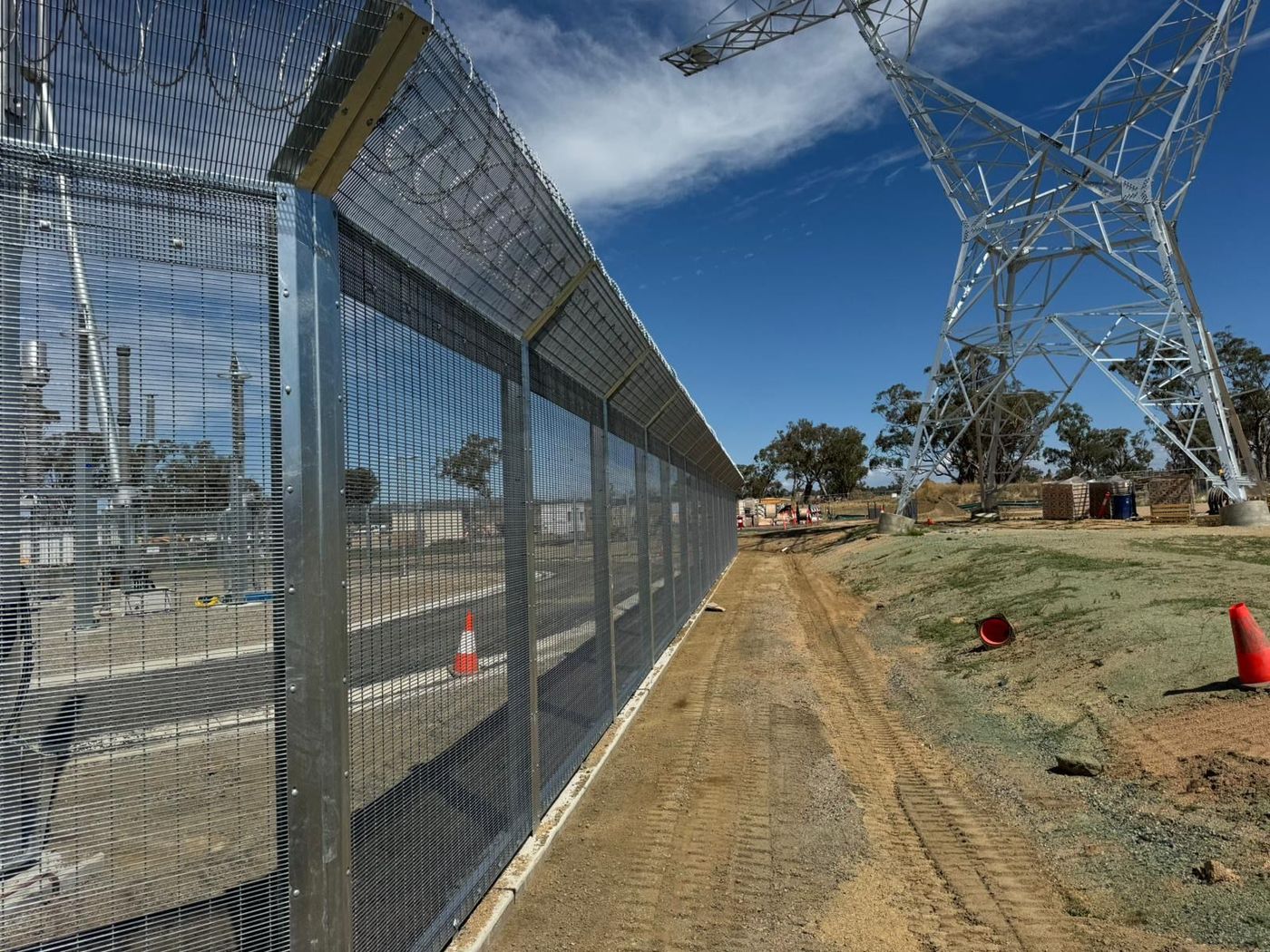
If security is the top priority, palisade is the go-to. It costs more, but it also blocks climbing and cutting. The table shows a per-metre cost of $250-$400+, the highest of the group.
If you need a mix of looks and strength, ornamental steel hits the sweet spot. It sits at $150-$350 per metre and still offers a strong barrier.
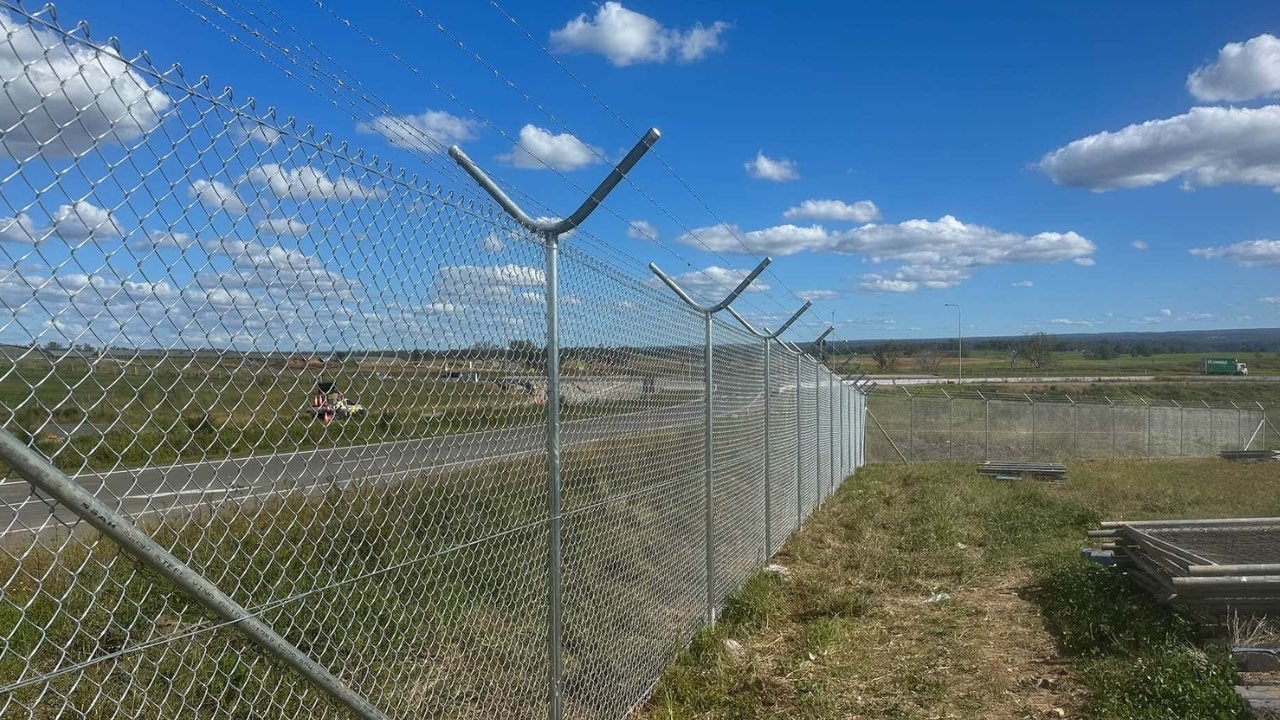
When money is tight, standard chain-link delivers the lowest per-metre price at $50-$100. The gate cost stays in the same range as pricier options, so you still get a functional entry point.
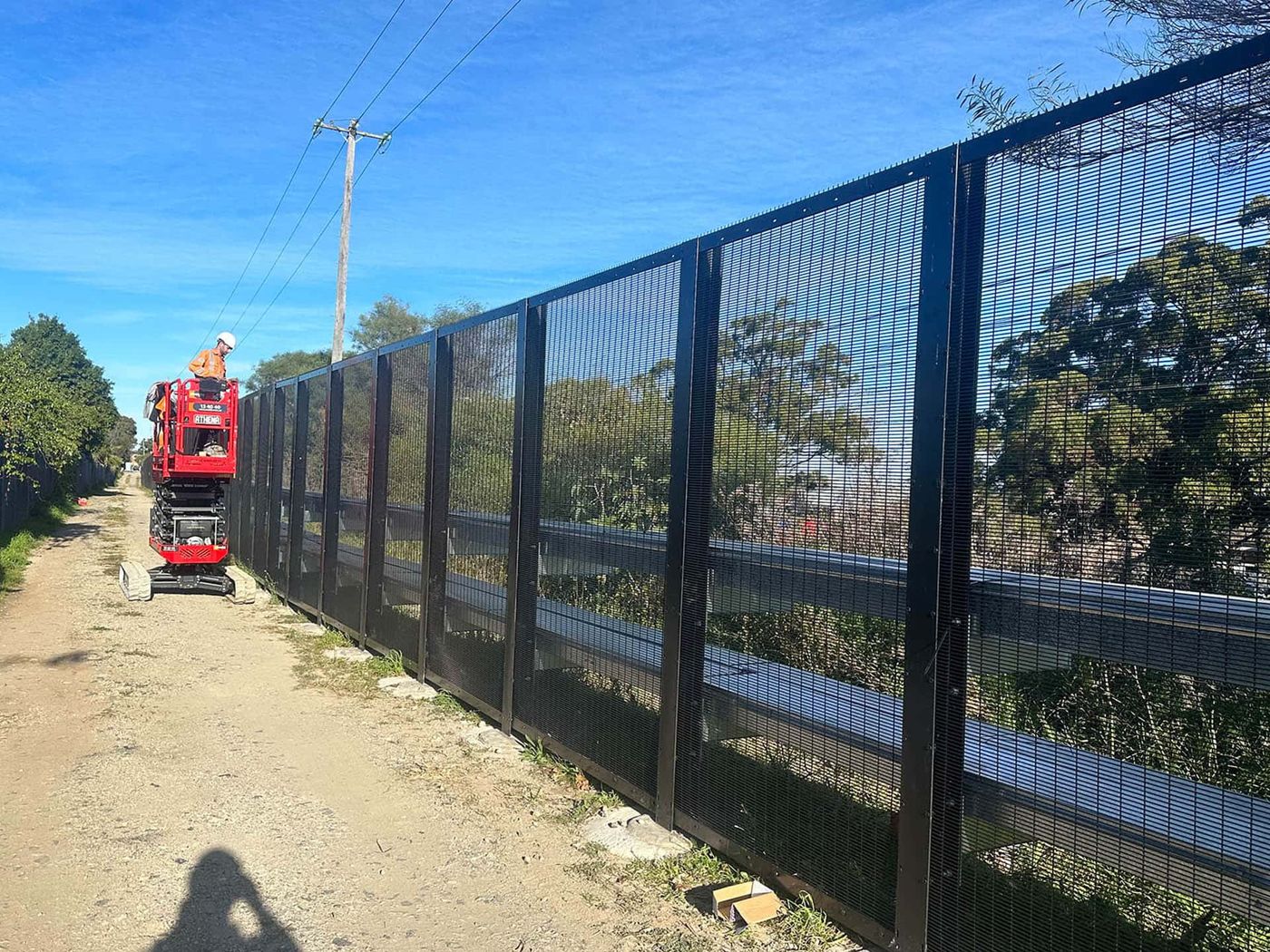
Welded mesh fits the mid-range niche. At $100-$200 per metre, it gives a rigid grid that’s harder to cut than plain chain-link.
Don’t forget the cyclone chain-link option. Its per-metre price is $75-$150, but the gate cost ranges from $300-$1,500, which can bite into a tight budget.
Here’s a simple decision table to help you match budget to fence type:
| Budget per metre | Best fence type | Key pros | Key cons |
|---|---|---|---|
| Under $100 | Standard chain-link | Cheap, easy to install | Low visual appeal |
| $100-$200 | Welded mesh | Strong, harder to cut | More labour |
| $200-$350 | Ornamental steel | Looks good, solid | Higher material cost |
| Above $350 | Palisade | Maximum security | Premium price |
Pick the type that meets your security goals first, then fit the gate to your budget.
For an easy-to-read cost comparison, read Aluminum Fences Direct’s guide. It breaks down wood, steel, vinyl, and aluminium costs in plain language.
To see how aluminium stacks up against steel for security, check Everfence’s 2026 comparison. LS Fencing’s high-security fencing page offers real-world examples of palisade projects.
Step-by-Step Cost Estimation Process
Getting a realistic budget means following a clear process. Skip a step and you’ll end up with surprise invoices.
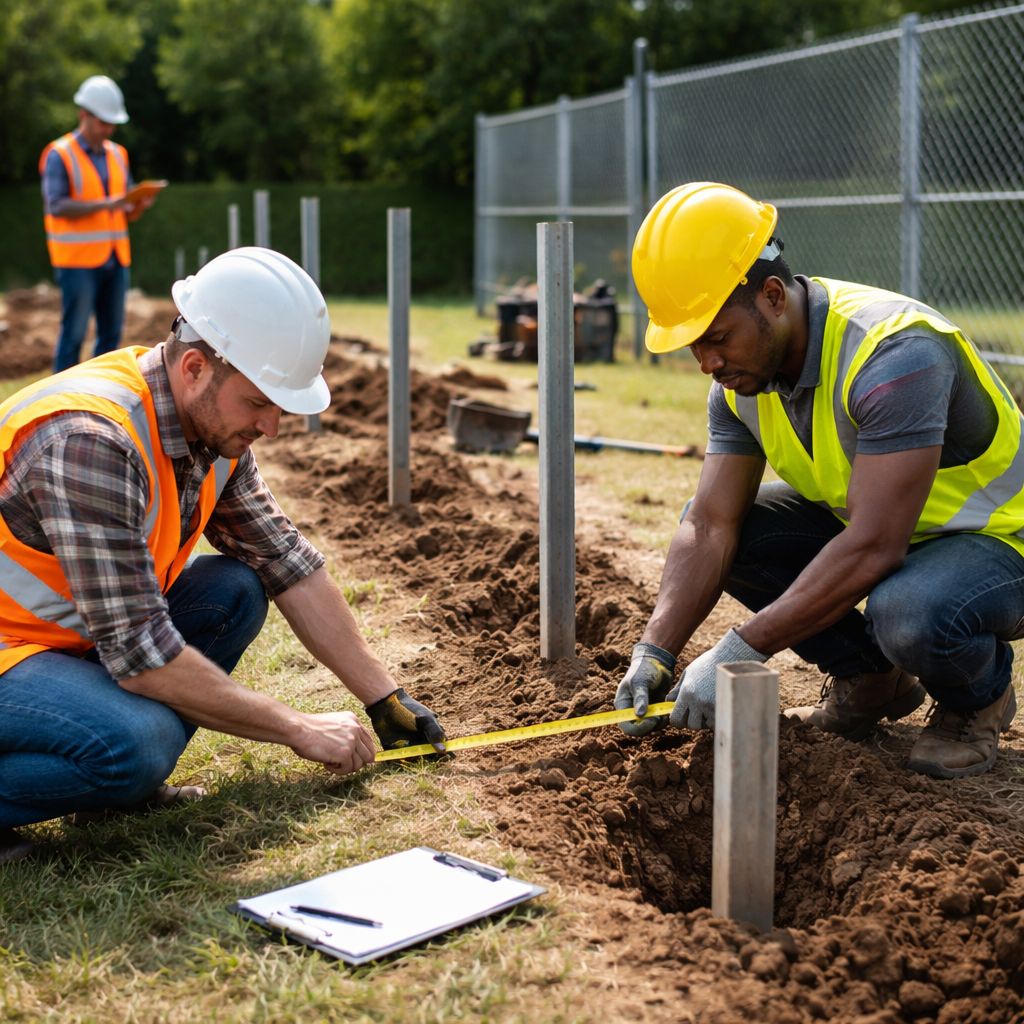
Step 1: Measure the perimeter. Walk the site with a tape and note every corner. Write the total length in metres.
Step 2: Choose fence height. For most commercial sites, 2 m is the norm. Add extra metres if you need 2.4 m.
Step 3: Pick a material. Use the table in the previous section to match your budget.
Step 4: Calculate material cost. Multiply the per-metre range by your total length. Use the low end for a tight budget, the high end for a comfortable buffer.
Step 5: Add post and footing costs. Most projects need a post every 2.5 m. That’s roughly 0.4 posts per metre. Multiply by $80-$120 per post, plus concrete footings at $25 per footing.
Step 6: Estimate labour. Multiply total metres by an average install rate of $10-$15 per metre. Add a 10% contingency for site challenges.
Step 7: Factor in gates. Decide how many gates you need, usually 1 or 2 for a commercial site. Use the gate cost range from the research table ($300-$1,500) and add any automation fees ($2,500-$10,000).
Step 8: Add permits and inspection fees. In Sydney, a security fence permit can run $200-$500.
Step 9: Sum everything. The result is your ballpark security fence installation cost.
Here’s a quick example:
- Perimeter: 200 m
- Material: welded mesh at $150 per m → $30,000
- Posts: 0.4 × 200 = 80 posts × $100 = $8,000
- Labour: 200 m × $12 = $2,400
- Gate: 1 gate at $1,000 + automation $3,000 = $4,000
- Permits: $350
- Total ≈ $44,750
That figure gives you a solid starting point before you ask for quotes.
To see how lighting adds to the cost, read Cast Lighting’s cost guide. And for a look at site-specific pricing, check Everfence’s Orlando study.
How to Reduce Installation Expenses Without Compromising Safety
You can shave off dollars while still getting a strong barrier. The trick is to focus on the parts that cost the most and look for smarter ways to do them.
Use the right post method
Concrete footings give the best hold, but they cost time and cement. If your soil is firm, you can drive T-posts straight into the ground. That saves $0.5-$1 per post.
Betafence’s guide shows six methods. The easiest is to compact soil in layers around the post. It’s cheap and works for light fences.
Choose galvanized steel posts
Galvanised posts resist rust, so you avoid future replacement. They cost a bit more up-front, about $15 extra per post, but save on maintenance.
Plan gate location early
Moving a gate after the fence is up means extra digging and re-aligning panels. Sketch the gate spot on your site plan before any ground work starts.
Do part of the work yourself
If you have a small crew, you can handle the post digging. LS Fencing notes that a DIY post dig can cut labour by 30%.
Buy in bulk
Many suppliers offer a discount if you order panels, posts, and fasteners together. Ask for a bulk price before you sign a contract.
Here are three actionable tips:
- Ask for a concrete-free quote. See if T-posts are allowed for your site.
- Group gates together. Two gates on the same line share wiring and automation costs.
- Schedule work in dry months. Less rain means faster concrete cure and fewer delays.
For more post-installation tricks, read Betafence’s six proven methods. And revisit the lighting cost guide for ideas on cheaper LED perimeter lights: Cast Lighting article.
Getting Accurate Quotes and What to Expect in Your Contract
When you ask for a quote, you want numbers that match reality. A good quote breaks down every cost line.
First, ask for a material list. It should name fence type, post size, coating, and any extra accessories like razor wire.
Second, look for labour details. The quote should state crew size, hourly rate, and total hours expected.
Third, gate and automation costs must be separate. That way you can compare gate options without re-doing the whole fence.
Fourth, check the payment schedule. Most installers ask for a deposit, then a progress payment when half the line is up, and the final payment after inspection.
Fifth, read the warranty. High-security fences often come with a 5-year steel coating guarantee and a 2-year labour warranty.
Sixth, verify compliance. In Sydney, a security fence needs to meet AS 1926.1. The FulcrumApp checklist can help you confirm that the contractor is covering all safety bases.
Here’s a short checklist you can hand to any contractor:
- Itemised material costs
- Labour rates and total hours
- Gate and automation breakdown
- Payment milestones
- Warranty terms
- Compliance with local codes
Ask the contractor to sign off on each item. That reduces the chance of hidden fees later.
For a deeper look at inspection standards, see FulcrumApp’s inspection checklist. Also, compare how different firms write contracts by reading another FulcrumApp guide.

Conclusion
Understanding the factors that drive security fence installation cost lets you plan a budget that works. Material, height, labour, gates, and automation all add up, but gates often take the biggest bite. By using the step-by-step estimate, you can see where the numbers land before you sign anything.
Choosing the right fence type, whether it’s budget-friendly chain-link or high-security palisade, depends on your security goals and cash flow. The decision table and quick-verdict box give you a fast way to compare options.
Saving money is possible. Use the post-installation tips, bulk buying tricks, and early gate planning to keep the total lower without giving up safety.
Finally, demand a clear, itemised quote and a contract that spells out warranty and compliance. That protects you from surprise costs and ensures the fence does its job for years to come.
If you’re ready to start, reach out to a trusted installer like LS Fencing. Their expertise in high-security projects can guide you from design to handover.
FAQ
What is the average security fence installation cost per metre in Sydney?
The average ranges from $50 for basic chain-link up to $400+ for premium palisade. Most commercial projects fall between $150 and $250 per metre when you include posts and basic labour.
How much does a motorised gate add to the total cost?
A motorised gate starts at about $2,500 and can rise to $10,000 depending on size and automation features. That means you should expect the gate to add roughly 20-40% to the overall security fence installation cost.
Can I install a security fence myself to save money?
You can handle the post digging and basic panel placement if you have the right tools. Doing the labour yourself can cut the install cost by 30-40%, but you still need a professional to set the gates and ensure compliance.
Do I need a permit for a security fence in NSW?
Yes, most local councils require a permit for a fence over 1.8 m high or for fences on commercial sites. Permit fees range from $200 to $500 and should be included in your budget.
What maintenance costs should I expect after installation?
Maintenance depends on material. Chain-link may need rust-proofing every few years, while steel or palisade often just need a coat of paint or powder coating touch-up. Budget about $200-$500 per year for inspections and minor repairs.
How do I compare quotes from different fence installers?
Look for itemised breakdowns, check that gate and automation costs are listed separately, and verify that each quote includes post, footing, and compliance fees. The lowest total isn’t always best if it skips warranty or proper footing.
Is razor wire required for high security?
Razor wire adds a visual deterrent and can increase security, but it’s optional. If you add it, expect an extra $10-$20 per metre. Make sure the fence design can support the extra load.
What role does lighting play in fence security?
Good lighting improves camera footage and deters trespassers. A basic LED perimeter light system can add $5-$10 per metre. More advanced systems with motion sensors can cost $15-$25 per metre.
Specifying or pricing a perimeter?
Send the drawings or a brief and LS Fencing Services will come back with a detailed proposal.