A commercial fence can mark a boundary, or it can delay an intruder and support a full security plan. The right choice depends on the site, threat level, access needs and compliance brief. This guide explains how security fencing for commercial sites works across Sydney warehouses, government facilities, schools, infrastructure sites and industrial yards.
A commercial fence can mark a boundary, or it can delay an intruder and support a full security plan. The right choice depends on the site, threat level, access needs and compliance brief. This guide explains how security fencing for commercial sites works across Sydney warehouses, government facilities, schools, infrastructure sites and industrial yards.
Choosing a Commercial Fence Type for the Site and Threat Level
Security fencing for commercial sites should begin with a site risk review, not a product catalogue. A warehouse with vehicle traffic has different needs from a substation, school campus or office frontage.
Height is an early decision. Commercial security fences are often specified between 1.8 and 3.6 metres, or roughly 6 to 12 feet, depending on the threat and project brief. A taller fence can deter climbing, but height alone won’t fix weak mesh, poor footings or an unprotected gate.
LS Fencing works with commercial property developers, government project managers and tier 1 builders to match the fence system to the site. Its commercial security fencing and installation service covers high-security mesh, palisade systems, gates and perimeter controls across Sydney and NSW.
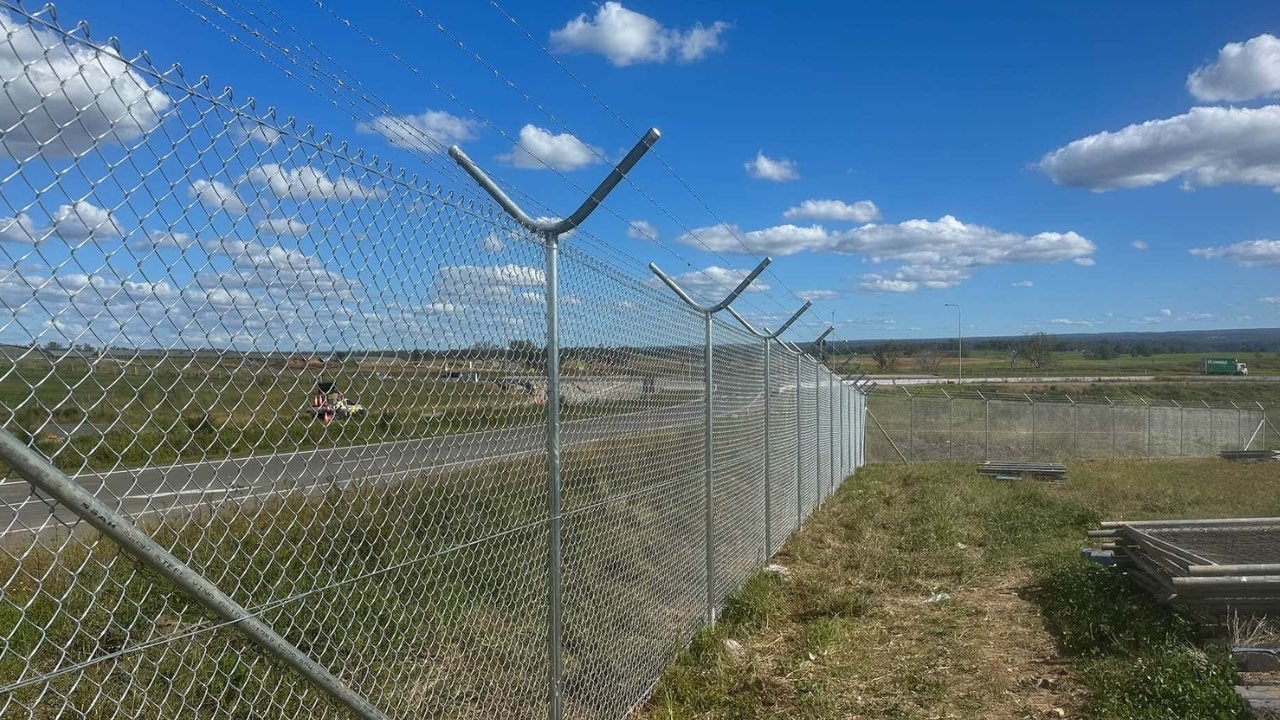
Chain wire remains useful on large industrial sites because it supports clear sightlines for patrols and perimeter monitoring. Barbed wire or razor wire can add a further deterrent where the security assessment allows it. For a higher threat, 358 mesh or palisade is usually a better starting point.
Budget planning should include more than the panel or fabric. Allow for ground conditions, post footings, traffic control, gate automation, power, drainage and future access changes. A low initial quote can become expensive if the gate line needs to be rebuilt later.
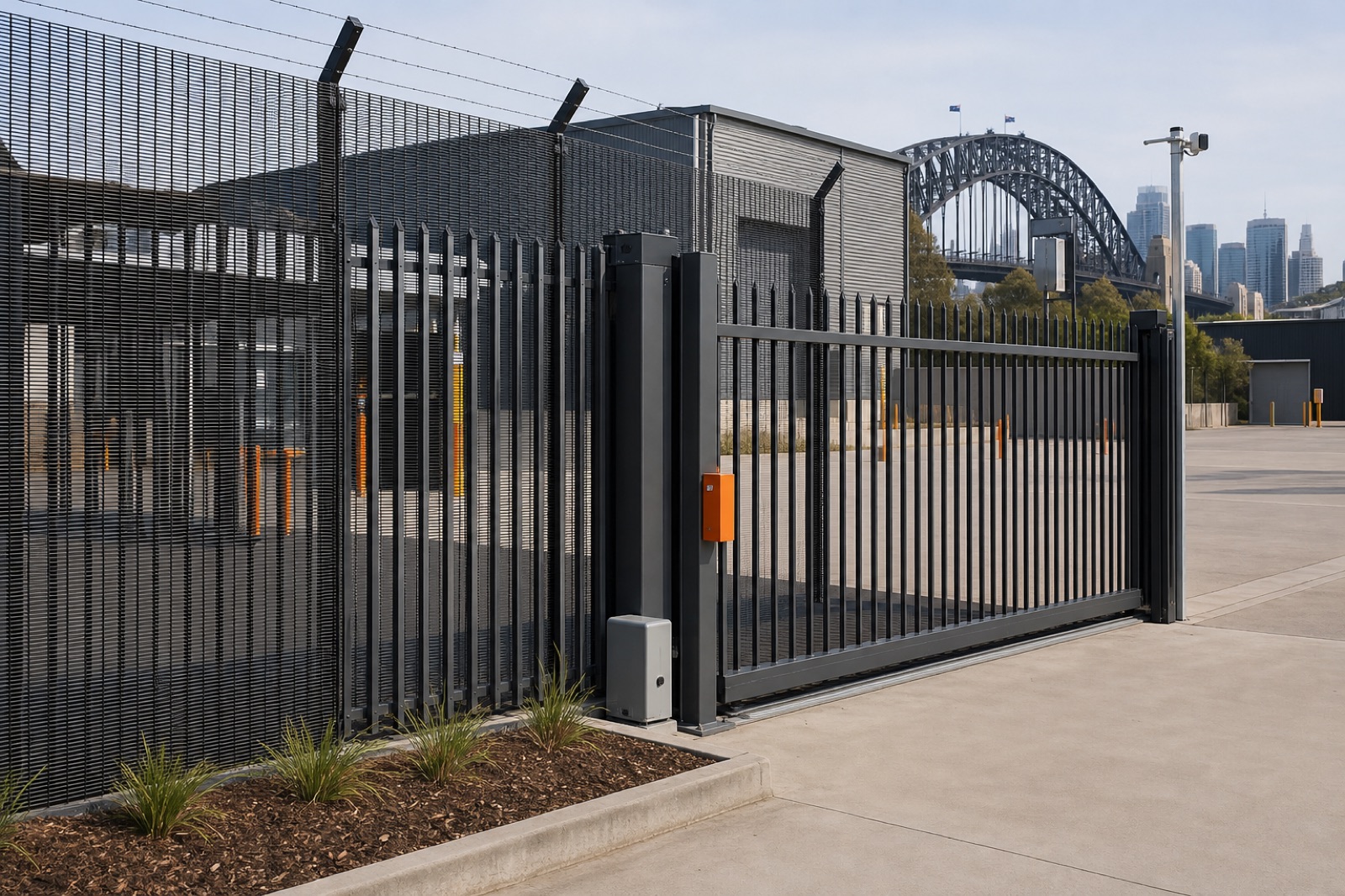
Anti-Climb Design, Materials and Corrosion Resistance
Anti-climb design gives security fencing for commercial sites its delay function. The aim is to remove easy handholds, reduce cutting points and make the top of the fence harder to reach.
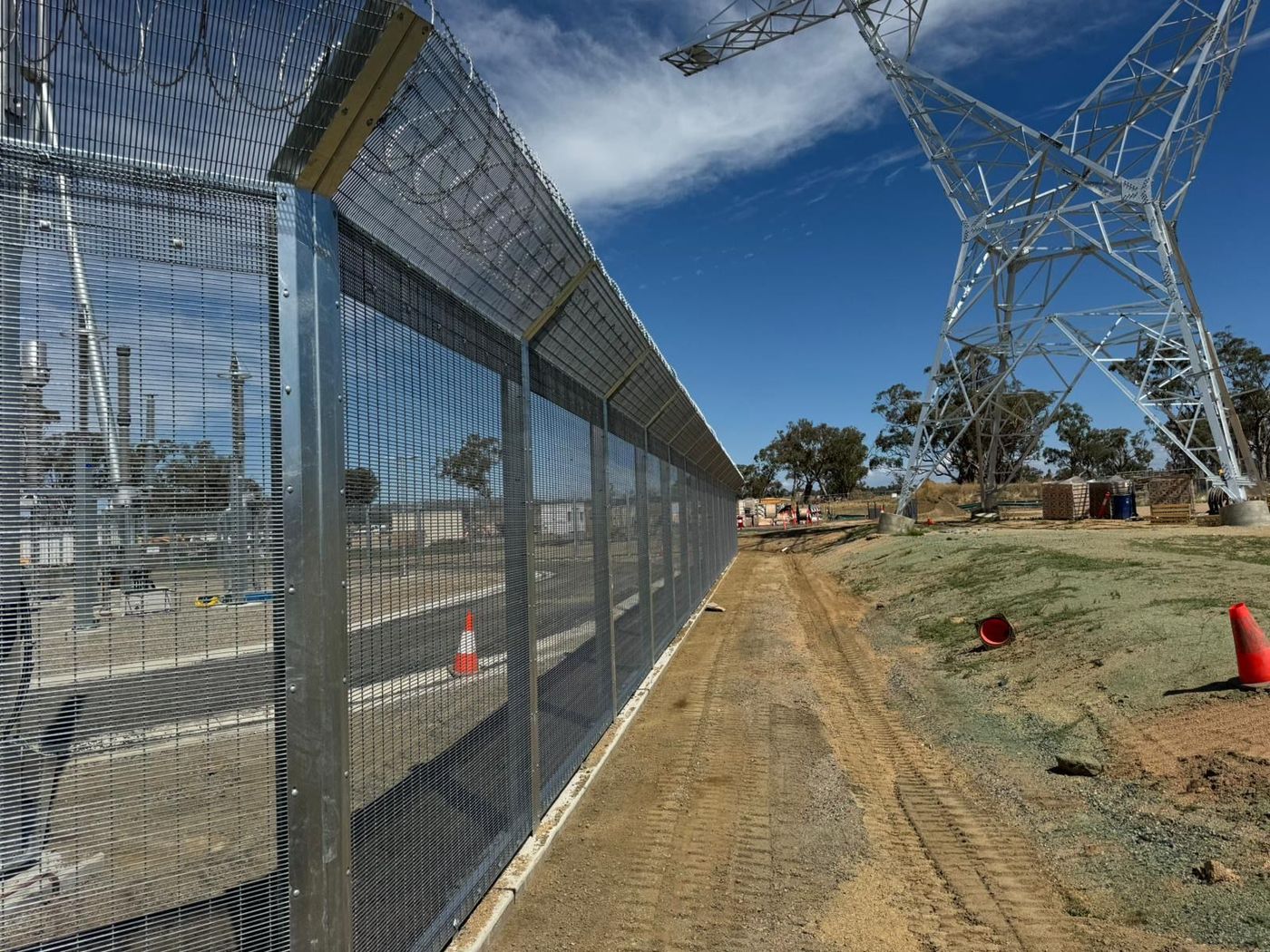
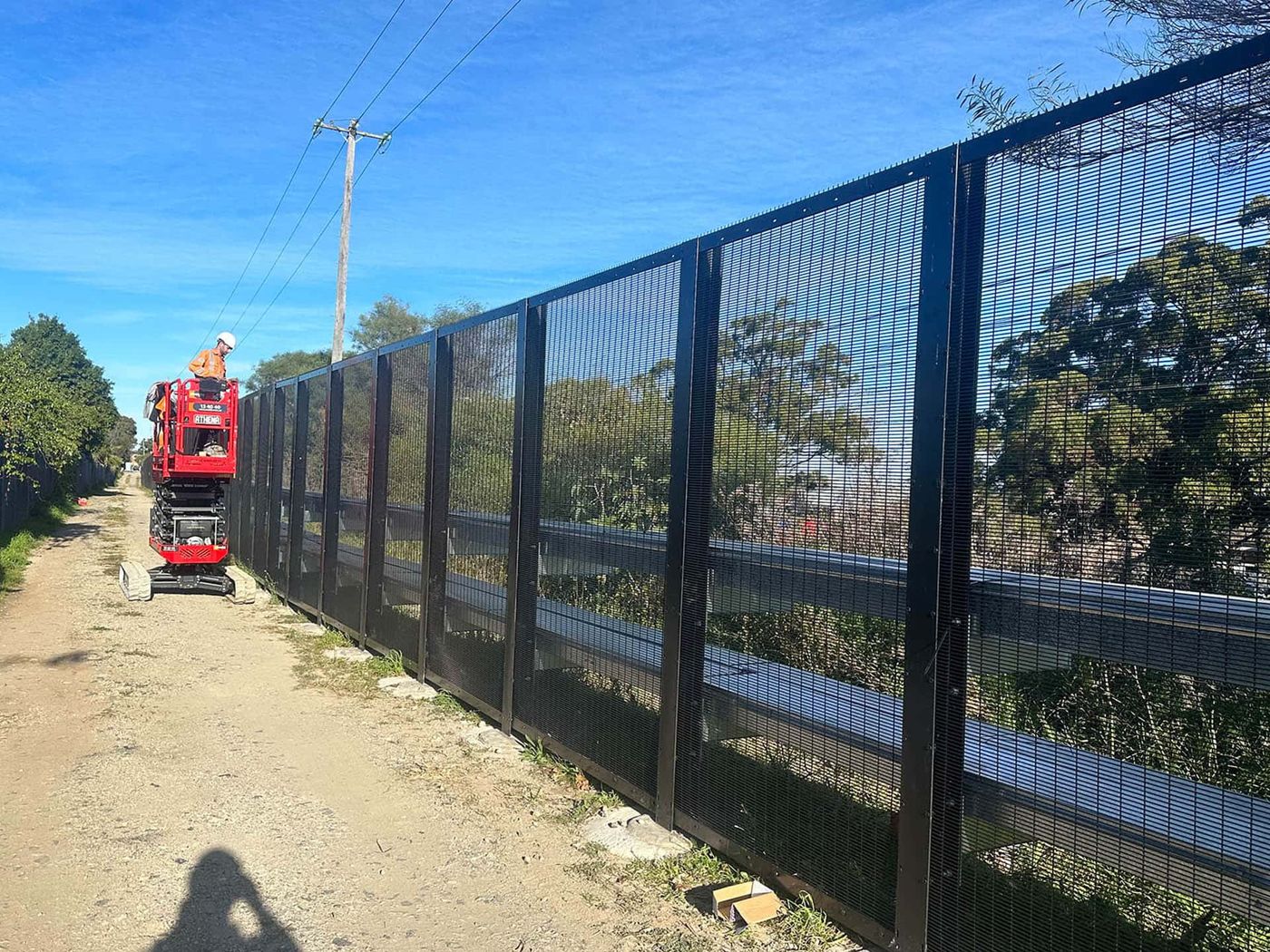
358 mesh is widely used for high-security work because its small aperture leaves little room for fingers or toes. A typical configuration uses narrow rectangular openings with structural posts and rails. The exact wire diameter, panel size and fixing method must come from the project specification.
Palisade fencing takes a different approach. Its vertical steel pales create a strong, visible barrier. Pointed or shaped tops can increase deterrence, while the open design keeps the fence line visible to site monitoring and patrol staff. Horizontal rails on the inside need review because poorly placed rails can become climbing aids.
Top treatments may include pointed tops, crimp tops, barbed wire or razor wire. These are supplemental controls. They don’t replace sound posts, secure foundations or a properly designed gate. Razor wire also needs careful handling, warning signs and approval under the project and local requirements.
Material choice must reflect the site environment. A suitable corrosion-resistant finish can help protect steel and is commonly considered for exposed industrial or coastal locations. A suitable protective finish can add colour and a finished appearance, but damaged areas still need prompt repair.
Coastal air, standing water, fertiliser, cleaning chemicals and cut edges can speed corrosion. Inspect welded joints, bolt heads, panel ends and the base of posts first. These areas often show damage before the main face of the fence does.
Specifications should name the coating, finish, wire diameter, aperture and corrosion protection. “Heavy duty” is too vague for a tender or handover file. The applicable standard should be confirmed with the project consultant and approval authority rather than guessed.
LS Fencing can tailor 358 anti-climb mesh, palisade and welded mesh systems around the threat profile, ground conditions and required finish. That level of customisation matters on a perimeter with slopes, drainage crossings or several gate types.
Integrating Gates, Access Control and Perimeter Technology
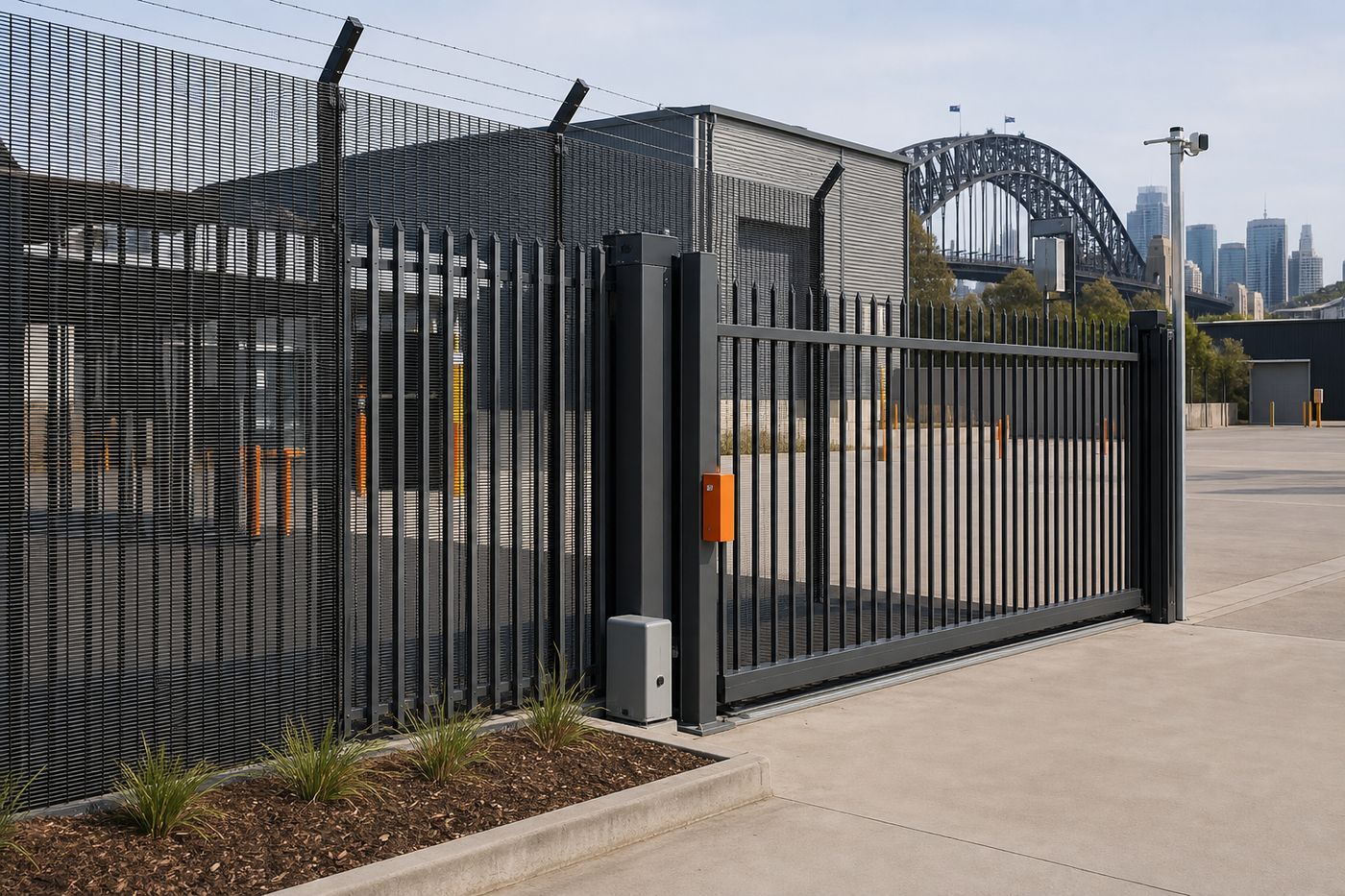
A fence is only as controlled as its opening. For security fencing for commercial sites, the gate must match the fence rating and the daily movement plan.
Start with the site layout. A gate that travels along the fence line needs room to move. A gate that opens across the approach needs clear arcs and a suitable surface. A steep driveway may affect the choice. High traffic requires equipment rated for the expected duty cycle, while a low-use emergency gate may need a different arrangement.
Access control can include card readers, keypads, intercoms or other approved credentials. The system should separate staff, contractors, visitors and fleet access where the site needs that level of control. It should also record entry events when audit evidence is required.
Gate automation needs a safe operating plan. The design should cover emergency release, power loss, vehicle detection and safe pedestrian movement. A gate that fails closed during an emergency can create a serious operational problem. A gate that fails open can weaken the whole perimeter.
Technology should support the physical barrier. Site monitoring equipment needs a clear view of the fence line. Site lighting should expose dark approaches without creating glare that affects monitoring equipment. Motion sensors can trigger lights or alarms, but the alarm response must be assigned to a person or monitoring process.
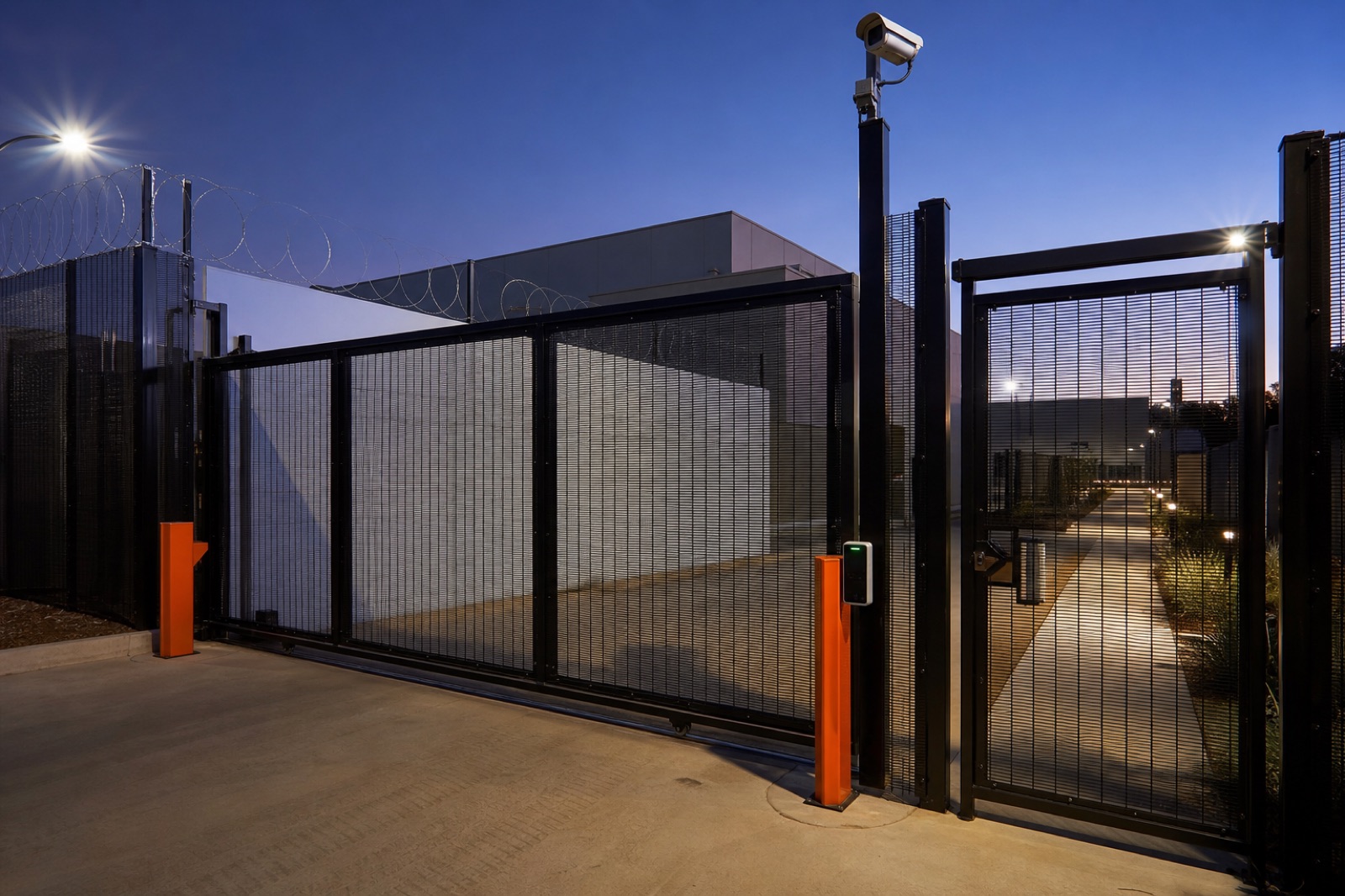
For critical infrastructure, the design may also include bollards or other vehicle mitigation near the gatehouse and approach road. The correct measure depends on the vehicle threat, road geometry and security brief.
LS Fencing supplies automated and access-controlled gates as part of a wider perimeter package. Using one accountable contractor can reduce disputes between the fence installer, gate supplier, electrician and access-control integrator. The project still needs clear interface drawings and sign-off points.
Planning Compliance, Maintenance and Lifecycle Value
Compliance planning should begin before procurement. Security fencing for commercial sites may need council approval, project-specific conditions, access permits, utility checks or requirements from a road and transport authority.
Confirm the required fence height, boundary position, footing design, finish and gate configuration in the tender documents. Check underground services before excavation. The fence line may cross easements, drainage paths or protected assets that affect the installation method.
Keep a project file with material certificates, approved drawings, inspection and test plans, safe work documents, gate commissioning records and as-built information. Government and infrastructure clients often need this evidence at handover. It also helps a facilities team prove that later repairs match the approved system.
Maintenance should be scheduled, recorded and linked to risk. A general commercial site should receive a full perimeter inspection at least twice each year. High-security sites may need quarterly checks, plus an inspection after severe weather, impact or a security incident.
- Walk the full fence line and check for leaning posts or displaced panels.
- Look for rust at welds, cut edges, bolts and post bases.
- Check gaps beneath the fence and remove stored materials that create footholds.
- Test every gate, latch, hinge and automated cycle.
- Confirm cameras, sensors, lighting and warning signs remain usable.
- Photograph defects and assign a due date for each repair.
The cost of ownership includes inspections, coating repairs, vegetation control, motor servicing and replacement parts. A fence that lasts longer but blocks camera views can still create extra security costs. A lower-cost fence that needs frequent repairs may also cause access delays and repeated site disruption.
Lifecycle value comes from matching the barrier to the threat and documenting the decision. For a warehouse, that may mean visible chain wire with controlled gates. For a substation or government site, it may mean 358 mesh, anti-climb topping, clear zones, security cameras and vehicle protection.
Standards and project specifications should be checked with the responsible designer or certifier. A fencing contractor can provide installation evidence, but the client remains responsible for confirming that the complete site solution meets its approval conditions.
Commercial Security Fencing FAQ
What is the best fence for a commercial property?
The best fence depends on the threat, site use and compliance brief. Chain wire suits large areas where visibility and access control matter. 358 anti-climb mesh suits higher-risk boundaries. Palisade fencing suits sites that need rigid steel construction with a clear sightline. A risk review should set the height, material and gate standard.
How high should security fencing be?
Commercial security fencing is often between 1.8 and 3.6 metres high. The right height depends on the site risk, local approvals, surrounding structures and project specification. A taller fence can deter climbing, but it still needs anti-climb design, secure footings and a gate that doesn’t become the weak point.
Is 358 mesh suitable for high-security sites?
358 mesh is commonly selected for high-security sites because its tight aperture makes climbing and cutting harder. The full system still matters. Posts, rails, fixings, foundations, fence height and topping must match the threat assessment. The required wire size and coating should appear in the approved specification.
How often should a commercial security fence be inspected?
A commercial perimeter should usually receive a formal inspection twice a year, with another check after severe weather or an impact. High-security and government sites may require quarterly inspections. Each inspection should cover posts, mesh, gaps, gates, access control, site visibility, monitoring equipment, vegetation and the repair record.
Can security fencing include automated gates?
Yes, security fencing can include automated gates with card readers, keypads, intercoms and related access controls. Gate type should follow the driveway, traffic volume, available space and security level. The design also needs emergency release, power-loss operation, safe pedestrian movement and a clear process for managing credentials.
Conclusion
For a Sydney commercial, government or infrastructure site, the strongest approach is a tailored perimeter system rather than a standard fence line. Engage a contractor that can manage the fence, gates, technology, compliance records and programme as one package. LS Fencing can assess the site and prepare a specification-led solution for the project team’s next design or procurement stage.
Specifying or pricing a perimeter?
Send the drawings or a brief and LS Fencing Services will come back with a detailed proposal.