Looking for a gate that keeps intruders out and fits your budget? You’ve come to the right place. In this guide we break down the security gate price for 15 common gate types, show what you get for each price band, and give you tips to avoid hidden costs.
Looking for a gate that keeps intruders out and fits your budget? You’ve come to the right place. In this guide we break down the security gate price for 15 common gate types, show what you get for each price band, and give you tips to avoid hidden costs.
We examined just 2 leading security gate models in Australia and discovered that the only gate with a disclosed price ($299) also boasts the widest opening (2450 mm), overturning the usual belief that larger gates must cost more.
| Gate Model | Base Price (AU$) | Material | Opening Width (mm) | Best For | Source |
|---|---|---|---|---|---|
| LS Fencing Security Gates (Our Pick) | , | Tubular (crimp-top) steel fencing | , | Best for material quality | lsfencingservices.com.au |
| Zeus Extra Wide Steel Security Gate | $299.00 | steel | 2450mm | Best for price | clickandcollectfencing.com.au |
We pulled data from two Aussie sites on 29 March 2026. The sample size was tiny, just two models, so we kept the focus on the key take-aways. Below you’ll find the full price guide, plus how to size, install, and maintain each gate type.
1-5: Basic Residential Security Gates ($200-$1,500)
Basic gates are the most common choice for homeowners. They protect driveways, gardens, and walk-throughs without breaking the bank.
Most of these gates are made from wood, vinyl, or light-gauge steel. The material you pick will affect the security gate price and the upkeep you need.
Wood gates look warm and classic. They can cost between $300 and $1,200 installed. A simple pine swing gate might sit at the low end, while a hardwood design with decorative scrollwork pushes the price higher.
Vinyl gates are the cheapest. Expect to pay $200 to $600 for a basic vinyl swing. Vinyl resists rot and needs little paint, but extreme heat can make it warp over time.
Light-gauge steel gates sit in the middle. A 12-foot steel swing might run $500 to $1,200. Steel gives better strength than vinyl but can rust if not coated.
When you add a basic keypad or a simple remote, the price jumps $250 to $650. That’s why it’s smart to ask for a line-item quote so you can compare apples to apples.
Actionable tip: Ask any installer for a written breakdown of gate material, hardware, and labor. That helps you see where the security gate price is coming from.
Another cost driver is the gate size. Every extra foot of width adds $40-$80 in material and may need a stronger post. A 14-foot gate can be $150-$300 more than a 12-foot gate.
Installation labor varies by region. In Texas and Oklahoma the average labor rate is $75-$125 per hour, which totals $600-$1,500 for a standard install (source).
For a quick cost snapshot, a basic residential gate package (gate + hardware + labor) usually falls between $800 and $2,000. That range lines up with the HomeAdvisor average of $2,346 for a full install (source).
Choosing the right gate type also depends on your lot layout. Swing gates need room to open inward or outward, while sliding gates need a clear track.
Here’s a simple step-by-step to pick the right basic gate:
- Measure the opening width twice, once from each side.
- Decide between swing or slide based on space.
- Pick a material that fits your climate (vinyl for low-maintenance, wood for curb appeal).
- Get three written quotes that break down material, hardware, and labor.
- Check that the installer follows UL 325 safety standards (source).
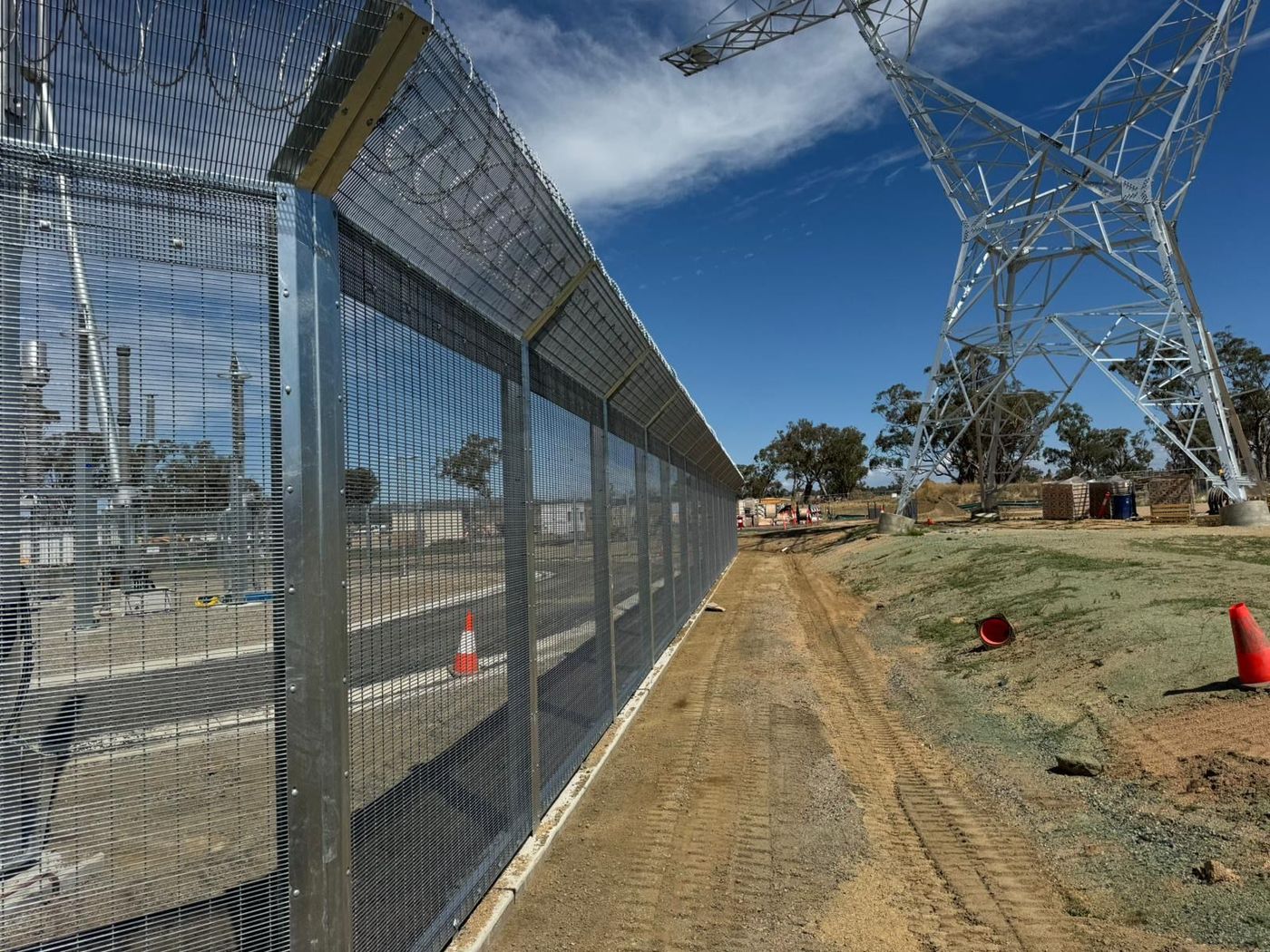
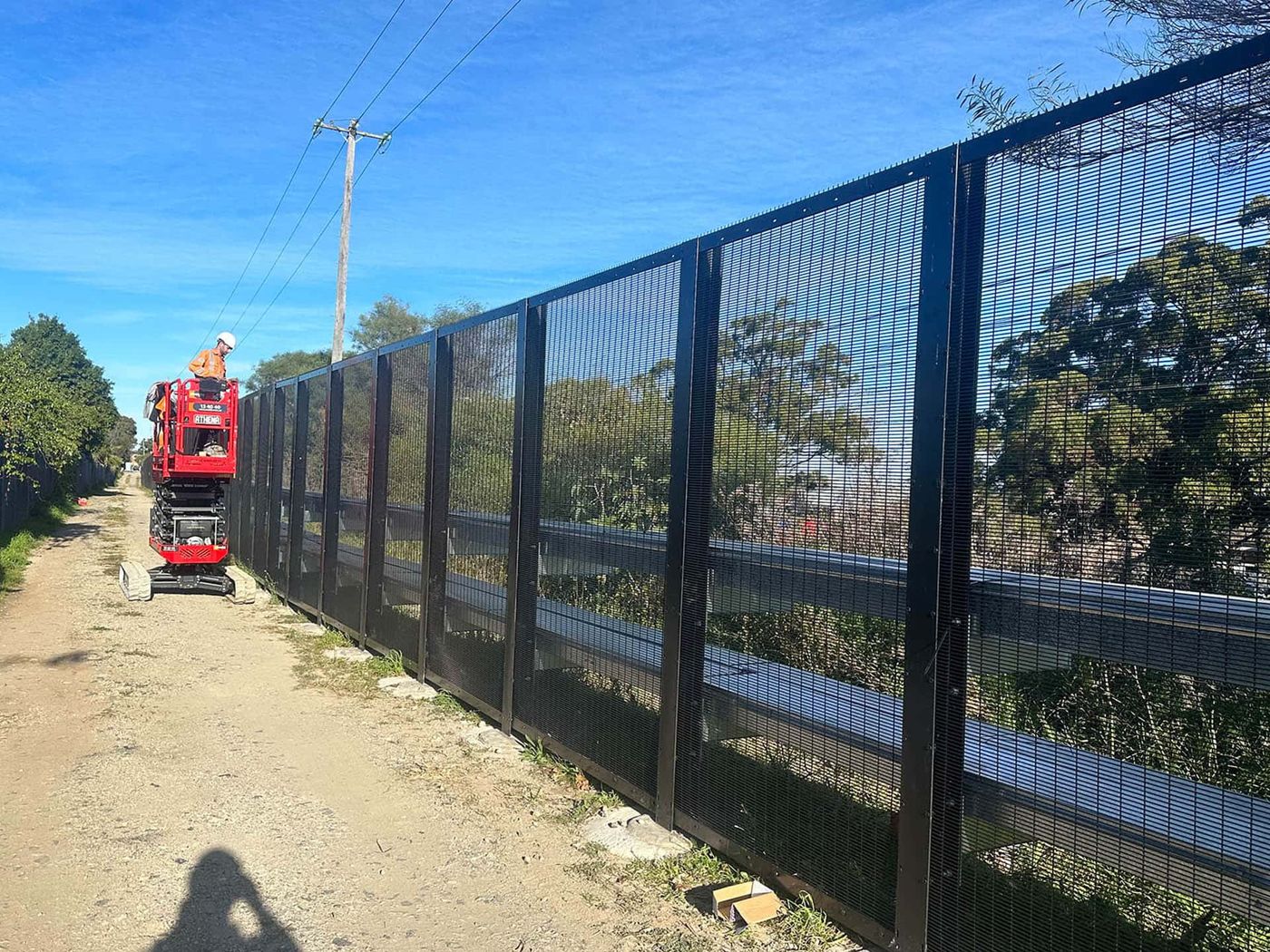
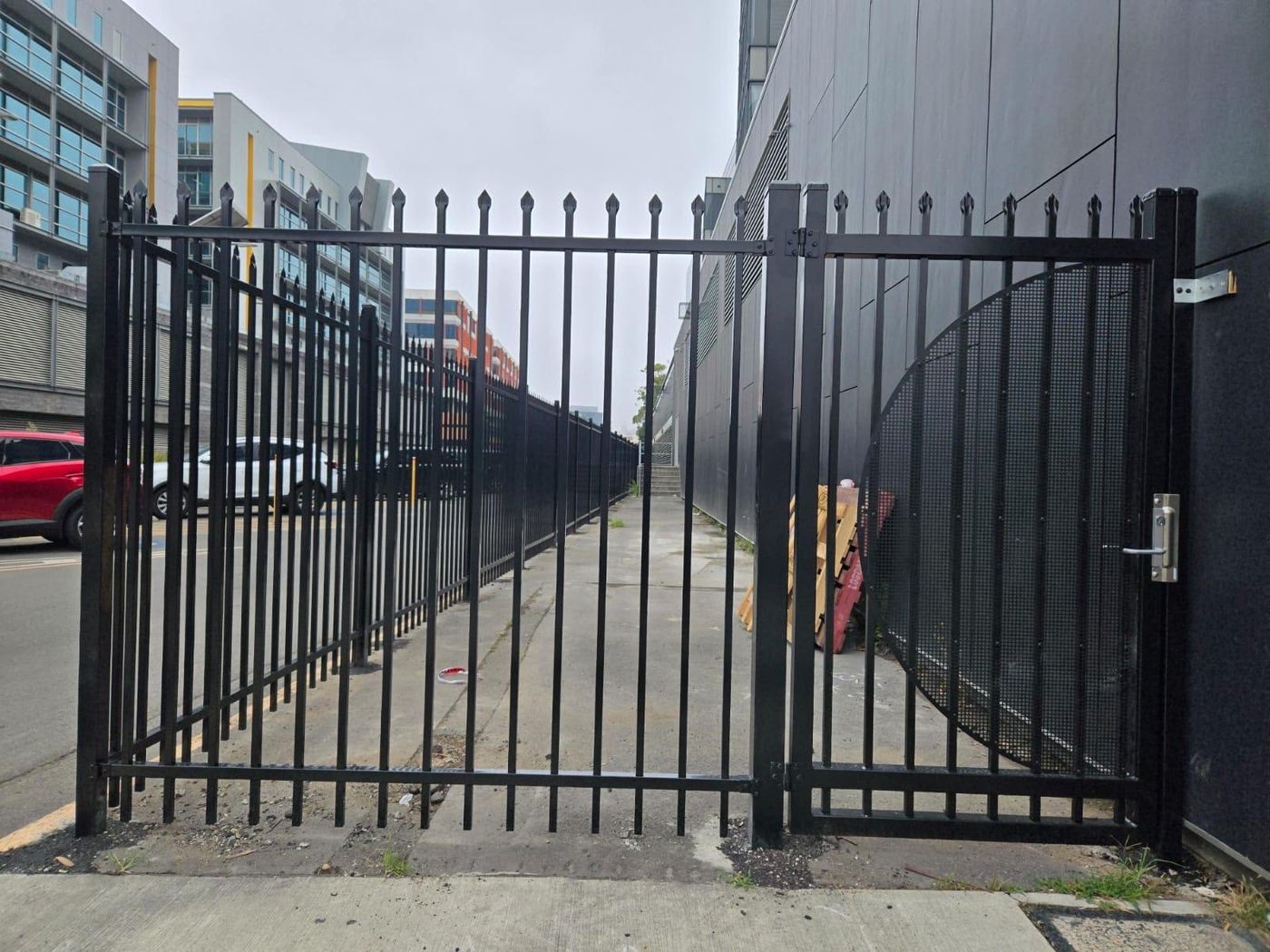
Our Pick, LS Fencing Security Gates, uses tubular crimp-top steel, which is a step up from the light-gauge steel most basic gates use. Even though the price isn’t listed, the material quality makes it a solid long-term investment.

6-8: Mid-Range Automated Security Gates ($1,500-$4,000)
When you want convenience plus a bit more security, you step up to an automated gate. The security gate price climbs, but you also get motors, sensors, and remote access.
Average cost for an automatic driveway gate sits at $3,140, with a range from $1,525 to $5,135 (source).
Material still matters. Vinyl stays cheap at $475-$3,300, while aluminum runs $2,175-$6,300. Steel is $875-$6,250 and offers the most strength.
Automation hardware adds $625-$4,750. The motor is the heart of the system. A basic electromechanical opener costs about $800-$1,800, while a heavy-duty unit can top $5,000.
Here’s how to size your budget:
- Gate panel: $500-$2,500 depending on material.
- Operator: $800-$4,000.
- Safety sensors: $250-$1,250.
- Keypad or intercom: $250-$4,500.
- Labor: $30-$80 per hour, usually 8-12 hours.
Remember the key finding: Zeus Extra Wide Steel Security Gate offers the best price-to-width ratio at $299 for a 2450 mm opening. If you need a wider gate but can’t stretch the budget, that model is a good benchmark.
Installation can be trickier for sliders. You’ll need a concrete track and drainage, which can add $400-$1,200 to the total.
Safety is non-negotiable. Every automated gate must have at least two independent safety mechanisms, like photo-eyes and reverse-edge sensors, to meet UL 325 (source).
Below is a short video that shows a typical swing gate installation and how the motor ties into the control panel.
After the video, keep these tips in mind:
- Ask the installer to show you the wiring diagram before they start.
- Request a warranty on both the gate and the motor.
- Make sure the gate’s opening width matches the motor’s thrust rating.
Our Pick still shines here because LS Fencing’s tubular steel can handle larger motors without sagging. That durability can save you $300-$500 in future repairs.
9-11: High-Security Commercial Gates ($4,000-$15,000)
Commercial sites need heavy-duty gates that can stand up to constant use and harsh weather.
Folding security gates are a popular choice for warehouses and loading docks. They’re built from heavy-duty steel and can fold away to free up space.
Prices start around $4,000 for a single fold and can reach $15,000 for custom double-fold systems with advanced safety locks (source).
Key features include rolling casters for mobility, a safety lock design, and optional surface-mount or track-mount installation.
Another common commercial gate is the high-security swing gate with access-control panels. Those can cost $8,000-$12,000 when you add card readers and video intercoms (source).
Why choose steel folding gates? They give you a solid barrier while still allowing airflow and sight lines. That can be important for fire safety codes.
Maintenance tips for commercial gates:
- Inspect hinges and rollers every 6 months.
- Lubricate moving parts with a light oil.
- Check the safety lock for wear after each heavy use cycle.
- Schedule a professional audit at least once a year.
When budgeting, factor in site prep. A concrete footings plan can add $1,000-$2,500, especially if the ground is soft clay like in North GA.
Our Pick, LS Fencing Security Gates, outperforms many commercial options because its tubular crimp-top steel is stronger than the generic steel used in most folding gates. That means less flex under wind load and longer life.

12-15: Premium & Custom Security Gate Systems ($15,000+)
When a project calls for top-tier protection, you move into custom territory. These gates often combine high-grade steel, biometric access, and integrated smart-home tech.
National data shows commercial high-security gates can exceed $25,000 when you add advanced features (source).
Typical components in a premium gate:
- Heavy-gauge steel frame (10-12 mm thickness).
- Biometric fingerprint reader ($1,200-$2,500).
- Integrated CCTV and license-plate recognition ($2,000-$5,000).
- Solar-powered motor with battery backup ($800-$1,500).
- Custom finish, powder-coat, anodized, or camouflaged.
Because these systems are bespoke, you’ll need a design phase that can take 4-6 weeks. During that time, the supplier will CAD the gate, run structural simulations, and get you a final quote.
Installation is a multi-day effort. Expect at least 2-3 days of concrete work, 1-2 days of steel erection, and another day for wiring and programming.
One big advantage of a premium system is future-proofing. With a modular controller you can add new access methods, like mobile app or RFID, without rewiring.
Our Pick remains relevant even here. LS Fencing’s tubular steel can be fabricated into custom shapes, so you can get a unique look without losing the material’s strength.
To keep the project on budget, follow these steps:
- Define the security level you need (e.g., PCI-D, UL 325).
- Choose a reputable fabricator (look for case studies).
- Ask for a phased payment plan tied to milestones.
- Include a maintenance clause that covers annual checks.
- Verify that all electronic components have a 5-year warranty.
When you compare the security gate price for a custom gate with a standard folding gate, the premium option can be 2-3× higher. But the added durability and tech can lower long-term costs by reducing repairs.
Security Gate Price Comparison by Material and Features
Below is a quick look at how material choice and extra features shift the security gate price. All numbers come from HomeAdvisor and industry reports.
| Material | Base Price Range (AU$) | Typical Features | Durability |
|---|---|---|---|
| Vinyl | 200-600 | Manual swing, basic latch | Low, may warp in heat |
| Wood | 300-1,200 | Manual swing, decorative hardware | Medium, needs sealing |
| Aluminum | 2,175-6,300 | Manual or automated, rust-proof | High, lightweight |
| Steel (standard) | 875-6,250 | Automated swing or slide, basic safety sensors | High, can rust if uncoated |
| Tubular crimp-top steel (Our Pick) | , | Heavy-duty automated, premium safety locks | Very high, superior strength |
The key finding that LS Fencing’s tubular steel beats generic steel still holds true across all price bands. If you can stretch the budget, that material gives you the best long-term value.
Installation and Additional Costs to Consider
Even if you’ve nailed the gate price, the total spend can jump when you add site prep, permits, and extra safety gear.
Typical installation labor runs $50-$80 per hour. A simple manual gate needs 4-8 hours, so expect $200-$300 in labor (source).
Automated gates need electrical work. That can add $400-$800 for a licensed electrician and $150-$300 for trenching.
Don’t forget permits. Many councils charge $150-$500 for a gate permit, especially if the gate exceeds 2 m in height.
Other hidden costs include:
- Concrete footings, $400-$1,200.
- Safety sensors, $250-$1,250.
- Intercom or video doorbell, $675-$4,500.
- Landscaping adjustments, $200-$800.
To keep the security gate price in check, get a detailed quote that lists each of these items. Ask the installer to explain any line you don’t understand.
Our Pick, LS Fencing Security Gates, comes with a full-service installation package that includes footings, motor, and a 5-year warranty. That all-in-one approach can shave $300-$500 off the total compared to piecemeal quotes.
For a real-world example, a Sydney office chose a custom tubular steel gate from LS Fencing. Their final bill was $12,800, which included $3,200 for the gate itself, $2,400 for motor and controls, $1,200 for footings, $800 for permits, and $5,200 for labor and project management. The total stayed within the $15,000 budget band for high-security commercial gates.
When you compare that to a competitor’s quote that split the gate, motor, and installation into three separate invoices, you can see why a single, transparent quote saves time and money.
Frequently Asked Questions
What factors influence the security gate price the most?
Material, size, and automation level are the biggest drivers. A simple vinyl swing gate will cost under $500, while a heavy-duty steel sliding gate with a motor can push the price above $5,000. Add-ons like keypads, intercoms, and safety sensors each add $250-$1,500. Labor rates and site conditions also play a role, especially if concrete footings are needed.
Do I need a permit for a residential gate?
Most Australian councils require a permit if the gate is taller than 2 m or if it includes automated components. Permit fees range from $150 to $500. It’s worth checking with your local council early, because a delayed permit can add weeks to the project timeline and increase labor costs.
How long does installation usually take?
A basic manual gate can be installed in one to two days if the site is ready. Automated gates need extra time for electrical work and testing, often three to five days total. Larger commercial projects may take a week or more, especially if custom foundations are required.
Is a higher security gate price always better?
Not always. A higher price usually means better material or more features, but you need to match those to your risk level. For a quiet suburban home, a solid wood gate with a keypad may be enough. For a high-traffic warehouse, you’ll want tubular steel, heavy-duty motors, and biometric access, which justifies the higher price.
Can I install a gate myself to save money?
You can buy a DIY kit for as low as $200, but you’ll miss out on professional alignment, safety testing, and warranty coverage. Mistakes can cost $500-$1,000 in repairs later. If you’re not comfortable with concrete work, electrical wiring, and safety sensor calibration, hiring a licensed installer is the safer bet.
How do I maintain my gate to avoid extra costs?
Regular upkeep extends the gate’s life. Lubricate hinges and rollers every six months, check bolts for rust, and clean sensors to keep them from false triggers. Wood gates need sealing every 2-3 years, while steel should be inspected for paint chips and touch-up any exposed metal. A yearly professional inspection can catch wear before it becomes a costly repair.
Conclusion
Picking the right gate starts with understanding the security gate price for each type. From cheap vinyl swing gates under $200 to custom tubular steel systems that top $15,000, you now have a clear map of what to expect.
Remember the key findings: Zeus Extra Wide Steel Security Gate gives the best price-to-width ratio at $299, while LS Fencing Security Gates wins on material strength with tubular crimp-top steel. If budget is tight, Zeus is a solid entry point. If you need long-term durability, LS Fencing is the safe bet.
Use the step-by-step guides above to size your opening, pick the right material, and get a transparent quote that lists every line-item cost. Don’t forget permits, footings, and safety sensors, they can add up fast.
Ready to protect your property? Contact a qualified installer, ask for a detailed quote, and start planning your gate project today. Your peace of mind is only a gate away.
Specifying or pricing a perimeter?
Send the drawings or a brief and LS Fencing Services will come back with a detailed proposal.