json { “Title”: “Top Security Fence Compliance Options for Sydney”, “MetaDescription”: “Explore the top security fence compliance standards and solutions in Sydney, including LS Fencing’s custom high-security services for commercial projects.”, “article_html”: “
json
{ “Title”: “Top Security Fence Compliance Options for Sydney”, “MetaDescription”: “Explore the top security fence compliance standards and solutions in Sydney, including LS Fencing’s custom high-security services for commercial projects.”, “article_html”: “
Security fence compliance in Sydney is not a single checkbox. Commercial projects must satisfy a layered stack of Australian and New Zealand material standards, NSW planning rules, and Work Health and Safety legislation that can carry fines up to $250,000 for non-compliance. Here are the six most important compliance options and standards every specifier, project manager, and tier 1 builder needs to know.
nn
1. LS Fencing (Our Top Pick) , Custom Compliance Solutions
LS Fencing is a Sydney-based commercial security fencing contractor with a proven track record on tier 1 builder and government projects across NSW. Its products meet recognized industry standards for security-rated fencing in government and critical infrastructure applications.
What separates LS Fencing from a standard fencing supplier is the full compliance scope it covers on a single contract. The team handles specification, supply, installation, and post-installation auditing. That matters on large sites where a documentation gap at handover can delay usable completion.
For high-security projects, LS Fencing works to the Australian Energy Regulator’s specifications: minimum 2.5 m height, barbed-wire topping with at least four strands, a maximum 50 mm gap at the base, and tamper-resistant fixings throughout. Those parameters map directly onto the material standards listed below, so the fence arrives on site already aligned with the relevant AS/NZS requirements.
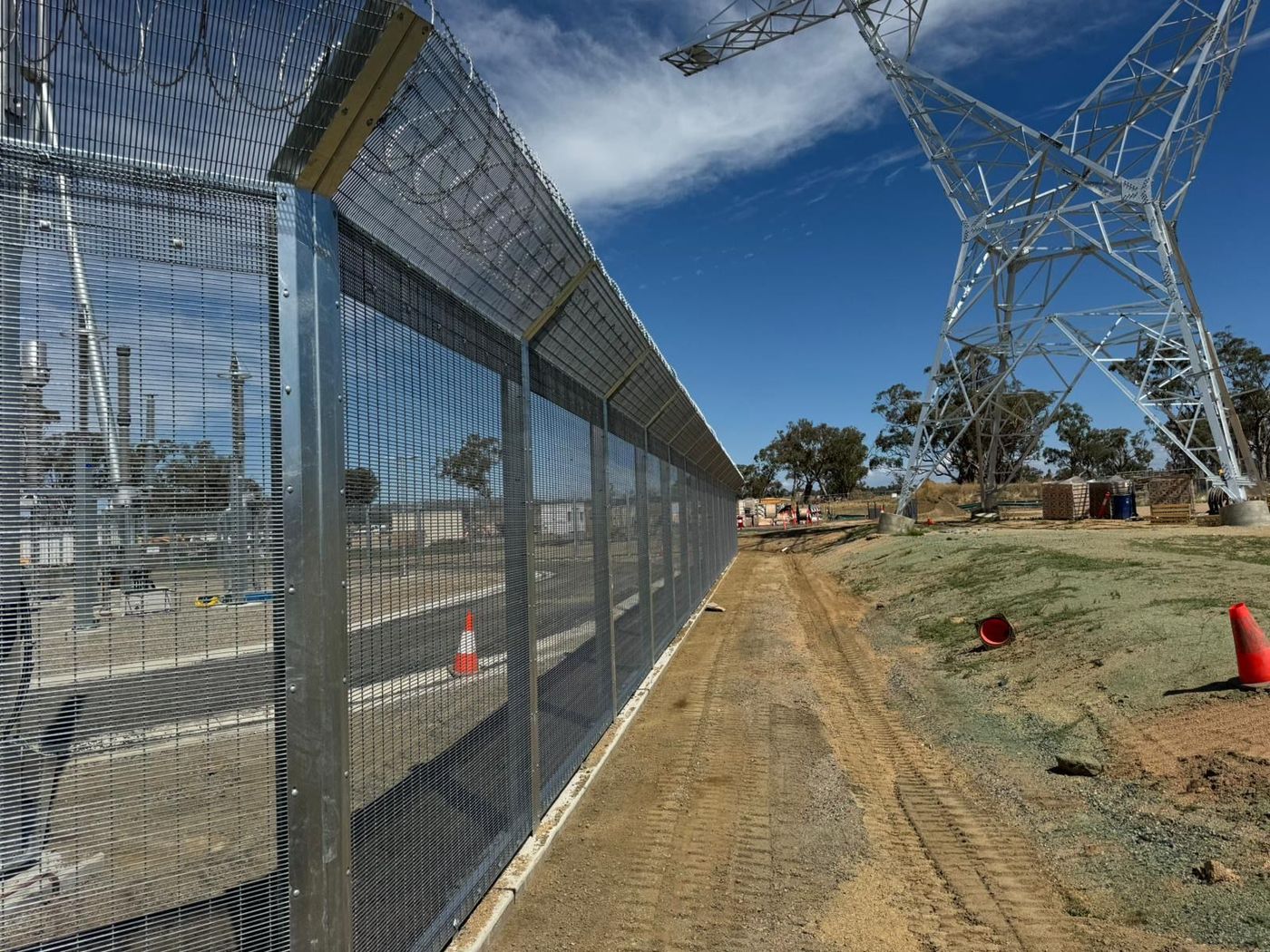
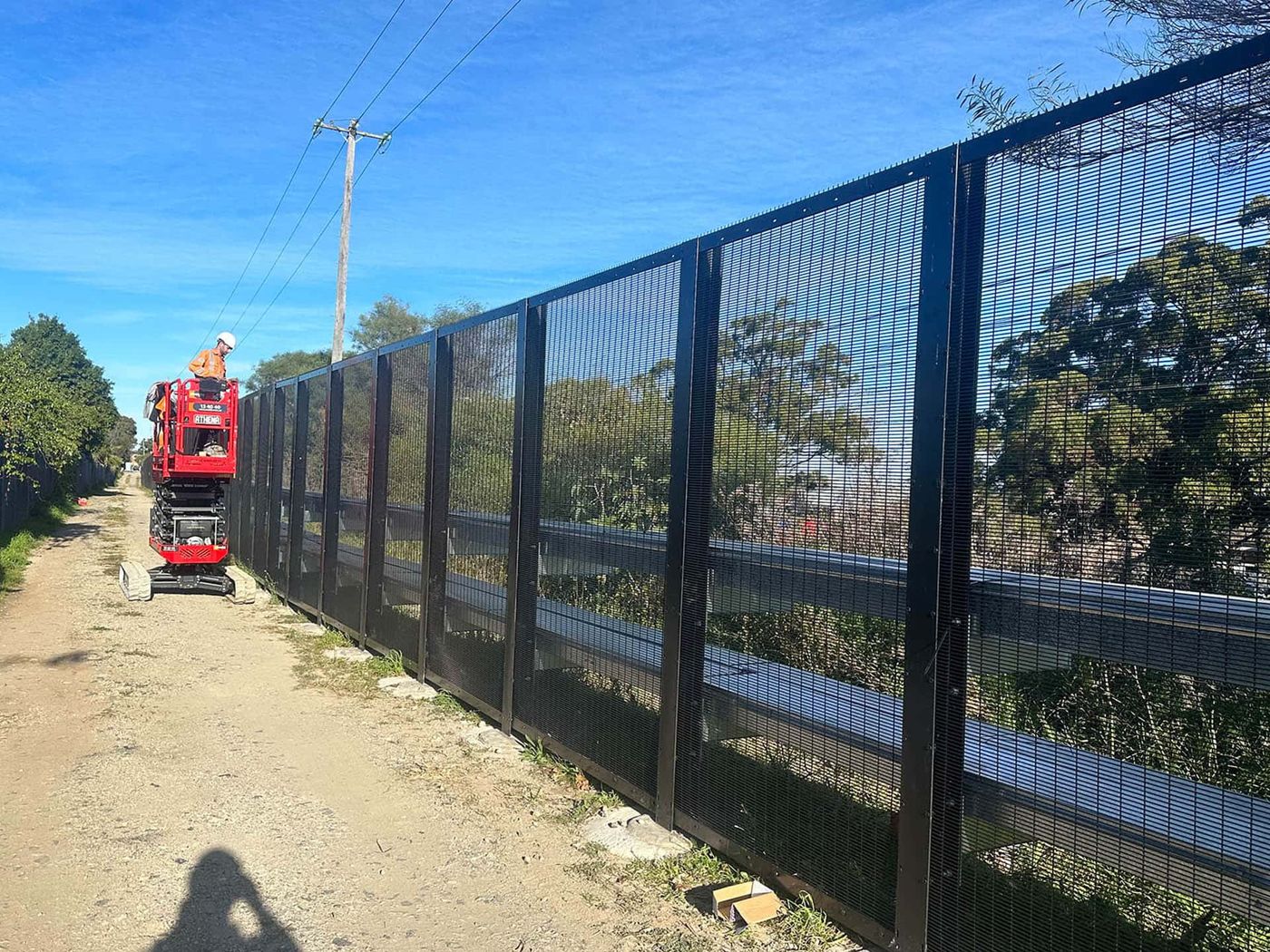
The product range covers 358 anti-climb mesh, palisade fencing, welded mesh, chain wire, automated gates with electronic access control, bollards, and perimeter security systems. Each can be specified with hot-dip galvanised or zinc-aluminium coatings to satisfy the coating standards that government and infrastructure clients require.
LS Fencing also provides safety audits and inspections for existing fencing systems, which is useful when a facilities manager needs to bring an ageing perimeter up to current compliance without a full replacement.
2. AS/NZS 4100-2020 , Steel Structure Standard

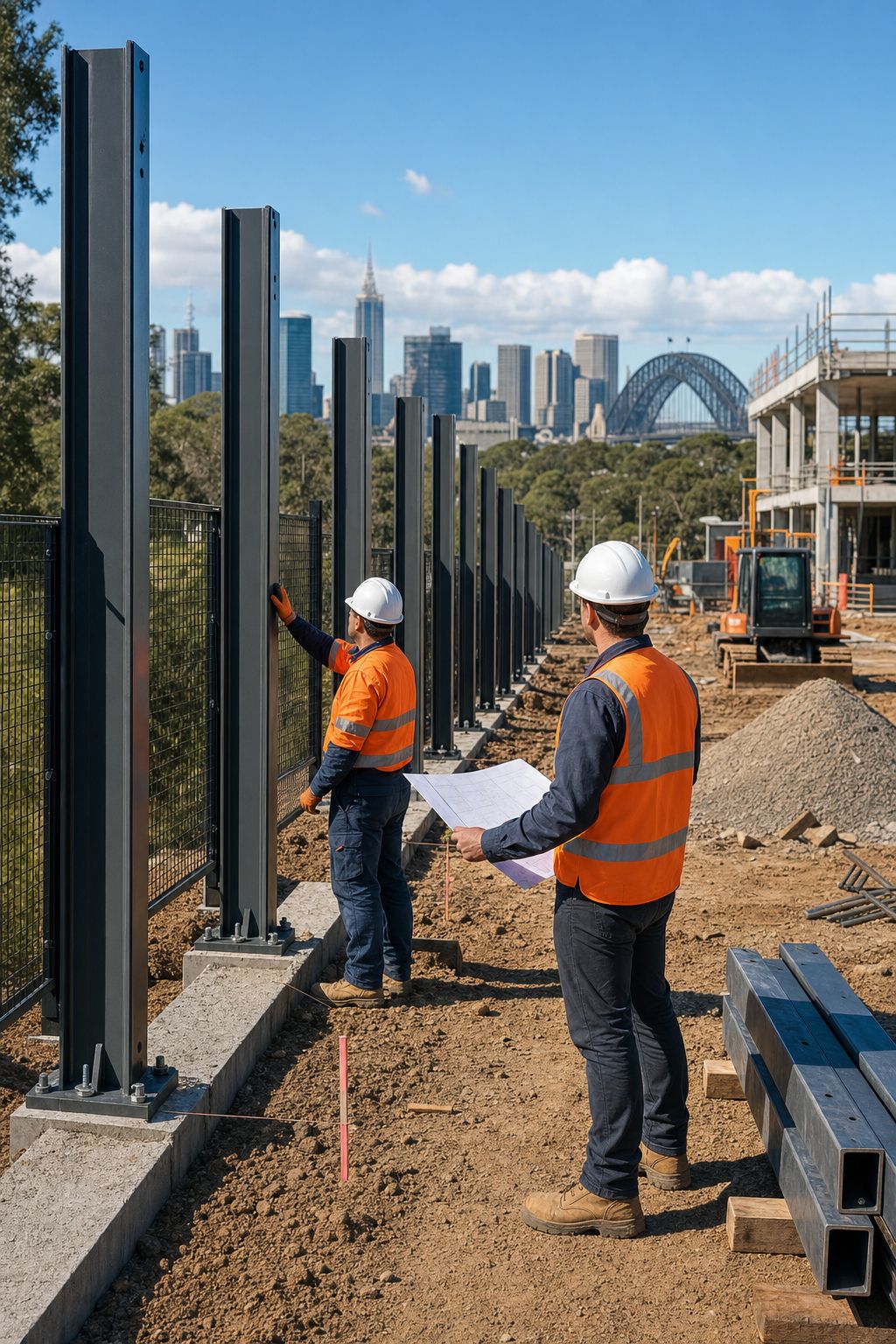
AS/NZS 4100-2020 is the joint Australian and New Zealand standard for steel structures. For security fencing, it governs the structural performance of the steel posts, rails, and frames that hold the fence system together under load. Any fence installed on a commercial or government site in NSW should be specified against this standard to confirm the structural members can handle the wind and impact forces they will face in service.
The standard is maintained by Standards Australia, the peak non-government standards development body recognised through a Memorandum of Understanding with the Australian government. Standards Australia oversees the development of Australian standards, including those listed on the Australian standards page.
For specifiers, AS/NZS 4100-2020 matters most when fence posts are welded or bolted into concrete footings on a critical infrastructure site. The standard defines minimum section properties, weld quality requirements, and connection design rules. A fence that skips this reference can pass a visual inspection but fail under a wind event or a vehicle impact test.
The usable caveat: AS/NZS 4100-2020 covers structural adequacy, not corrosion protection. You need to pair it with a coating standard (AS/NZS 4680-2006 or AS/NZS 4534-2006) to get a fully compliant specification. Specifying one without the other leaves a gap that a diligent auditor will find.
3. AS/NZS 4534-2006 , Zinc/Aluminium Alloy Coating Standard
AS/NZS 4534-2006 specifies requirements for zinc and zinc-aluminium alloy coatings on steel wire and fabricated wire products. It supersedes the earlier AS/NZS 4534:1998. For 358 anti-climb mesh panels, this is the primary coating reference.
The standard is relevant because the coating on steel wire fencing is what determines service life in coastal and industrial environments. A zinc-aluminium alloy coating at the minimum coating mass specified in AS/NZS 4534-2006 (Class W10Z5A requires 255 g/m² minimum) gives the wire significantly better corrosion resistance than a plain zinc coating at the same thickness.
For government and infrastructure projects in Sydney, specifying AS/NZS 4534-2006 compliance on mesh panels is a common requirement in tender documentation. It signals to the supply chain that the product has been manufactured to a verifiable standard, not just described as “galvanised” in a product brochure.
One thing to watch: AS/NZS 4534-2006 applies to the wire and wire products before or after fabrication. It does not cover hot-dip galvanising of fabricated steel sections, which is handled by AS/NZS 4680-2006. Mixing up the two in a specification is a common error that can create a compliance gap on mixed-material fence systems.
4. AS/NZS 2423-2002 , Coated Steel Wire Fencing Standard
AS/NZS 2423-2002 covers coated steel wire fencing products for terrestrial, aquatic, and general use. The standard supersedes the earlier AS 2423-1991, which only addressed galvanised wire fencing products. The expanded scope matters because it now captures the zinc-aluminium alloy coatings that have largely replaced plain zinc in high-durability applications.
The objective of the standard is to confirm that zinc and zinc-aluminium alloy coated steel wire products meet the requirements for a broad range of applications, including marine and general fencing use. That marine reference is directly relevant to Sydney projects near the harbour, coastal suburbs, or waterfront industrial sites where salt spray accelerates corrosion.
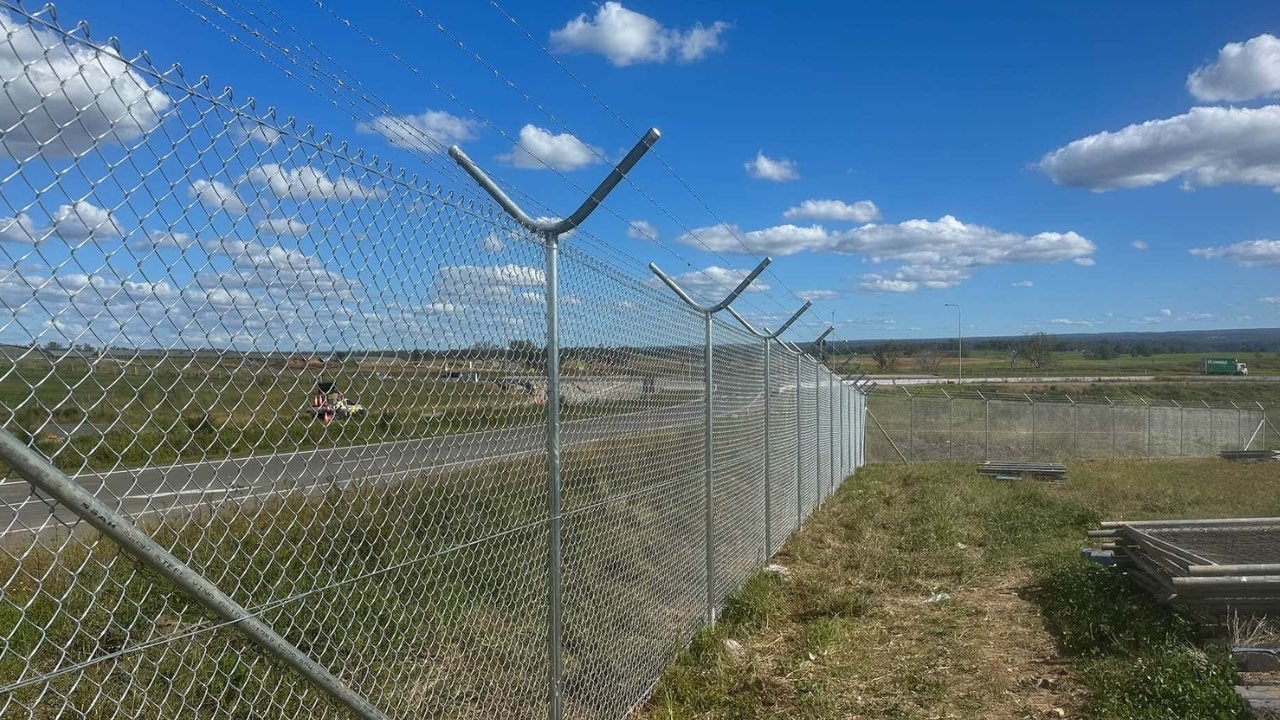
For project managers specifying chain wire or woven wire perimeter fencing, AS/NZS 2423-2002 is the standard to cite in procurement documents. It gives the supply chain a clear performance target and gives the client a basis for acceptance testing on delivery. Without it, a supplier can deliver wire that looks correct but carries a lighter coating that will fail well before the design life.
It is worth noting that AS/NZS 2423-2002 was developed to address specific Australian market needs.
Specifiers working on projects that include both welded mesh and woven wire sections should check whether both product types are covered by the same standard or whether they need to reference AS/NZS 2423-2002 alongside BS EN 10223-4-1998 to close the specification gap. Getting this detail right at the tender stage avoids substitution disputes during construction.
5. AS/NZS 4680-2006 , Hot-Dip Galvanised Coating Standard

AS/NZS 4680-2006 specifies requirements for hot-dip galvanised zinc coatings applied to general fabricated ferrous products. It was prepared by the Joint Standards Australia/Standards New Zealand Committee MT-009 to supersede AS/NZS 4680:1999. For security fencing, this is the standard that governs the zinc coating on fabricated structural components: posts, rails, frames, and gate hardware.
Hot-dip galvanising after fabrication is the process referenced in this standard. The steel component is fully fabricated first, then immersed in a bath of molten zinc. The result is a metallurgically bonded coating that covers all surfaces, including welds, cut edges, and internal cavities. For fence posts that will be concreted into the ground on a Sydney commercial site, this is the most reliable corrosion protection available.
The standard requires all steelwork to be hot-dip galvanised after fabrication, meeting the AS/NZS 4680-2006 requirements commonly specified for security fencing projects.
A usable point for project managers: AS/NZS 4680-2006 requires a minimum average coating thickness that varies by the steel section size. Thicker sections get a heavier coating. Specifiers should confirm that the fence supplier’s mill certificates reference the correct coating class for the post sizes being used, not just a generic “galvanised to AS 4680” claim without the class designation.
6. BS EN 10223-4-1998 , Steel Wire Mesh Specification
BS EN 10223-4-1998 is the British and European standard for steel wire and wire products used in fencing, specifically steel wire welded mesh. It specifies general characteristics for welded mesh fencing supplied as rolls or panels, covering wire properties, coatings, and dimensional tolerances. Despite being a European standard, it appears in Australian commercial fence specifications because it was established before equivalent Australian standards covered all welded mesh configurations.
The standard was prepared by the relevant technical committee. It covers the general characteristics of welded mesh fencing and specifies coatings, properties, and tolerances for both roll and panel formats. For 358 anti-climb mesh, which is the most common high-security mesh product specified on Sydney government and infrastructure projects, BS EN 10223-4-1998 is frequently cited alongside AS/NZS 4534-2006 to give a complete material specification.
Project managers working on data centres, substations, schools, and correctional facilities in NSW will encounter this standard in product data sheets and tender specifications. It is worth understanding that the 1998 version has since been updated in Europe to EN 10223-4:2012, but the 1998 reference remains common in Australian commercial fencing documentation. Specifiers should confirm with the supplier which version the product was manufactured to, as the 2012 edition introduced updated requirements.
For security fence installation projects that require both structural and material compliance documentation, referencing BS EN 10223-4-1998 alongside the relevant AS/NZS standards gives the client a complete specification package. It also signals to the supply chain that the project team has done the technical work rather than relying on a generic “security mesh” description.
The caveat with this standard is that it is a European document, not an Australian one, so it does not carry the same regulatory weight as an AS/NZS standard in a NSW planning or WHS compliance context. Use it as a material specification reference, not as a standalone compliance claim.
Comparison of Security Fence Compliance Options
The table below maps each compliance option against its primary scope, the component it covers, and the project types where it is most relevant. Use it as a quick reference when assembling a specification package for a Sydney commercial or government project.
A well-constructed specification for a Sydney high-security perimeter will typically reference three or four of these standards simultaneously. AS/NZS 4100-2020 covers the structure, AS/NZS 4680-2006 covers the fabricated steel components, and AS/NZS 4534-2006 or BS EN 10223-4-1998 covers the mesh wire itself. Missing any one layer leaves a gap that can surface during a compliance audit or a WHS inspection.
Work Health and Safety legislation adds another layer above these material standards. Both the national WHS Act and NSW-specific requirements mandate that every active worksite be securely fenced off from public access. Non-compliance can trigger fines up to $250,000 and possible shutdown orders. That penalty context means the choice of compliance standard is not just a technical decision; it carries direct financial and operational risk for the principal contractor.
Wind loading is another dimension that specifiers often overlook when focusing on material standards. AS1170.2:2011 requires designers to account for regional wind factors, terrain category multipliers, wind directions, shielding, topographic multipliers, and post-disaster importance levels. A fence that meets every material standard but is not designed for the wind loads at its specific location can still fail structurally.
How to Choose the Right Compliance Package
Start with the project type and site classification. A substation or data centre in Sydney will likely require products that meet relevant security standards, which points directly to LS Fencing’s product range. A school perimeter may have different height and visibility requirements under NSW Planning Portal rules.
- Confirm the structural standard (AS/NZS 4100-2020) applies to all steel posts and frames.
- Identify the mesh or wire type and match it to AS/NZS 4534-2006 or BS EN 10223-4-1998.
- Specify hot-dip galvanising to AS/NZS 4680-2006 for all fabricated components that will be in ground contact or exposed to industrial atmosphere.
- Check NSW Planning Portal height and material rules for the specific zone and boundary type.
- Confirm WHS obligations for the construction phase, including site fencing during the build.
- Verify wind loading compliance under AS1170.2:2011 for the site’s terrain category and region.
If the project is for a government client or a tier 1 builder, the simplest path to a complete compliance package is to engage a contractor whose documentation covers all the relevant standards in a single submission.
FAQ
What standards apply to security fence compliance in NSW?
Commercial security fencing in NSW must meet a combination of material standards and planning rules. The core material standards are AS/NZS 4100-2020 for structural steel, AS/NZS 4680-2006 for hot-dip galvanised coatings, and AS/NZS 4534-2006 for wire coatings. NSW Planning Portal rules add height limits and zoning requirements on top of those. Work Health and Safety legislation also applies during construction, with fines up to $250,000 for non-compliance.
What is 358 anti-climb mesh and which standard covers it?
358 anti-climb mesh is a welded steel mesh panel with 76.2 mm x 12.7 mm apertures, which are too small to provide a hand or foot hold. The wire coating is specified under AS/NZS 4534-2006, and the mesh construction is referenced against BS EN 10223-4-1998. It is the most common high-security mesh product on Sydney government, data centre, and critical infrastructure projects.
What is the penalty for non-compliance with security fencing requirements on a worksite?
Under Work Health and Safety legislation, failing to securely fence an active worksite from public access can result in fines up to $250,000 and potential shutdown orders. This applies to both the principal contractor and the person conducting the business or undertaking (PCBU). It is the most significant monetary penalty recorded across the NSW security fencing compliance framework.
Does a security fence need to meet wind loading requirements?
Yes. AS1170.2:2011 requires that fence designs account for regional wind loading factors, terrain category multipliers, wind direction, shielding, topographic multipliers, and post-disaster importance levels. A fence that meets all material standards but is not designed for the wind loads at its specific Sydney location can still fail structurally and create a compliance and liability issue for the project team.
What does endorsement by a recognized security standards body mean for a security fence product?
Endorsement by a recognized security standards body indicates that the product has been assessed and meets the security performance requirements for government and critical infrastructure applications in Australia. This represents a higher bar than standard AS/NZS compliance and is often a mandatory requirement in government tender documents. LS Fencing’s products carry such endorsement, which is why they appear on government and tier 1 builder projects across NSW.
Do I need a permit to install a security fence in Sydney?
In most cases, yes, if the fence exceeds 2 m in height or is in a heritage or special-purpose zone. The NSW Planning Portal sets explicit height limits, material specifications, and boundary line considerations for commercial fence installations. Submit a site plan with the fence height, location, and relevant compliance standard references to the local council before breaking ground. Review periods typically run two to four weeks.
Conclusion
For commercial and government projects in Sydney, the right approach is to build a specification that layers structural, coating, and wind-loading standards together rather than treating each as a standalone requirement. LS Fencing provides that full compliance scope under one contractor, offering products that meet the applicable Australian standards and documented experience on tier 1 and government sites across NSW. Contact LS Fencing directly to discuss the compliance requirements for your next perimeter security project.
Specifying or pricing a perimeter?
Send the drawings or a brief and LS Fencing Services will come back with a detailed proposal.