Data centre security fencing is one of the most demanding perimeter jobs in NSW. Western Sydney now hosts a large and growing share of Australia's data centre capacity, and the operators building there expect a fence that stops people, slows vehicles, works with their cameras and detection systems, and stands up to an…
Data centre security fencing is one of the most demanding perimeter jobs in NSW. Western Sydney now hosts a large and growing share of Australia's data centre capacity, and the operators building there expect a fence that stops people, slows vehicles, works with their cameras and detection systems, and stands up to an audit.
This guide covers what data centre operators and their builders typically specify, and the questions to settle before the fence goes to tender.
Why the perimeter matters so much
A data centre's value is inside the building, but the perimeter is where an intruder is first seen and slowed down. Security designers think in layers: deter, detect, delay, respond. The fence is the main delay layer. The longer it takes to get through, the more time there is for cameras and guards to respond.
There is also a regulatory reason. Data storage and processing is one of the sectors covered by the Security of Critical Infrastructure Act 2018, and the Cyber and Infrastructure Security Centre explains the obligations that apply to responsible entities, including managing physical security risks. Operators pass those expectations down to their contractors.
The usual perimeter layers
Most data centre campuses in NSW use some version of this layout:
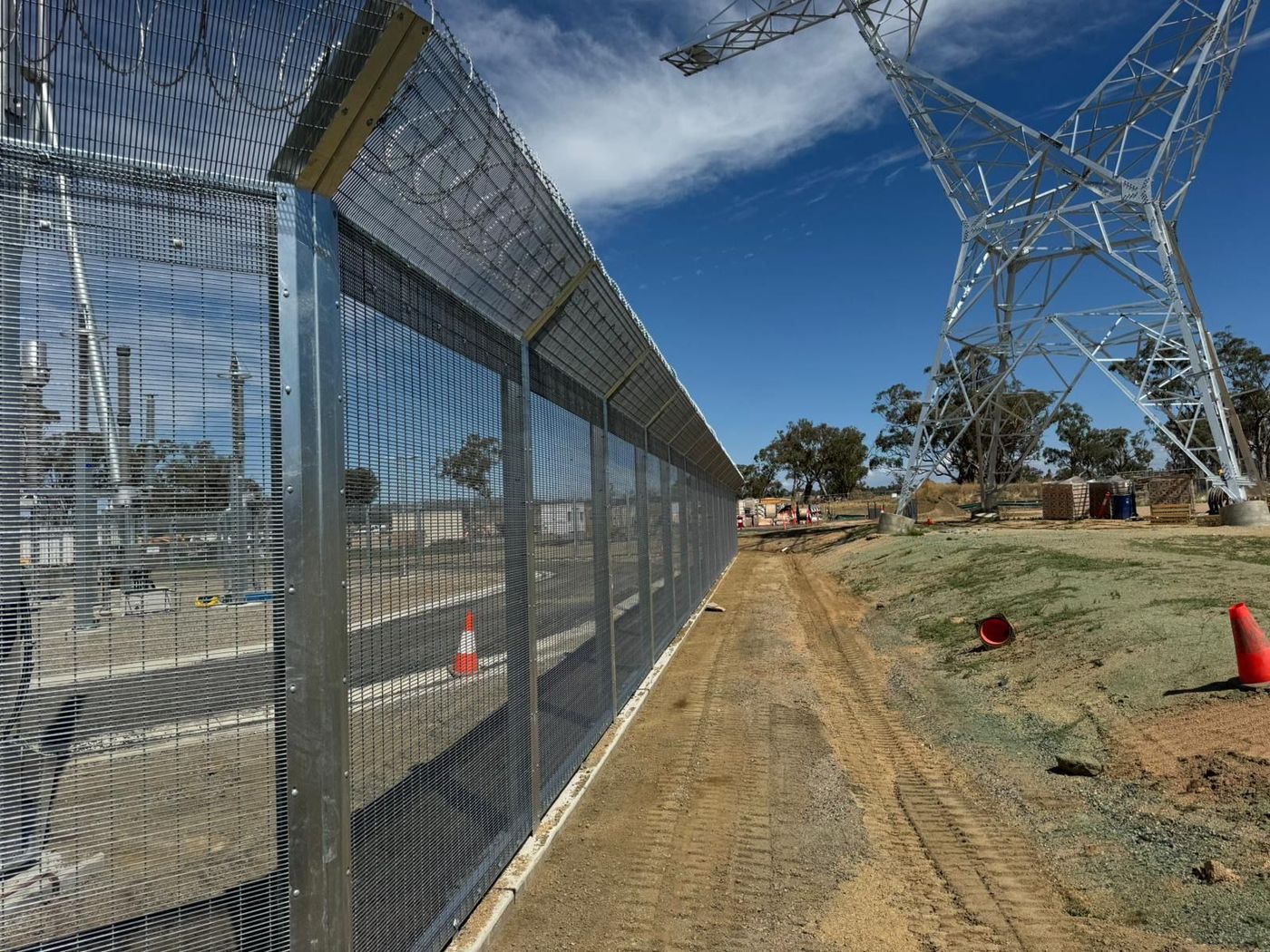
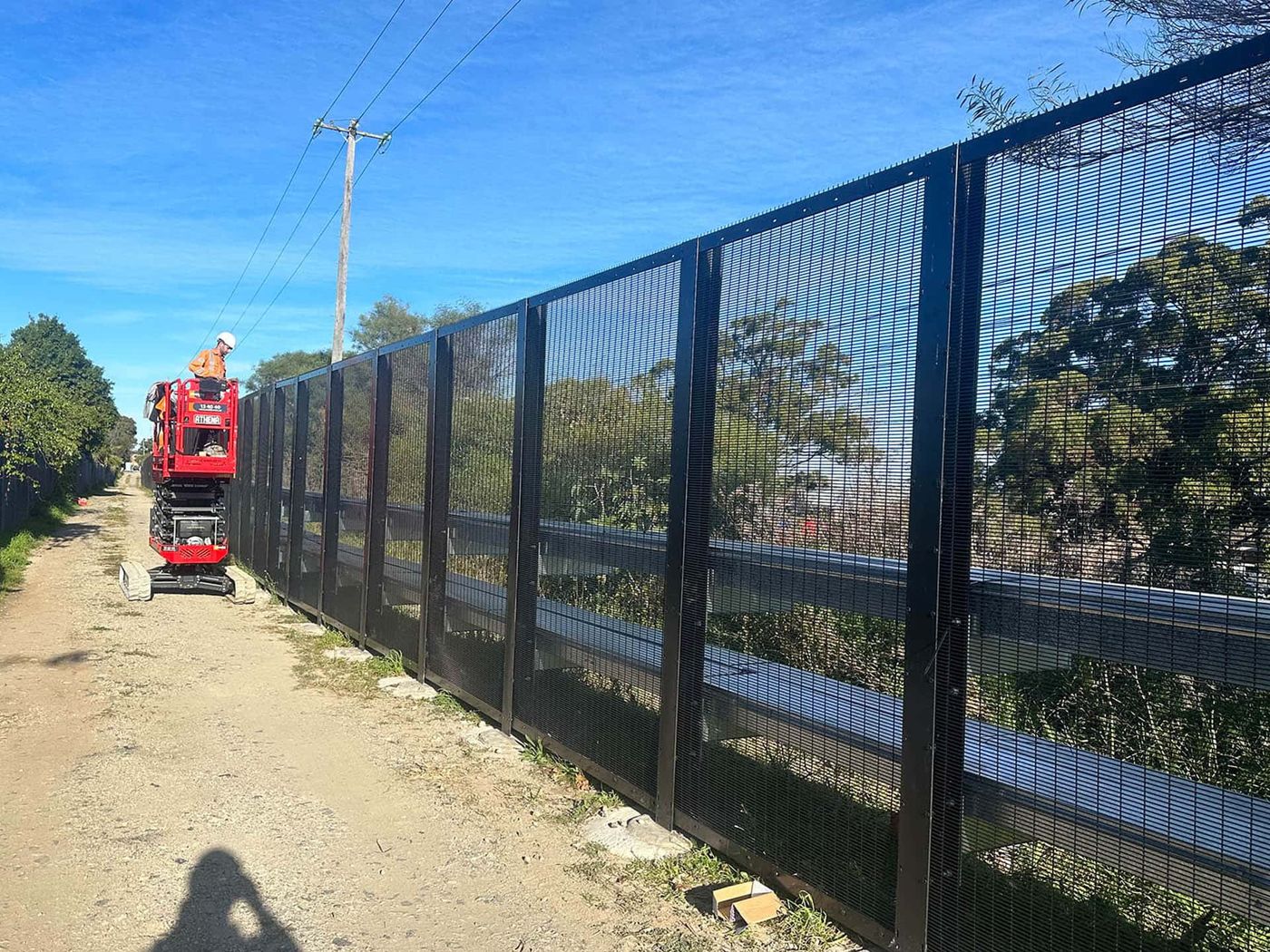
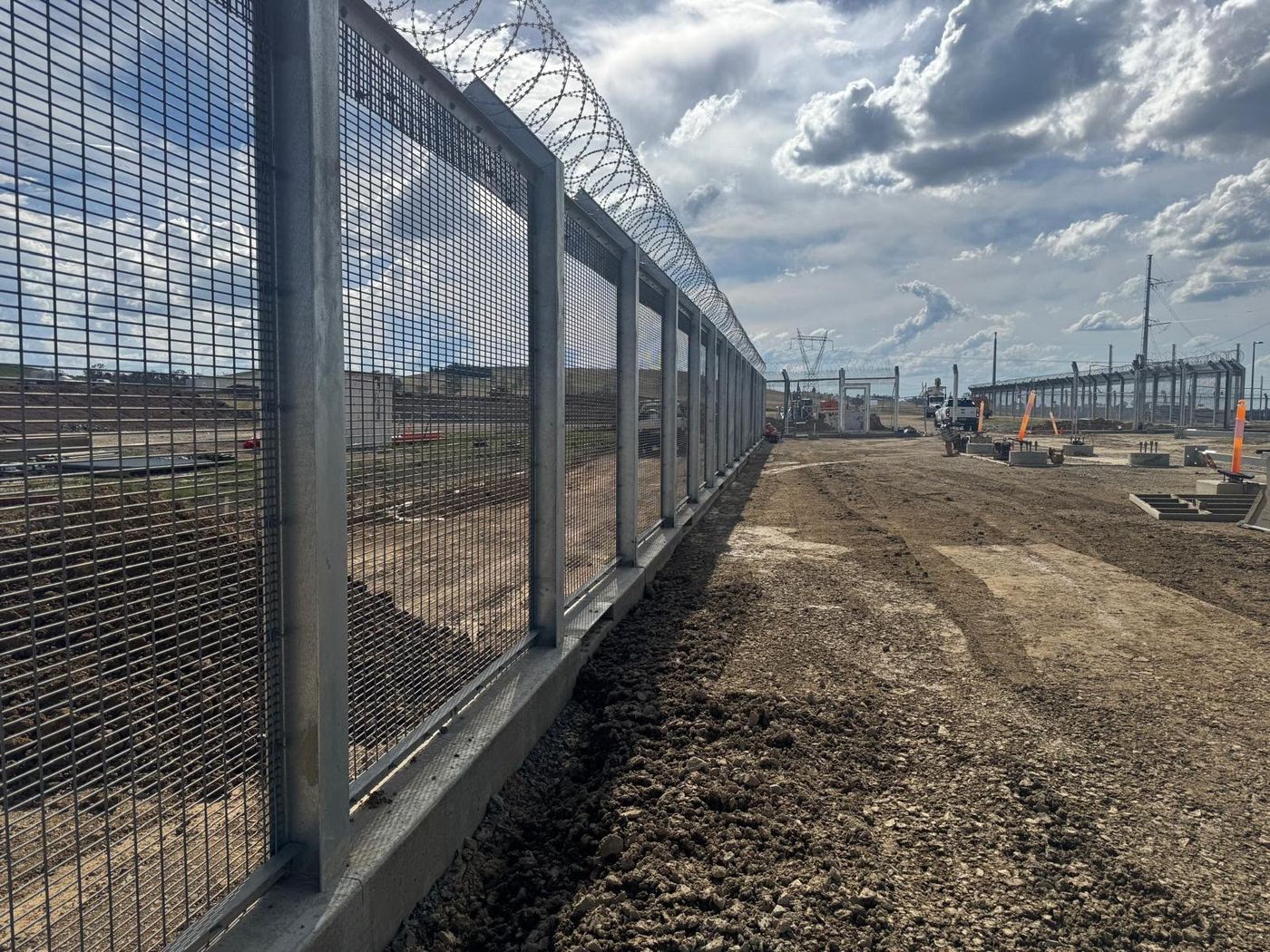
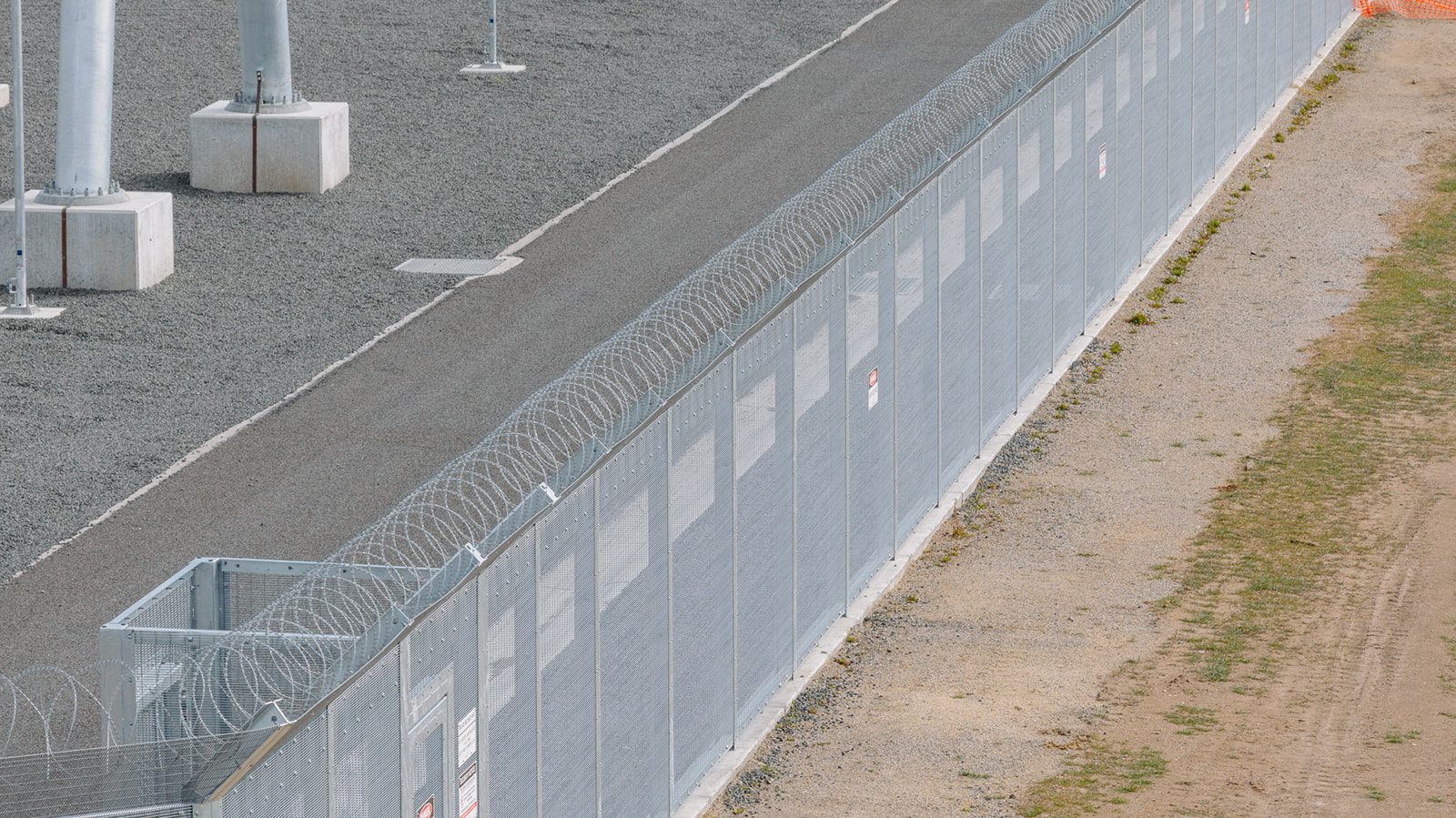
- An outer boundary fence defining the site, often 2.4 metres or higher in 358 anti-climb mesh.
- A clear zone inside the fence, kept free of vegetation, parked vehicles and anything that could help someone climb.
- A vehicle mitigation line of rated bollards, barriers or a crash-rated fence protecting the building from a vehicle attack.
- Controlled entry points with guardhouses, airlocks for vehicles and separate pedestrian turnstiles.
- Inner compounds around generators, fuel, cooling plant and the substation, each with its own fence and gate.
Fence types that suit data centres
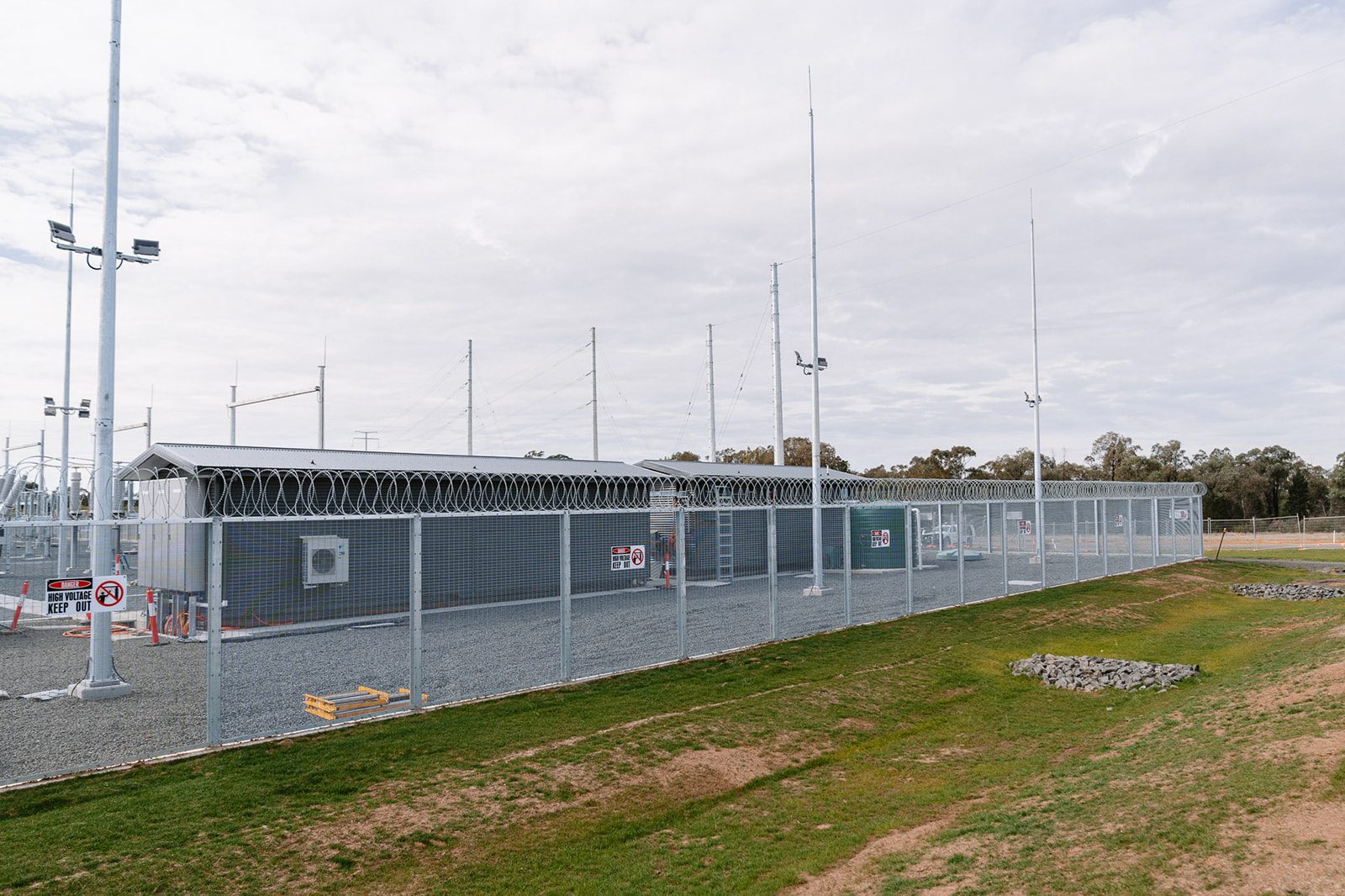
358 anti-climb mesh is the default. It is very hard to climb or cut, and it keeps the clear sightlines that cameras and video analytics need. Heights of 2.4 to 3 metres are common, sometimes with a topping. See our 358 anti-climb mesh page for specifications.
Rated security fencing is used where the operator specifies a tested product rather than a standard fence. Some government and defence-related tenants require products evaluated under federal schemes, and the operator's security consultant will name them.
Palisade sometimes appears on frontages where the operator wants a stronger visual statement, but mesh is usually preferred because it does not block camera views.
Gates and vehicle entries
Gates are the busiest and most vulnerable part of a data centre perimeter. Typical requirements include:
- Sliding gates or high speed gates at vehicle entries, often in pairs so a vehicle can be held between them and checked
- Rated barriers or bollards in front of the gate line
- Integration with the site's access control, so gates open only for authorised cards, plates or the guardhouse
- Dual height safety beams and safety edges
- Manual override and emergency services access
Our page on access controlled gates and automation covers the operator and access control options we commission.
Detection on the fence
Many data centre fences carry perimeter intrusion detection: sensor cable on the fence fabric, buried cable, microwave or radar along the clear zone, or video analytics. That affects the fence build. Sensor cable needs a rigid, well-tensioned fence that does not rattle in the wind and trigger false alarms. Posts, fixings and panel joins need to be tight. The fencing contractor and the security integrator have to agree the details before installation, not after.
The honest caveat: more fence does not fix a weak gate
Operators sometimes spend heavily on a 3 metre rated fence and then accept a standard gate with a basic motor and an exposed control box. An intruder will go for the weakest point, and that is usually the gate or the place where the fence meets the building. Before you upgrade the fence, check the gates, the joins and the service penetrations have the same strength.
Questions to settle before tender
- What security standard or specification does the operator or tenant require?
- Is a rated or tested fence product required, and which one?
- Where does the vehicle mitigation line sit, and who supplies it?
- What detection system will go on or near the fence, and who integrates it?
- How will construction security be handled before the permanent fence is complete?
- What inspection, test and handover records are needed?
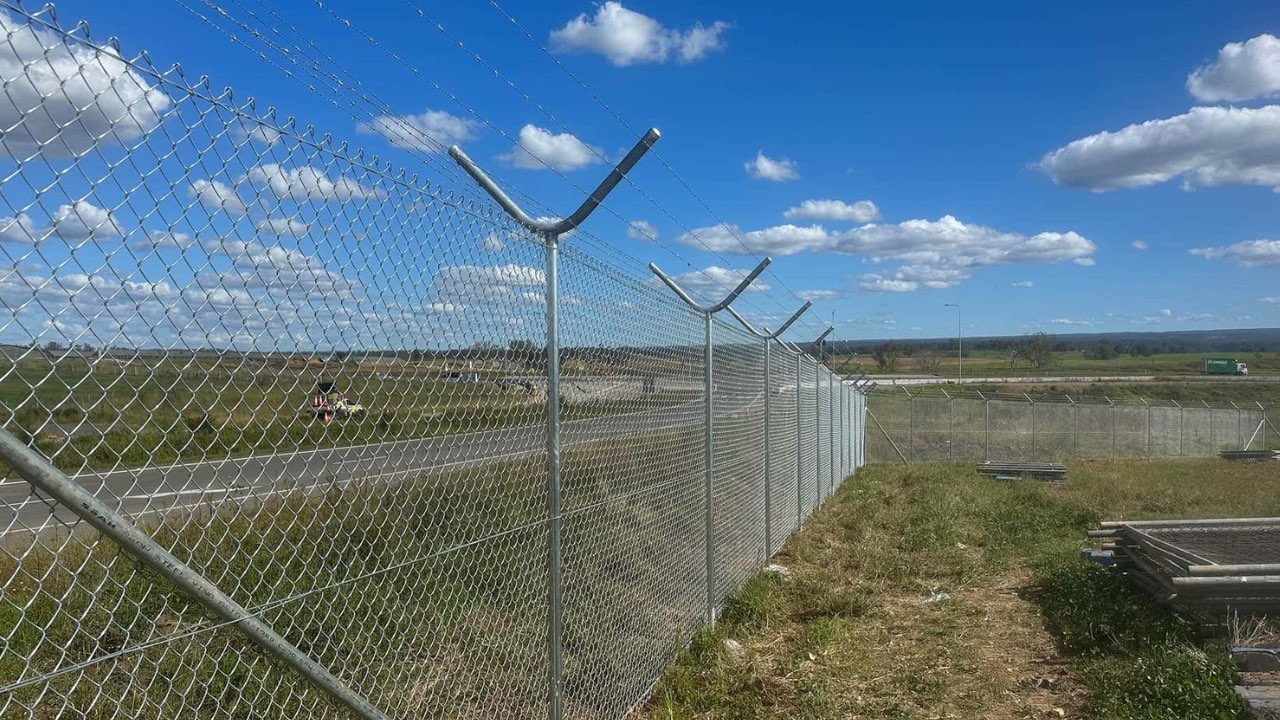
Construction security deserves its own plan. Data centre builds run for a long time and carry high value plant, cable and switchgear well before the building is finished. Many projects install the permanent perimeter early, or stage it so each finished section replaces temporary fencing as the build moves across the site. That decision affects the program, the budget and who is responsible for the fence while it is still a construction site, so settle it with the builder at the start.
Installation crews on live data centre sites work under strict site rules and must also meet SafeWork NSW requirements.
The next step
Get the operator's security specification and the integrator's detection plan, then price the fence against both. LS Fencing Services installs 358 mesh, gates and automation for substations, data centres and critical infrastructure under ISO 9001, 14001 and 45001 certified systems. Call 1800 572 878 to discuss your site.
Specifying or pricing a perimeter?
Send the drawings or a brief and LS Fencing Services will come back with a detailed proposal.