If you are searching for a 358 mesh supplier, the short answer is that there are two very different things being sold under the same name: panels off a pallet, and a finished perimeter that has been surveyed, set out, footed and certified. Most people searching end up needing the second one, because 358 mesh panels are only as strong as the posts, fixings and gates around them.
If you are searching for a 358 mesh supplier, the short answer is that there are two very different things being sold under the same name: panels off a pallet, and a finished perimeter that has been surveyed, set out, footed and certified. Most people searching end up needing the second one, because 358 mesh panels are only as strong as the posts, fixings and gates around them.
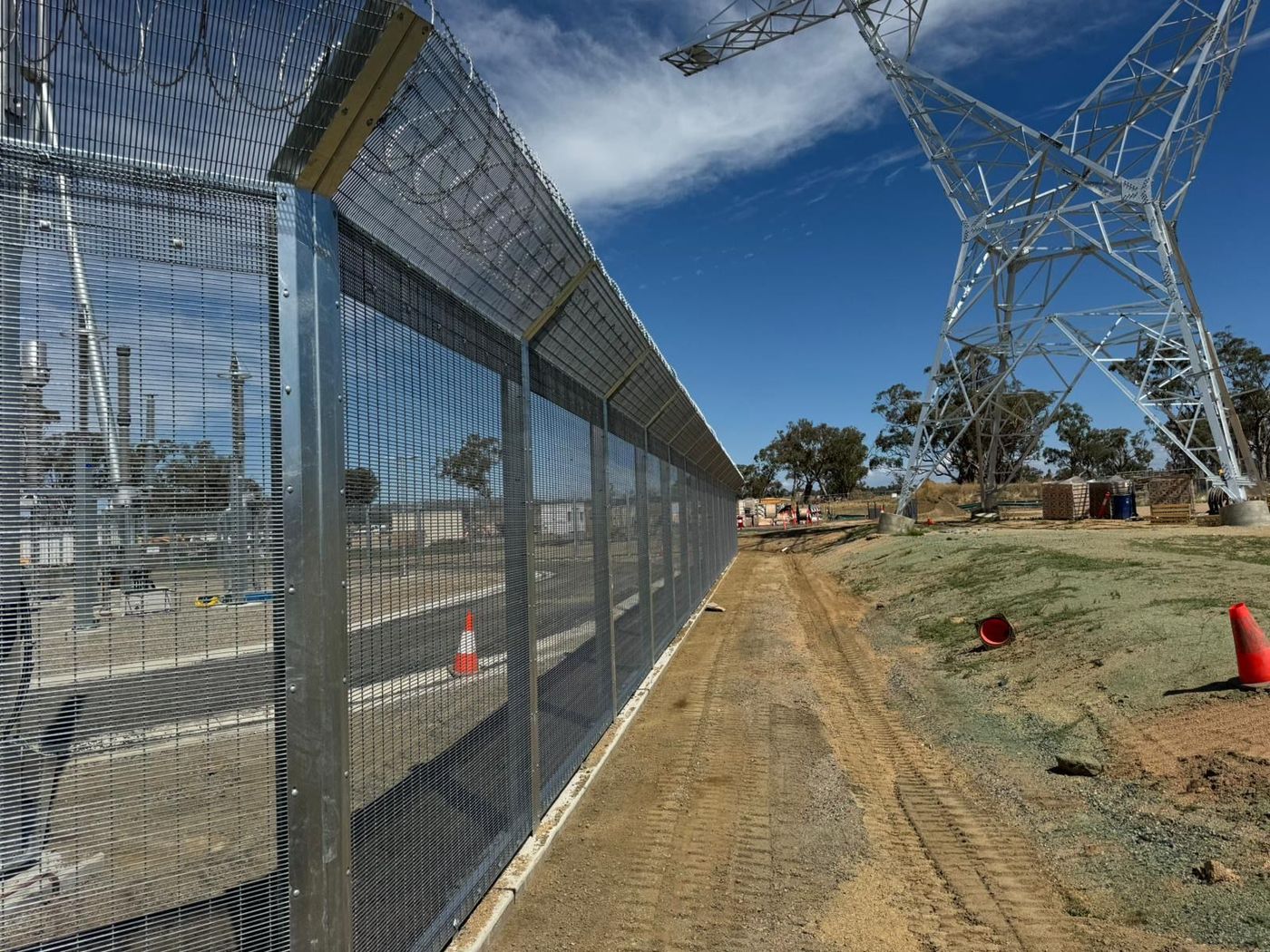
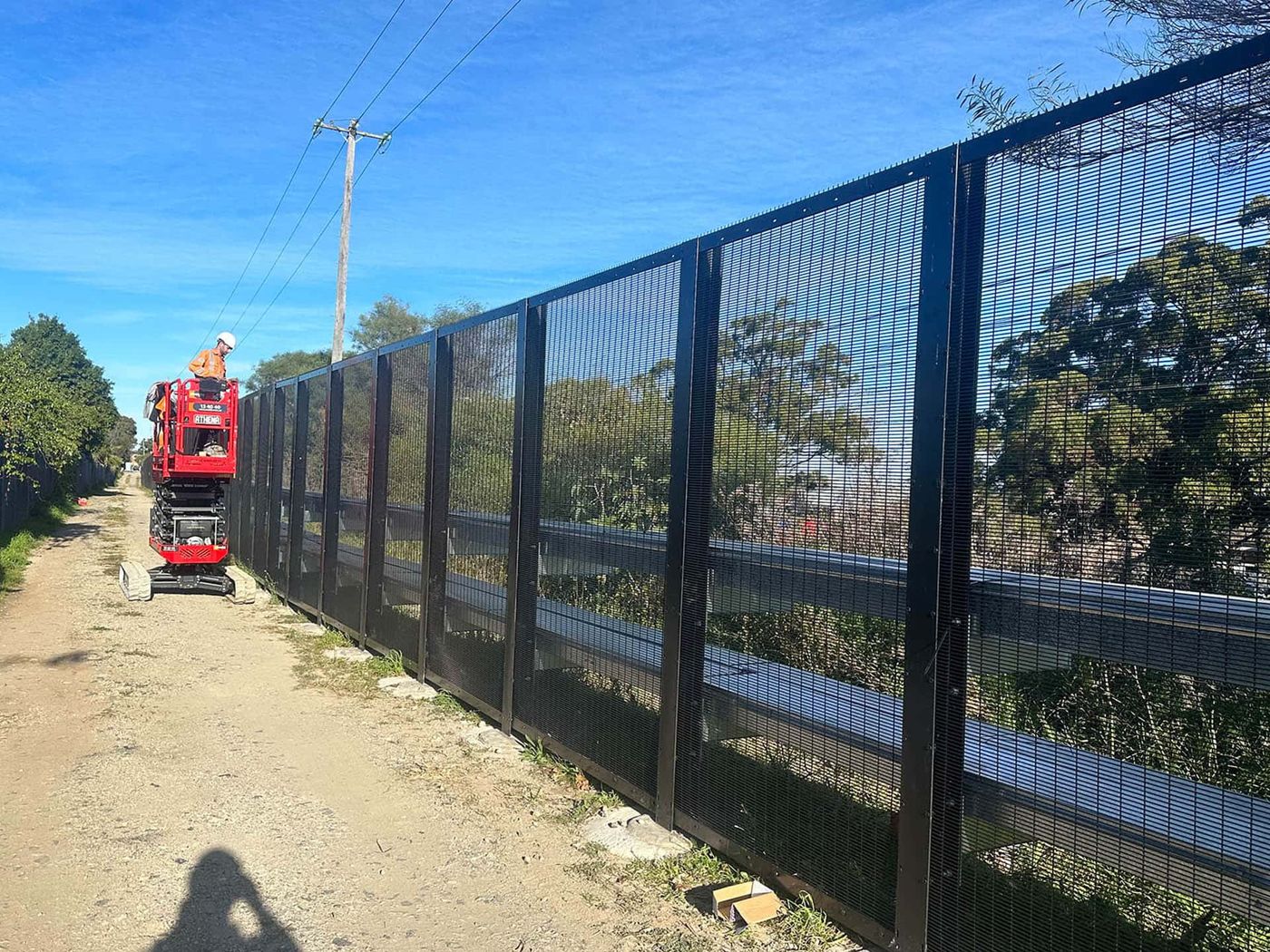
LS Fencing supplies and installs anti-climb 358 mesh for commercial and industrial sites across Sydney. Here is what actually matters when you are comparing suppliers.
What 358 mesh actually is
The name comes from the imperial aperture: 3 inches by 0.5 inch, in 8 gauge wire. In metric that is roughly a 76.2mm x 12.7mm opening in 4mm wire, welded at every intersection.
That narrow opening is the whole point. A finger will not get a grip, and a standard bolt cutter jaw will not sit around a single wire cleanly. There is no toe hold, so climbing is slow, awkward and obvious. The welded grid also means the panel holds its shape rather than deforming like chainwire when someone leans a ladder against it.
Because the wires are close together, 358 panels are heavy. A 3m high panel is a two-person lift. That matters for your delivery access, your site handling and your labour cost, and it is one of the reasons supply-only jobs go sideways.
Mesh and fence types compared
Before you commit to 358, check it is the right product for the threat you actually have.
| Option | Aperture / form | Climb resistance | Cut resistance | Sight lines | Typical use |
|---|---|---|---|---|---|
| 358 welded mesh | 76.2 x 12.7mm, 4mm wire | Very high, no toe hold | High, hard to get cutters on | Good, near see-through | Substations, data centres, rail, government sites |
| Standard welded mesh | 50 x 50mm or larger | Moderate | Moderate | Good | Yard boundaries, plant enclosures |
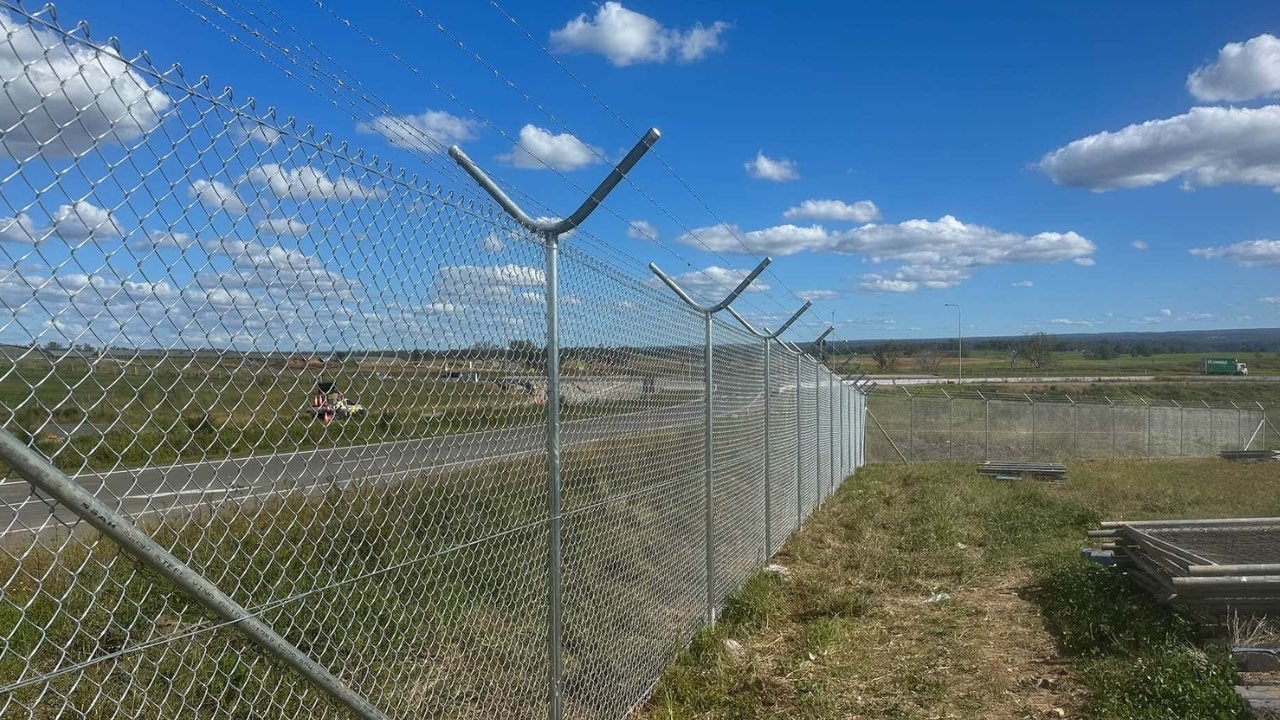
| Chainwire | 50mm diamond | Low, easy to climb | Low | Good | Large low-risk boundaries, sports, storage yards |
| Palisade (steel pale) | Vertical pales, spiked top | High | Very high | Good | Streetfront industrial, aggressive-attack sites |
| Sheet or solid panel | Solid | High | Varies | None | Screening, hoarding, noise |
If you want the visual deterrent of spiked steel rather than mesh, palisade fencing is the usual alternative and both can be run on the same site where the risk changes.
Coating: the question that decides how long it lasts
This is where quoted prices diverge the most, and where a cheap supply-only pallet costs you later.
- Hot dip galvanised after welding. The whole panel is dipped once fabricated, so cut ends and weld points are coated. This is what you want in Sydney, especially anywhere within a few kilometres of the coast.
- Pre-galvanised wire, welded after. Cheaper. Every weld point and cut end is bare steel, so rust starts at the joins.
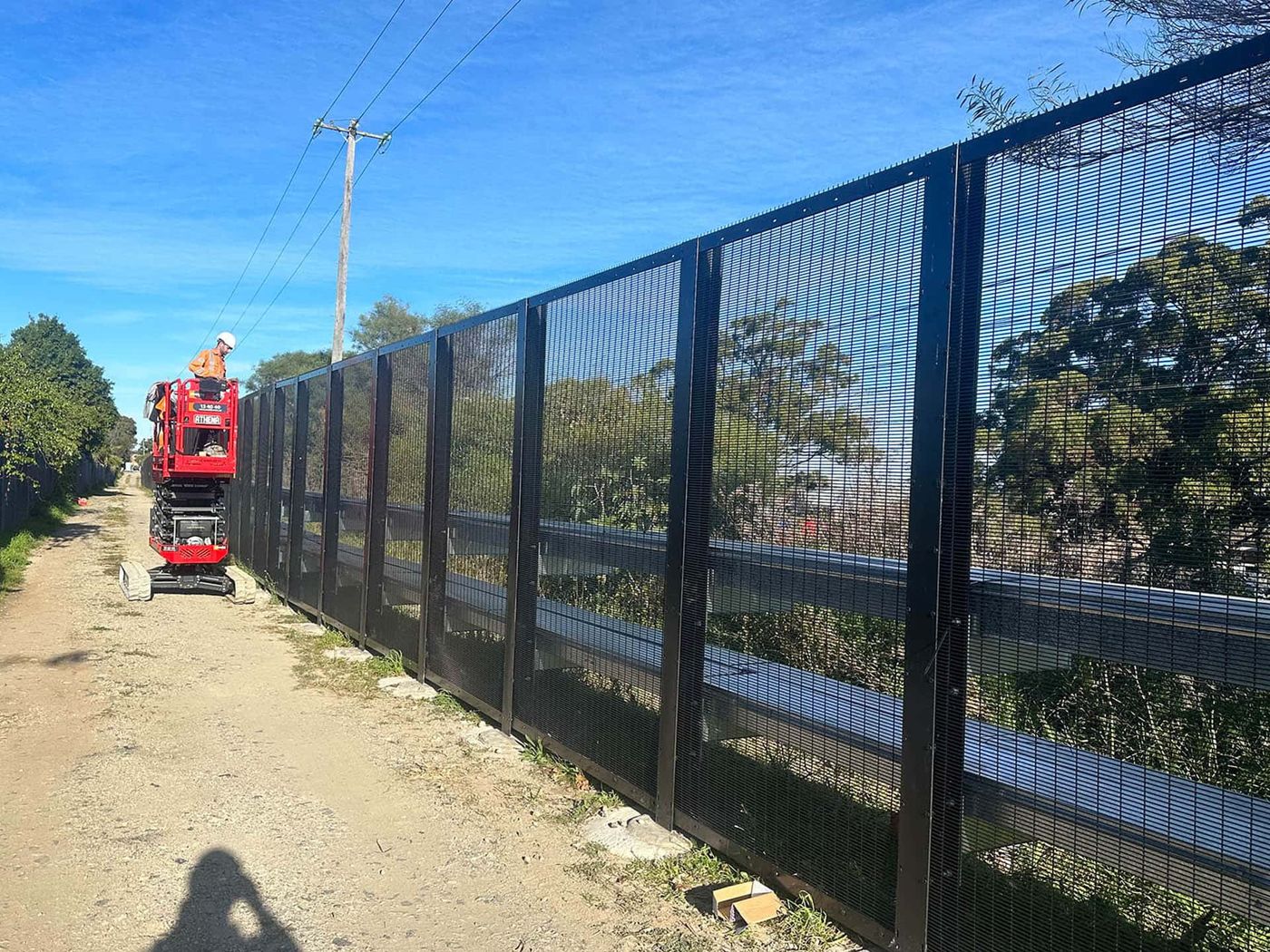
- Galvanised plus polyester powder coat. The standard high-spec finish: zinc for the corrosion protection, powder coat for colour and a second barrier. Black is the common choice because it visually disappears.
- PVC coated. Thicker, softer finish. Fine in some settings, but if it is damaged the water sits under the coating.
Ask any 358 mesh supplier, in writing, whether galvanising is applied before or after welding, and what coating thickness they are quoting. If they cannot answer plainly, that tells you something.
Heights, posts and fixings
Common 358 heights are 2.1m, 2.4m, 3.0m and 3.6m, in panel widths around 2.5m or 3.0m depending on the system. Height is often set for you: asset owners, insurers and network operators frequently specify a minimum, and substation and utility perimeters usually sit at the taller end. Our page on high security fencing for utility substations covers how those specifications typically read.
Things to nail down at quote stage:
- Post section and wall thickness. A 3m panel on an undersized post is a false economy. Post size should follow the panel height and the local wind loading.
- Footing depth and concrete. Deeper and wider for taller panels, and different again in rock, fill or reactive clay.
- Fixings. Security fasteners, shear nuts or clamp bars, not standard bolts. If a panel can be unbolted with a socket set from the outside, the mesh spec is irrelevant.
- Toppings and bases. Barbed or razor extensions, anti-dig plinths or buried mesh returns where burrowing under is a real risk.
- Ground follow. Sloping ground means raked or stepped panels. Stepping leaves gaps at the base unless it is detailed properly.
Compliance and documentation
For commercial and government work, the paperwork is part of the deliverable. Expect to be asked for material certificates, galvanising conformance, a set-out or as-built drawing, and confirmation the installation meets the referenced Australian Standards. Chainlink and security fence fabric work is commonly specified against AS 1725.1, and hot dip galvanising against AS/NZS 4680. Some asset owners add their own network standards on top.
If the fence is on a boundary or in a public area, also check what your council requires for height and setback, and whether any part of the works needs traffic management or a road occupancy permit.
Gates are where most 358 projects get expensive
Mesh runs are predictable. Gates are not. A 358 mesh perimeter with a poorly specified gate is only as secure as the gate. Wide openings need heavier frames, cantilever or tracked systems, and proper allowance for drainage across the opening.
If the gate is going to be motorised, decide early, because the operator, the loop detectors, the power supply and the safety devices all affect the civil works. Costs vary widely with width, weight, duty cycle and how far the power has to come, so look at how gate automation is priced before you set a budget.
Supply only or supply and install
Supply only makes sense if you have your own crew, a way to lift 3m panels, and someone who will own the set-out and footings. Otherwise the saving usually disappears into rework, extra deliveries and non-conforming footings.
When you ask for an installed price, give the supplier: total metres, required height, coating and colour, ground and access conditions, number and width of gates, whether automation or access control is needed, and any client standard the fence has to meet. That is enough to quote properly rather than with allowances. The security fence installation guide walks through how a job runs from set-out to handover.
FAQ
Can 358 mesh be cut through at all?
Yes, with enough time and the right tools. The aim is delay and visibility, not invulnerability. The tight aperture stops hand tools and standard bolt cutters getting a clean bite, which pushes an intruder into slower, noisier methods. That is why 358 is usually paired with lighting, detection or cameras on high-value sites.
How long does 358 mesh take to get?
It depends on height, coating and colour. Standard heights in stock galvanised finish move fastest. Powder coating to a specific colour, non-standard heights, or larger quantities add manufacturing time, and coastal-grade coatings can add more again. Ask for a lead time in weeks against your exact spec, not a general answer.
Is 358 mesh worth it over chainwire?
If the risk is unauthorised entry by a person, yes, because chainwire is climbable in seconds. If you are just marking a boundary or containing materials, chainwire does the job for less. Many sites use both: 358 on the exposed or street-facing sides, chainwire on internal or low-risk runs.
Specifying or pricing a perimeter?
Send the drawings or a brief and LS Fencing Services will come back with a detailed proposal.