Chainwire (also called chain link or cyclone wire) is the cheapest way to fence a large area in Sydney and still get a real barrier. For most commercial and industrial sites the decision comes down to four things: mesh gauge and aperture, post size and spacing, coating, and how deep the footings go. Get those right and the fence lasts twenty years plus. Get them wrong and you are re-tensioning sagging mesh within two
Chainwire (also called chain link or cyclone wire) is the cheapest way to fence a large area in Sydney and still get a real barrier. For most commercial and industrial sites the decision comes down to four things: mesh gauge and aperture, post size and spacing, coating, and how deep the footings go. Get those right and the fence lasts twenty years plus. Get them wrong and you are re-tensioning sagging mesh within two summers.
What chainwire is actually good at
It is a boundary and a deterrent, not a wall. It defines the line, stops casual entry, keeps kids and dogs out of yards and pits, and lets you see through it. That last part matters more than people expect. Security cameras work through chainwire. Site staff can see someone loitering. Wind loads are low, so you are not building a sail that needs concrete piers the size of a bar fridge.
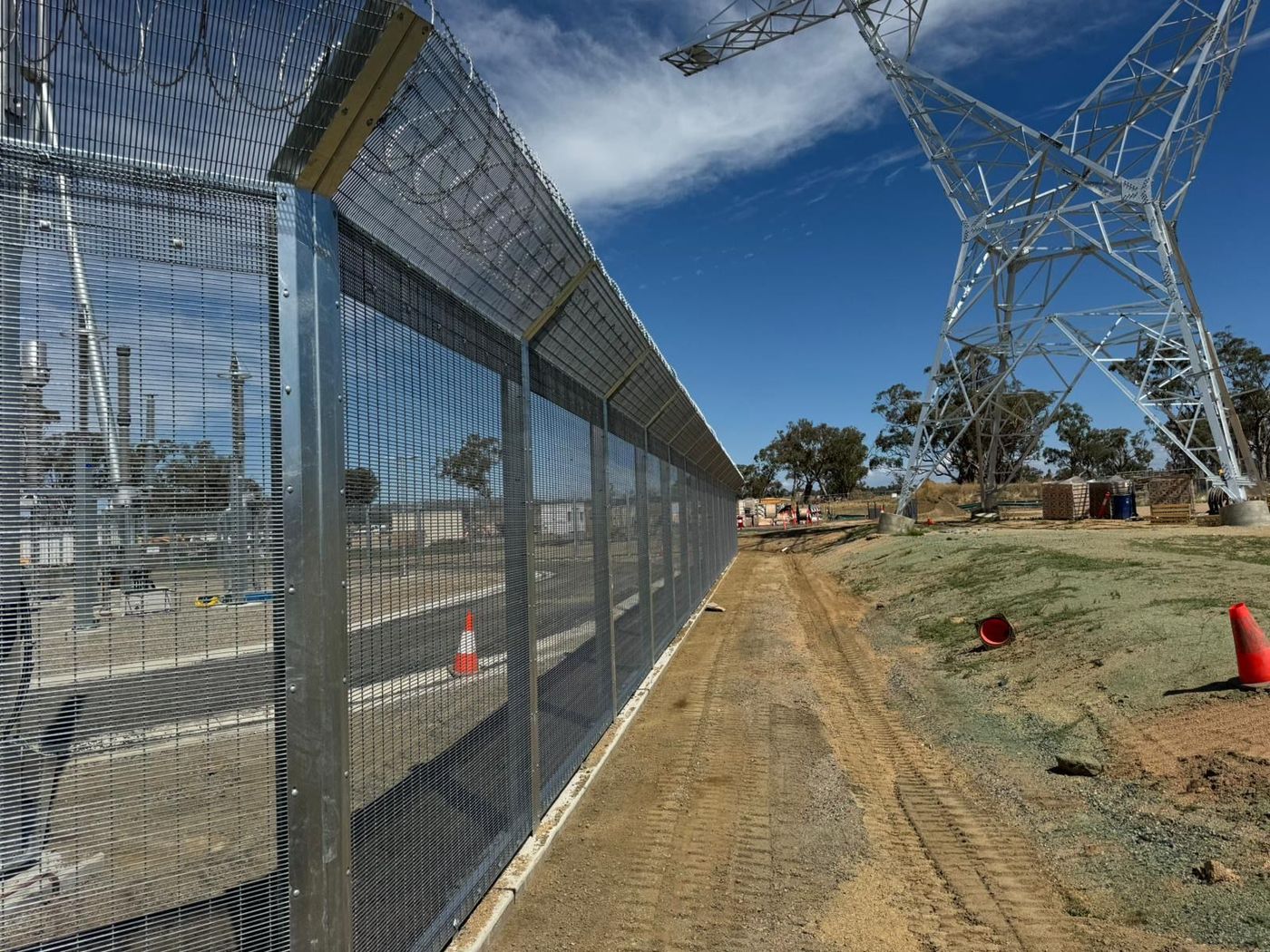
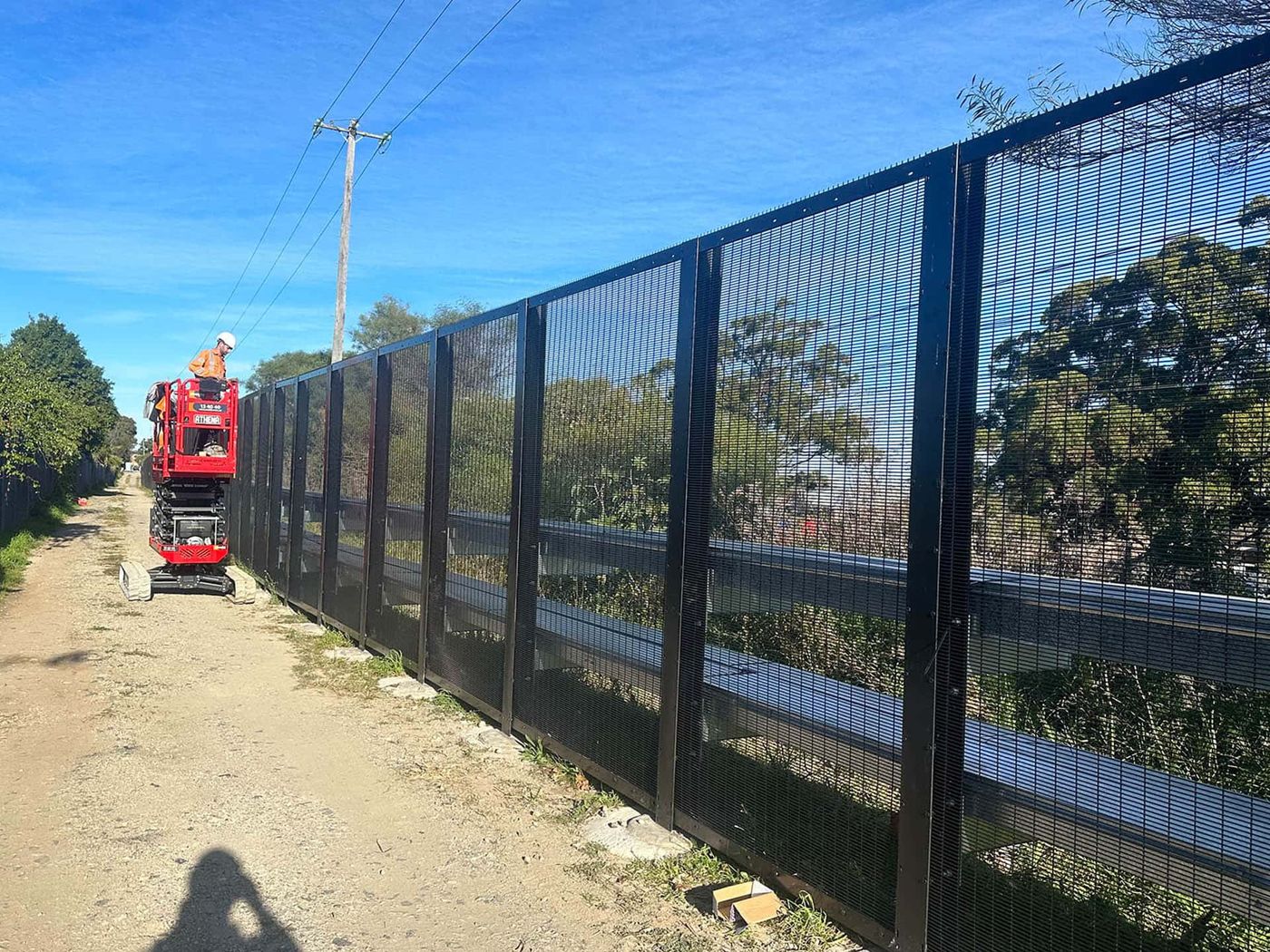
Where it is the wrong call: anywhere you need privacy, anywhere the look matters to a customer walking past a shopfront, and anywhere the main threat is someone with a pair of bolt cutters and twenty minutes alone. For that last one you are looking at welded mesh security panels or 358 mesh, not chainwire.
The specification decisions that actually change the price
Mesh gauge and aperture
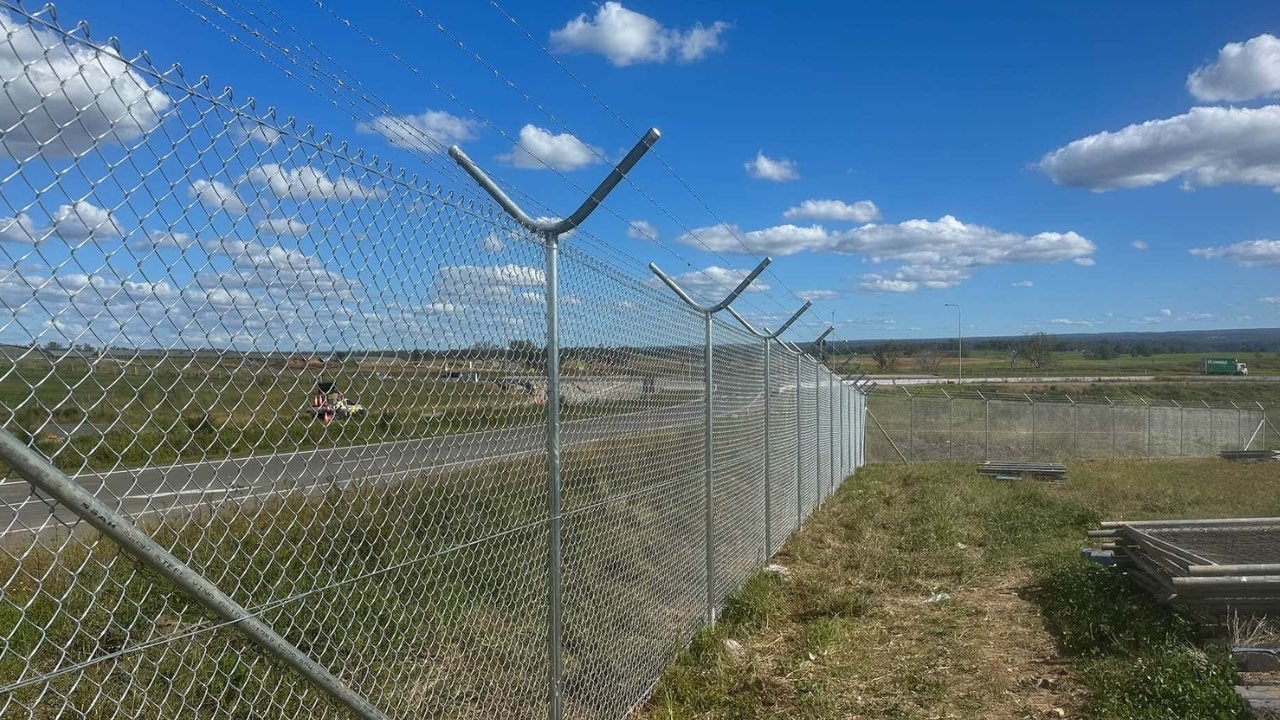
Chainwire is described by the wire thickness and the size of the diamond. A common commercial spec is 2.5mm wire in a 60mm diamond. Heavier gauge wire in a smaller aperture costs more, resists cutting for longer and holds its shape better when someone leans on it or drives a forklift into it. Lighter mesh is fine for a tennis court or a paddock and a poor idea for a yard storing plant and equipment.
Smaller apertures also matter if climbing is a concern. A 60mm diamond gives a toe hold. Tighter mesh does not.
Height
Standard commercial heights in Sydney run 1.8m, 2.1m and 2.4m. Add three-strand barbed wire on 45 degree extension arms and you gain roughly another 450mm of effective height. Whether you are allowed barbed wire depends on the council and how close the fence is to a public footpath. Some councils require it to be set back or angled inward, and some will not allow it on a boundary the public can touch at all. Worth checking before you order the arms.
Galvanised or PVC coated
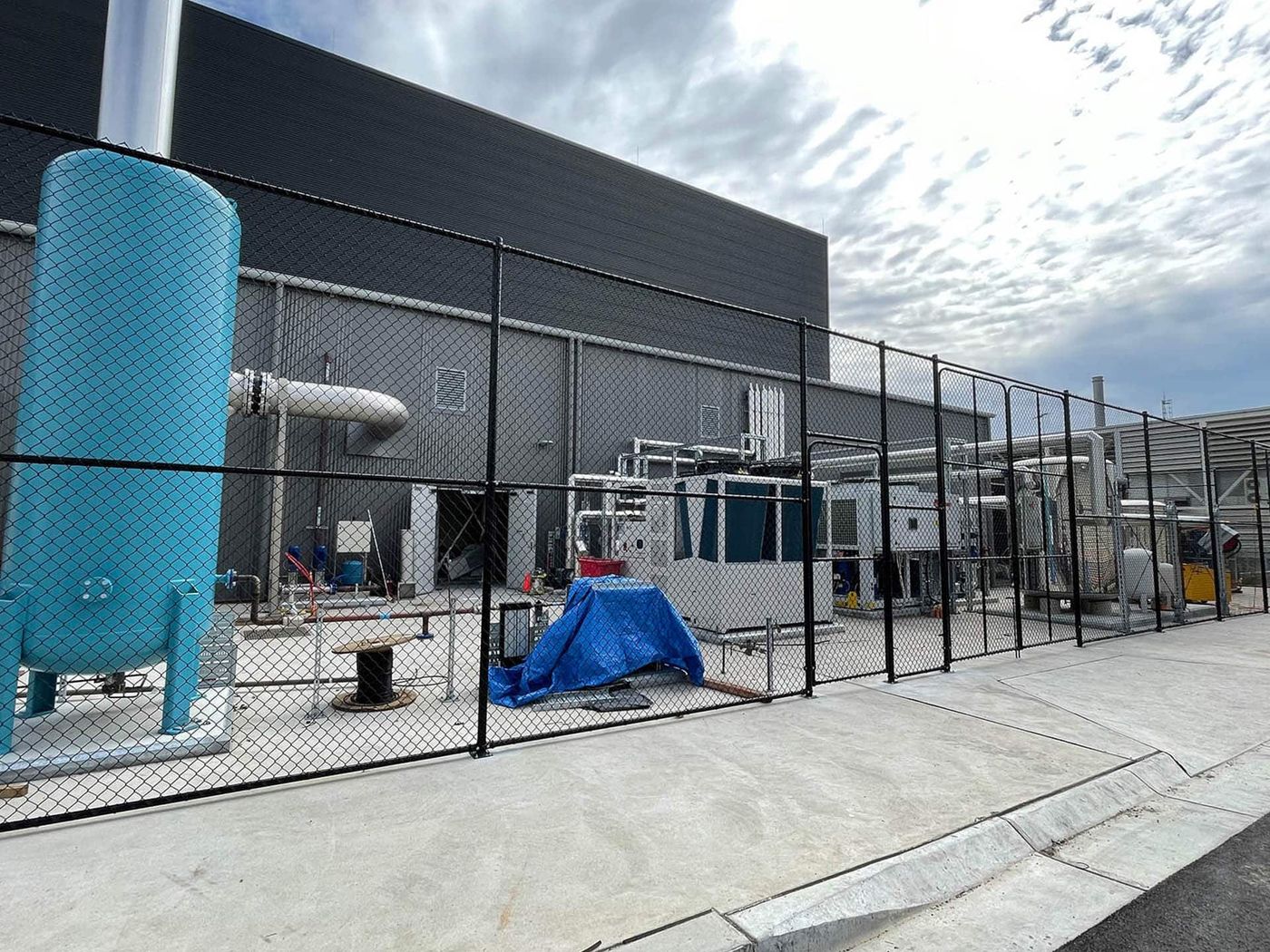
Hot dip galvanised is the default and the workhorse. In coastal Sydney suburbs and anywhere near a pool, salt shortens the life of everything, so heavier galvanising or a PVC coat over galvanised wire is money well spent. Black or green PVC also reads as less industrial, which helps if the fence faces a street or a residential neighbour. PVC coating adds cost per metre and the trade off is that once the coating is nicked, moisture sits underneath it.
Posts, rails and footings
The mesh is not what fails. The posts are. Look for:
- Line posts and heavier end, corner and gate posts. Corners and gates take all the tension.
- A top rail on anything you expect to get leaned on or climbed. Without one, the top edge of the mesh eventually rolls over.
- Bottom tension wire or a bottom rail, so the mesh cannot be lifted and someone cannot roll under it.
- Concrete footings sized for the post and the ground. Sandy soil on the coast and reactive clay out west behave very differently, and a footing that works in one will move in the other.
Ask your fencer what post spacing they are quoting. Wider spacing is cheaper and sags sooner.
Gates: where most jobs get complicated
A straight run of chainwire is simple. Gates are where the cost and the timeline go. Decide early:
- Swing gates are cheapest. They need clear swing space and level ground.
- Sliding gates, cantilever or track, suit driveways where there is no room to swing. Cantilever gates need a run-back area roughly the width of the opening plus the counterbalance.
- Automation means power to the gate, a controller, safety edges or beams, and a way for trucks, staff and visitors to get in. That is often a separate trade or at least a separate part of the quote.
- Pedestrian gates and where they sit relative to the site office. Do not make people walk the long way around, or they will prop the vehicle gate open.
Sydney-specific things to sort before you order
Dial Before You Dig. Every post hole is an excavation. On commercial sites the services under the boundary line are rarely where the old drawings say they are.
Boundary and title. If the fence is going on a shared boundary, the Dividing Fences Act applies and your neighbour may owe a contribution. If you are fencing an industrial lot, confirm the survey line rather than assuming the old fence was correct.
Council and DA conditions. Height limits, barbed wire, and fencing forward of the building line all vary. Some industrial estates also have covenants that dictate fence colour and type.
Pool fencing is a different animal. Chainwire is generally not compliant as a swimming pool barrier because it is climbable. Do not let anyone tell you otherwise.
Access for the machine. Post holes get bored with a machine where possible. If the fence line is behind a building with a 900mm gap, everything is hand dug and the labour cost changes.
How to compare quotes without getting stung
Two quotes for “2.1m chainwire, 80 metres” can differ by a lot for perfectly honest reasons. Ask each fencer to put in writing:
- Mesh gauge, aperture and coating.
- Post sizes for line, end, corner and gate posts, and the spacing.
- Top rail, bottom rail or bottom tension wire.
- Footing depth and diameter.
- Gate type, size, hardware and whether automation is included.
- Who removes and disposes of the old fence.
- Whether rock excavation is included or charged as an extra.
That last one catches people out in parts of Sydney where sandstone sits close to the surface. A quote that stays silent on rock is a quote that will grow.
FAQ
Can chainwire be installed on a slope?
Yes, and there are two ways to do it. Raking follows the ground so there is no gap underneath, which is what you want for security. Stepping keeps each panel level and leaves triangular gaps at the bottom that need infill. Tell your fencer which one you need, because the ground clearance is the whole point on a security fence.
How long does a chainwire fence take to install?
The holes and concrete usually happen on one visit and the mesh goes on after the footings have cured. A straightforward run can be done inside a week; gates, automation and rock all stretch it. Site access hours on commercial and industrial estates often matter more than the fencing itself.
Is chainwire enough to stop theft from a yard?
On its own, no. It stops opportunists and it defines the boundary. If you are storing high value plant, tools or copper, chainwire is one layer alongside lighting, cameras, anti-climb topping and how the yard is laid out. Anyone selling you a fence as complete security is overselling it.
Specifying or pricing a perimeter?
Send the drawings or a brief and LS Fencing Services will come back with a detailed proposal.