If you are fencing critical infrastructure, the decision comes down to three things: how long the fence needs to delay an intruder, whether you need to see through it, and how the gates and access control will work day to day. Get those right and the rest of the specification follows almost by itself.
If you are fencing critical infrastructure, the decision comes down to three things: how long the fence needs to delay an intruder, whether you need to see through it, and how the gates and access control will work day to day. Get those right and the rest of the specification follows almost by itself.
Infrastructure perimeters are not the same job as fencing a yard. A substation, a data centre, a rail corridor, a water treatment plant or a solar farm each has an asset owner with its own standards, an operator who has to get vehicles through the gate at 2am, and a regulator or insurer who will ask questions if something goes wrong. The fence has to satisfy all three.
Start with delay time, not fence type
Every perimeter is a delay mechanism. It buys time between someone deciding to get in and someone responding. So before you compare products, answer this:
- What is the realistic threat? Opportunistic copper theft is a different problem to a determined, tooled-up intrusion or to vandalism and trespass.
- How long until someone responds? A site with a 24/7 control room and cameras needs less delay than an unmanned regional asset an hour from the nearest patrol.
- What is behind the fence? Live apparatus, lithium storage and high voltage change the picture, because you are also protecting the public from the asset, not just the asset from the public.
Once you can say "we need roughly five to ten minutes of delay against hand tools, with camera coverage", the fence type stops being a matter of taste.
Comparing the main perimeter systems
| System | Typical use | Climb and cut resistance | Visibility through | Notes |
|---|---|---|---|---|
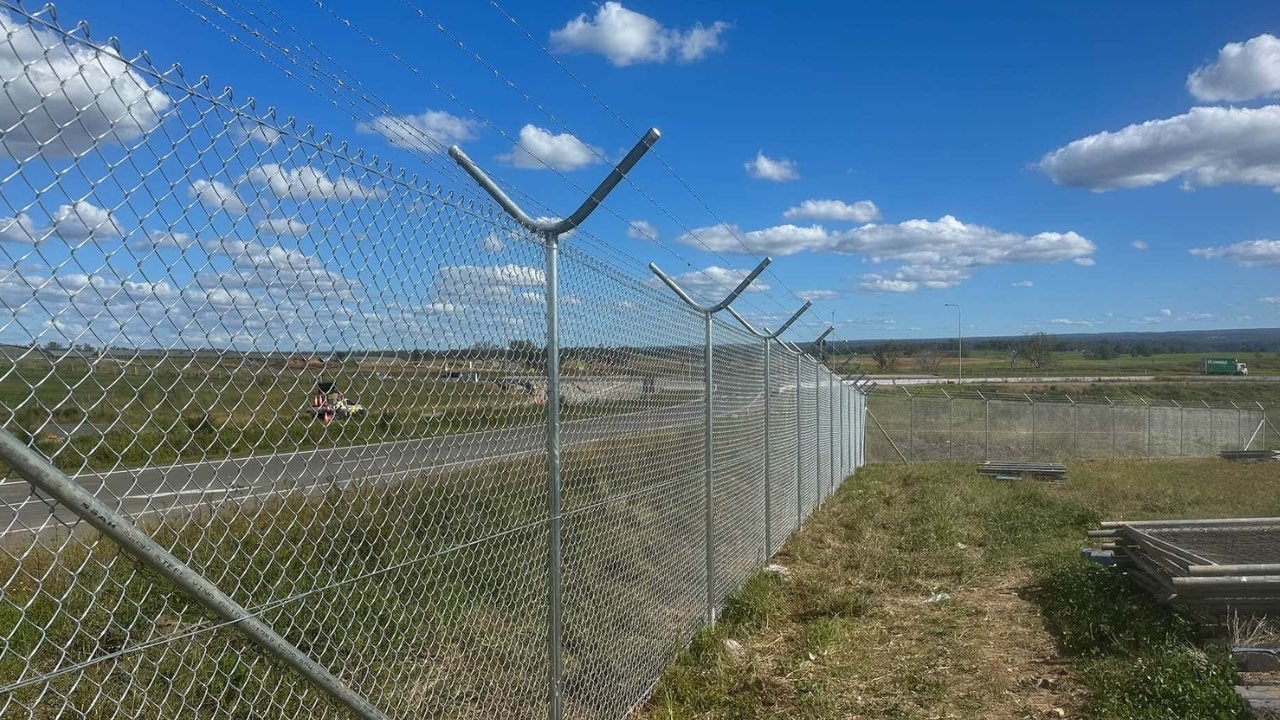
| Chainwire (chain link) | Boundaries, laydown yards, staged works, large rural perimeters | Low on its own, improved with barbed or razor extension arms and tension wires | High | Most economical per metre over long runs; easy to repair |
| Welded mesh | General industrial and commercial perimeters | Moderate, better than chainwire, rigid panels resist deformation | High | Neat appearance, good for sites with public frontage |
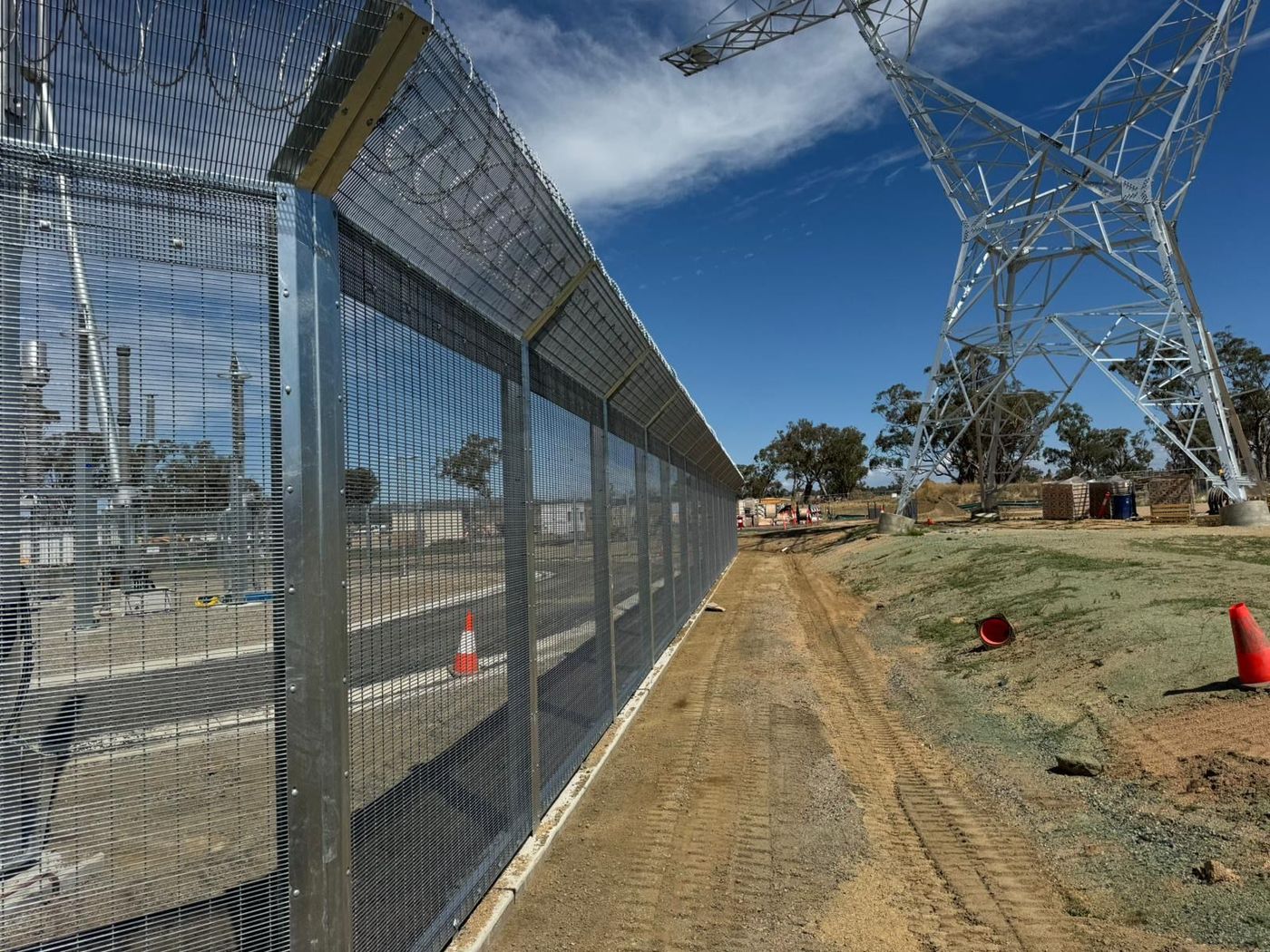
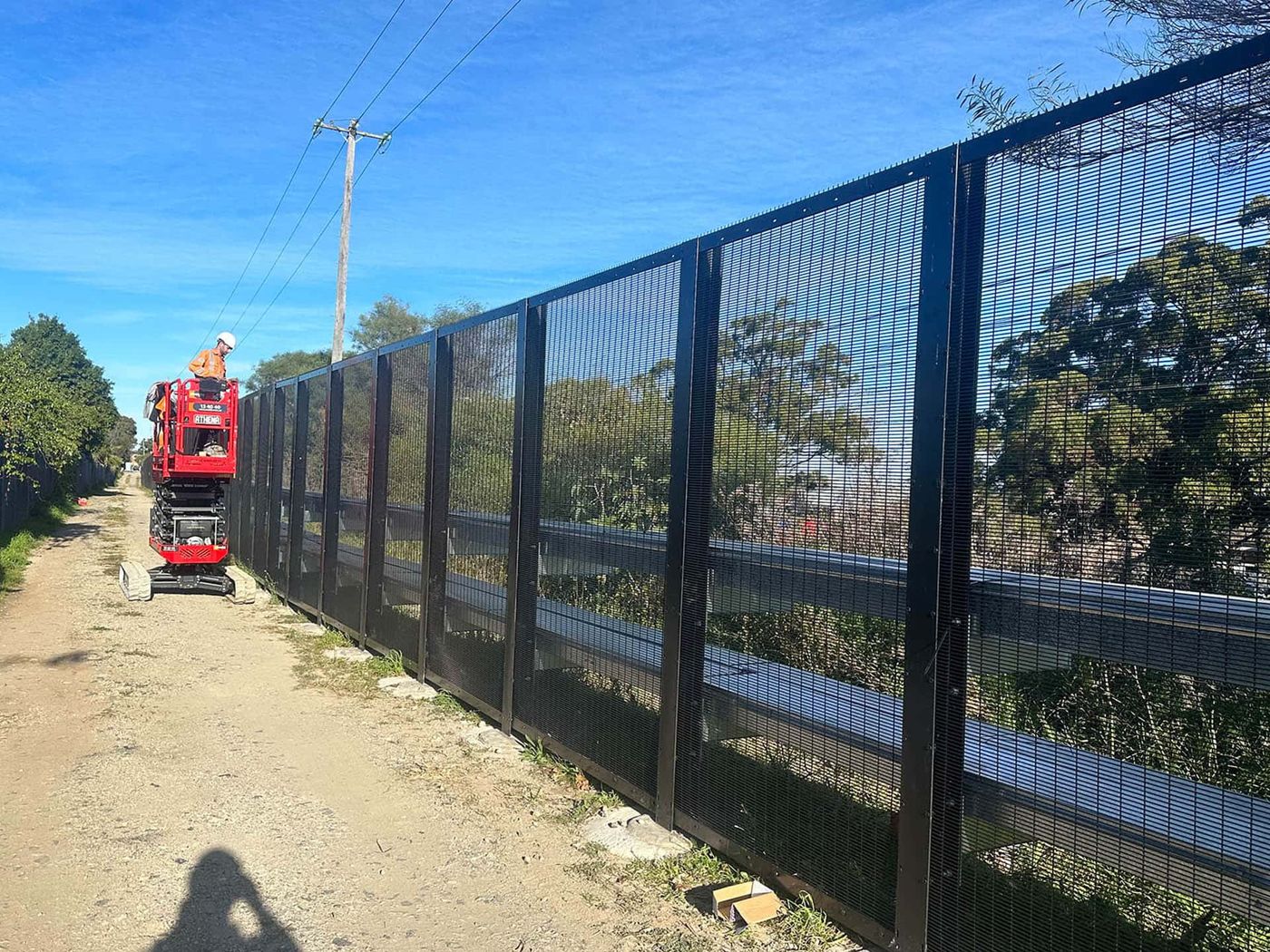
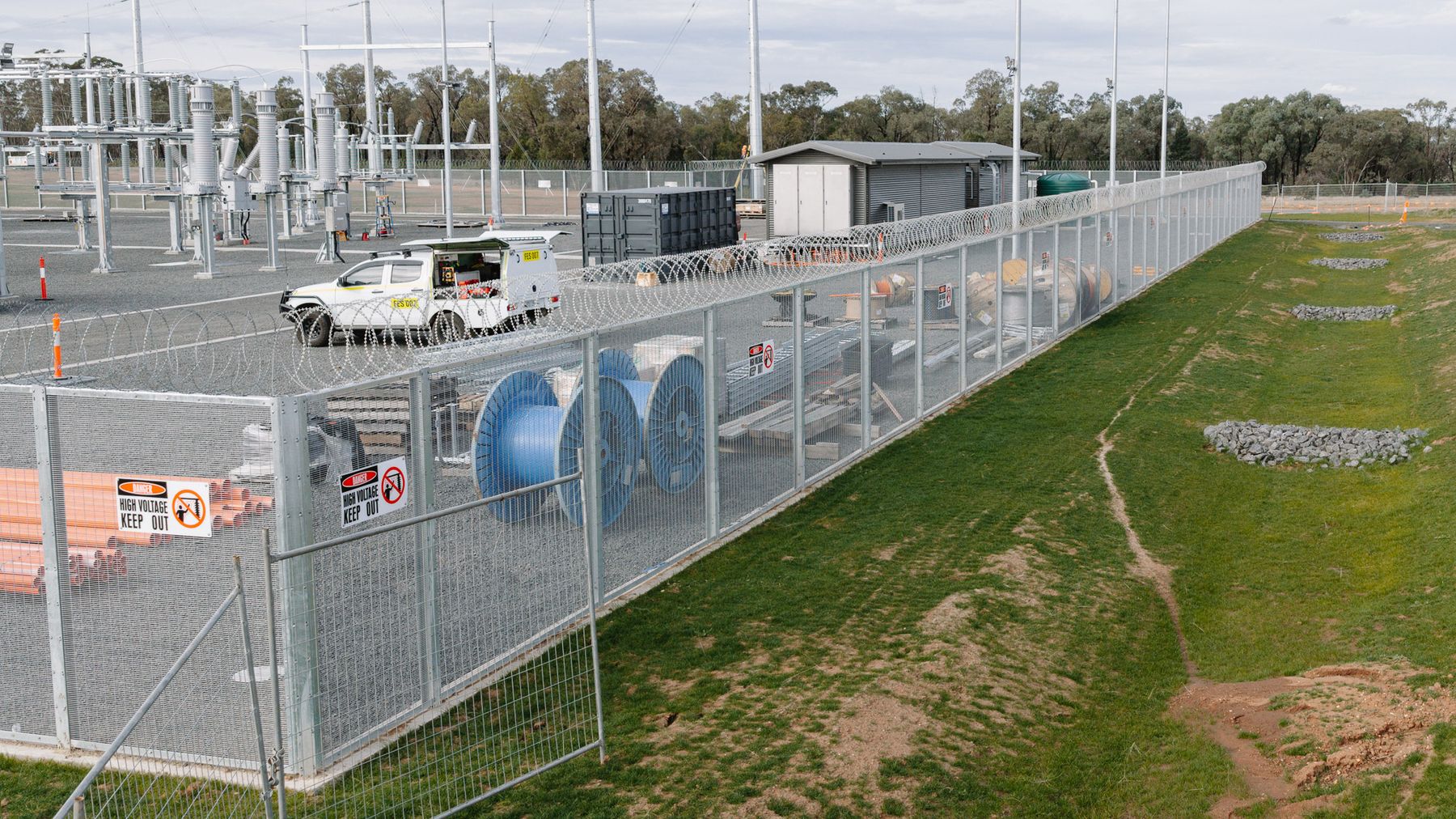
| Anti-climb 358 mesh | Substations, data centres, rail, government, water assets | High. Apertures too small for fingers or standard bolt cutters | High, close to see-through | The default for high security where surveillance must work through the fence |
| Palisade | Depots, plant rooms, sites wanting a hard visual deterrent | High, especially with spiked or splayed tops | Partial | Strong deterrent look, harder to get a foothold |
| Solid or acoustic panel | Screening, noise, privacy | Varies | None | Blocks surveillance both ways, so usually paired with detection |
For most infrastructure sites in Sydney, the conversation lands on anti-climb 358 mesh or palisade fencing, sometimes with chainwire on the low-risk sections of a long boundary.
Height, toppings and the ground line
Height is the most common thing that gets specified badly. Asset owners often nominate a minimum, and 2.4 metres is a common baseline for industrial perimeters, with 3 metres and above used where the risk or the standard calls for it. Adding barbed or razor extension arms raises the effective climb height without the cost of taller panels, but check the site conditions first, because razor tape near a public footpath or a school boundary invites its own problems.
The weakest point on most perimeters is not the top. It is the bottom. Intruders go under fences far more often than over them. Options include:
- Extending mesh below ground level
- A concrete mowing strip or kerb along the fence line
- Anti-dig plates or a buried rail
- Ground beams where the surface is rock or fill and posts cannot be dug deep
On sloping ground, decide early whether the fence rakes with the slope or steps. Stepping leaves triangular gaps at each step that have to be closed off, and that detail is worth resolving before panels arrive on site.
Gates are where perimeters fail
A 3 metre 358 mesh perimeter with a sagging manual swing gate that staff prop open is not a secure site. Gates deserve as much attention as the fence:
- Match the gate to the fence. Same infill, same height, same topping. A gate with a bigger aperture mesh undoes the anti-climb design.
- Swing or slide? Sliding (cantilever) gates suit narrow entries, sloping driveways and windy exposed sites. Swing gates need clear arc space and level ground.
- Automation and access control. Card readers, intercoms, keypads, vehicle detection loops, safety edges and photo eyes all need to be designed in, along with power and comms to the gate location. Retrofitting later usually costs more than doing it once. If you are budgeting, our notes on gate automation pricing explain what actually drives the number.
- Fail-safe or fail-secure? Emergency egress, fire brigade access and manual release in a power outage need a decision, not an assumption.
Compliance, approvals and the paperwork trail
Infrastructure clients almost always have their own network standard sitting over the top of the Australian Standards. That might cover earthing and bonding near high voltage apparatus, minimum clearances to live equipment, signage, or the specific mesh and post sections that are approved for use.
Expect to deal with some or all of the following before a post goes in the ground:
- Site induction, permits to work and any rail or utility specific accreditation
- Dial Before You Dig and service location, because underground services near substations and comms sites are unforgiving. See Before You Dig Australia for the free enquiry service.
- Traffic management where the fence line meets a road or footpath
- Earthing requirements for metal fencing inside or adjacent to a switchyard
- Council development consent or an exemption, depending on the site and the zoning
- Hot dip galvanising to the relevant standard, and coating specifications for coastal Sydney exposure
Ask any fencing contractor how they document all this. The handover pack, including as-built details, coating certificates and product data, is often what the asset owner actually needs at the end.
Sequencing and site realities
On live infrastructure you rarely get to remove the old fence and start fresh. Plan for temporary fencing or staged sections so the perimeter is never open overnight. Work out the crane, auger and concrete access early, especially on constrained inner Sydney sites or long regional runs where the fence line is the only access track.
Lead times matter too. Specialty mesh, custom gate leaves and automation gear are not always off the shelf, so bring the fencing contractor in during design rather than after the tender closes.
If you are working through the full process, from survey to handover, our security fence installation guide walks through the stages in order, and there is more detail on high security fencing for utility substations for that specific asset class.
FAQ
Does a taller fence always mean better security?
Not on its own. Height without a secure ground line, decent gates and a strong post foundation just moves the weak point somewhere else. A well detailed 2.4 metre anti-climb perimeter usually outperforms a taller fence with poor gates.
Can we mix fence types around one site?
Yes, and it is often the sensible approach. Public frontages and areas near assets get the high security system; long back boundaries across open land might be chainwire with extension arms. The risk assessment should drive where the line changes.
Do we need to remove the existing fence first?
Usually not all at once. Most infrastructure jobs are staged so a continuous barrier is maintained, with temporary fencing covering any section left open. That should be written into the program before works start.
Specifying or pricing a perimeter?
Send the drawings or a brief and LS Fencing Services will come back with a detailed proposal.