Commercial security fencing in Australia is not governed by one single rulebook. Compliance comes from a stack of separate requirements: the Building Code, your council’s development consent, Australian Standards for the fence type, work health and safety duties on the site, and whatever your insurer or a client contract demands on top. Most fences that fail do so because one of those layers was missed, not because t
Commercial security fencing in Australia is not governed by one single rulebook. Compliance comes from a stack of separate requirements: the Building Code, your council’s development consent, Australian Standards for the fence type, work health and safety duties on the site, and whatever your insurer or a client contract demands on top. Most fences that fail do so because one of those layers was missed, not because the fence was badly built.
Here is how to work out which ones apply to you, in the order they matter.
Start with why the fence exists
The compliance path is completely different depending on the reason for the fence. Before you look at any standard, be clear on which of these you are dealing with:
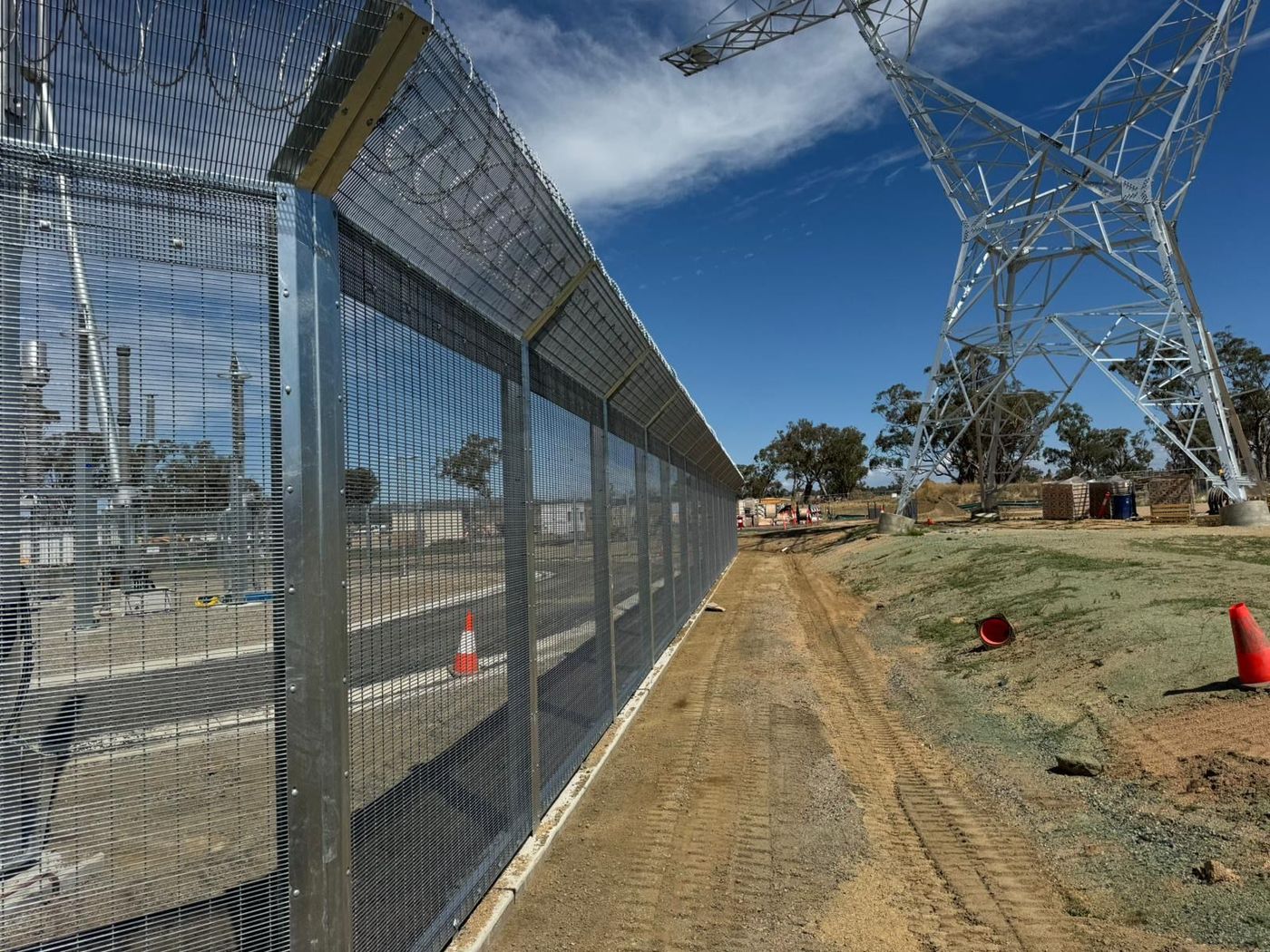
- Perimeter security for a commercial or industrial site. Driven mostly by council conditions, the standard for the fence type, and sometimes a client or insurer specification.
- Fall protection or edge protection. Now you are in Building Code territory, with barrier height and gap rules that are not negotiable.
- Pool or spa enclosure on a commercial site (motels, gyms, strata, caravan parks). AS 1926.1 plus the Swimming Pools Act 1992 in NSW. Certification and registration are involved.
- Site hoarding or temporary fencing around construction. Council hoarding approval, plus SafeWork NSW duties around stability and public safety.
- Screening machinery, substations, or restricted plant. Access control and gap sizing become the focus.
A fence can sit in more than one category. A pool fence that also forms part of a boundary has to satisfy both sets of rules, and the stricter one wins.
The standards that come up most often
Chainwire and security mesh
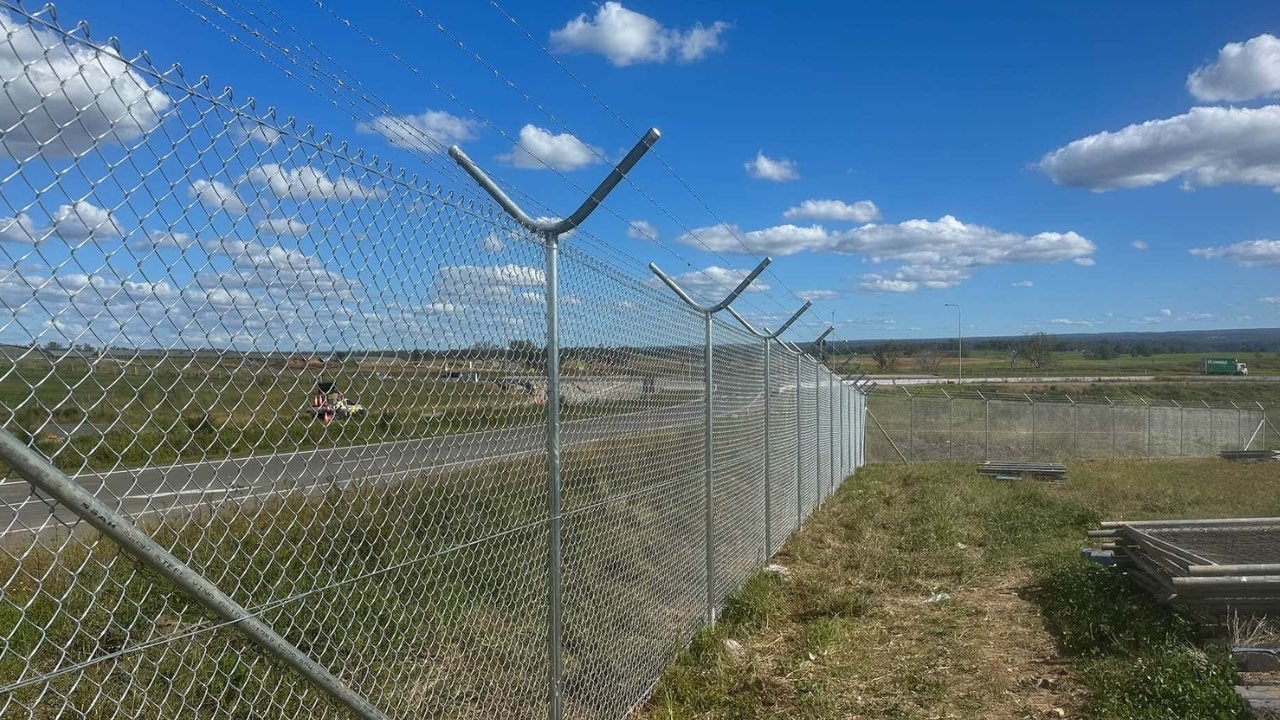
AS 1725 is the family of standards for chainlink fabric security fences. Part 1 covers general requirements, and there are parts dealing with specific uses including electric security fences and fencing for schools and industrial sites. It sets out things like wire gauge, mesh aperture, post spacing, tension wires, tie spacing and how barbed wire extensions should be arranged. If a tender or a council condition says “security fence to AS 1725”, that is what is being referenced.
Palisade, welded mesh and tubular fencing
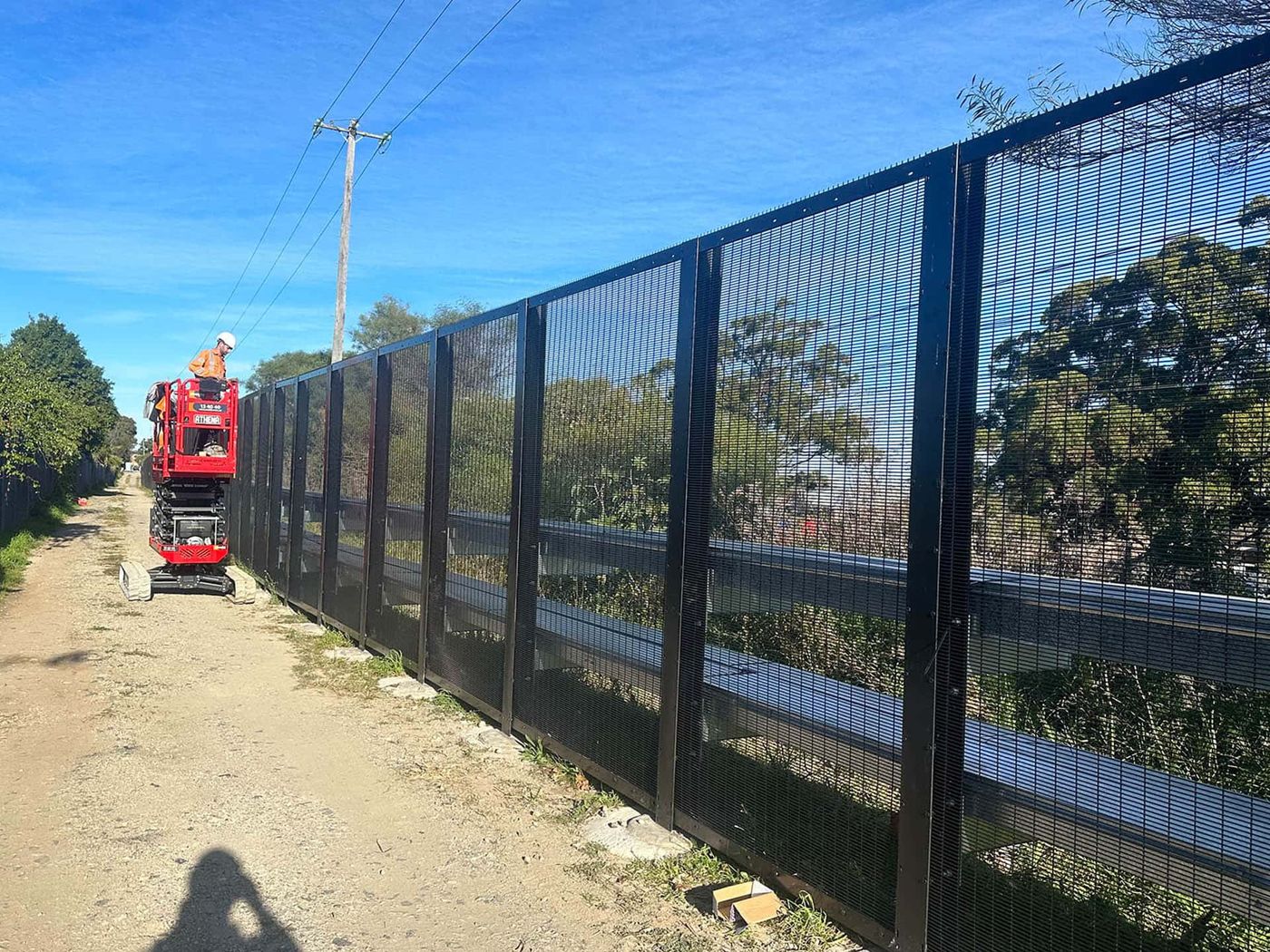
These do not have a single dedicated standard the way chainwire does. Compliance usually comes from a combination of the manufacturer’s engineering, corrosion protection to AS/NZS 4680 for hot dip galvanising or AS/NZS 4792 for pre-galvanised sections, powder coating to AS/NZS 4506 where specified, and whatever performance criteria the client wrote into the spec.
Barriers and balustrades
If the fence is preventing a fall, the National Construction Code sets minimum heights and restricts openings. Climbable elements between certain heights are limited. This catches a lot of people who assume a security fence on a raised loading dock or a rooftop plant area is just a security question. It is not.
Electric security fencing
AS/NZS 3016 covers electrical installations for security fences, and there are strict signage and voltage requirements. In NSW there are additional rules about where an energised fence can be used and how it must be marked. It is not something to add to an existing fence casually.
Bushfire-prone land
If the site is mapped as bushfire prone, materials near a building may be restricted under AS 3959 and the RFS Planning for Bush Fire Protection guidelines. This mostly affects the fence type and whether combustible infill is permitted.
Council rules will often be the tightest constraint
In Sydney, every council has its own Development Control Plan, and fencing sits inside it. The things that commonly bite on commercial sites:
- Height limits on the street boundary, often lower than what you want for security, with anything taller needing consent.
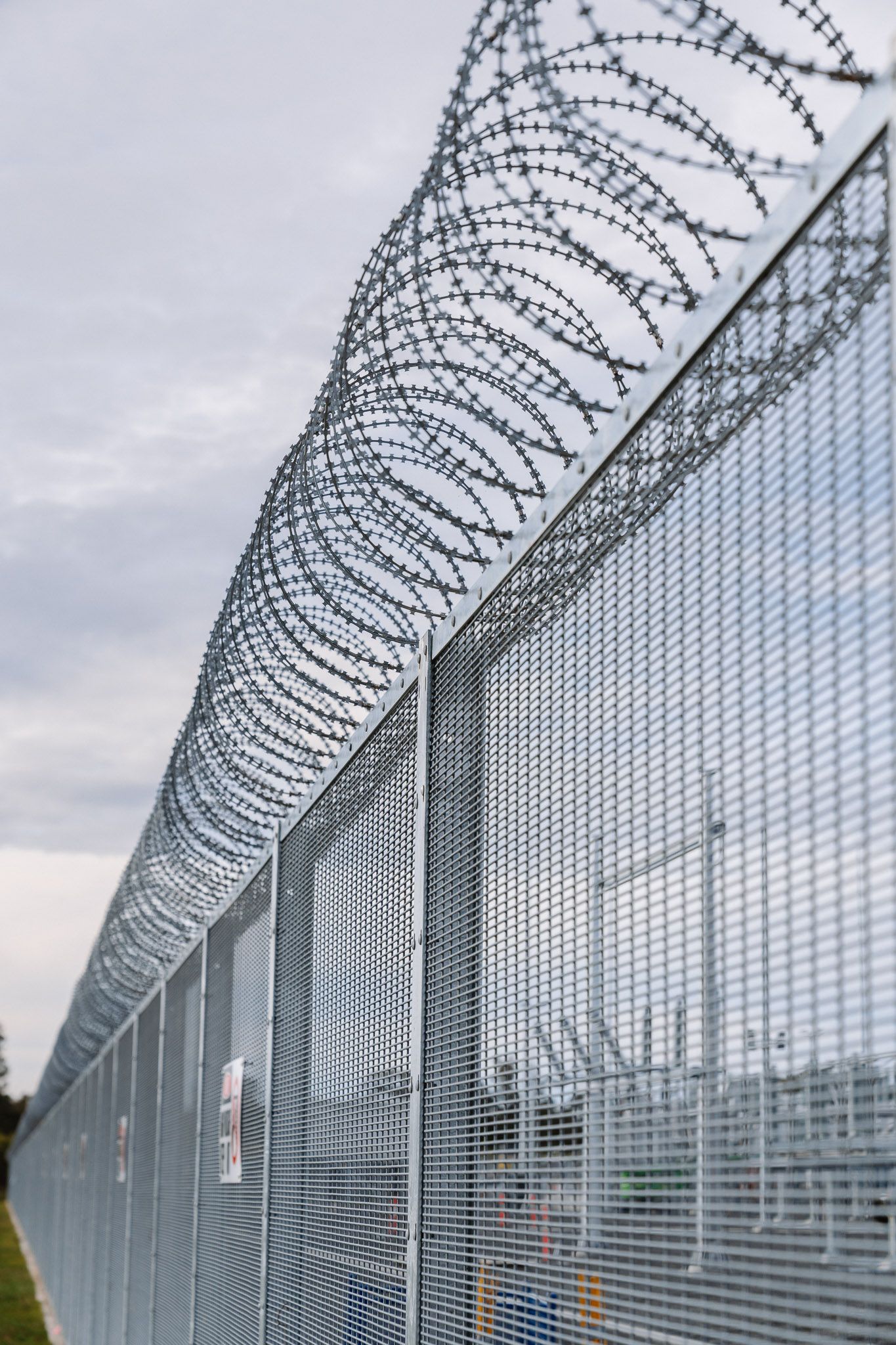
- Restrictions on barbed wire and razor wire, particularly where the fence faces a public footpath or a residential zone. Some councils prohibit it outright below a certain height.
- Transparency requirements in commercial and mixed use zones, where solid fencing is discouraged in favour of open style palisade or mesh.
- Heritage and conservation area controls, which can dictate materials and colour.
- Sight line and splay requirements at driveways so vehicles can see pedestrians.
If the site has an existing development consent, read the conditions before you read the DCP. Conditions attached to a consent override the general rules and are enforceable directly.
Gates are where compliance usually falls over
A compliant fence with a non-compliant gate is a non-compliant site. The common problems:
- Sliding and swing gates that are powered must meet AS/NZS 60335.2.103 for drive requirements, with force limiting, safety edges or photo beams so the gate cannot crush or trap someone. A gate that does not reverse on obstruction is a serious liability.
- Emergency egress. If the fence encloses an area where people work, they need a way out without a key. Exit requirements from the NCC apply to the path of travel, not just the building.
- Fire brigade access. Fire and Rescue NSW may require a particular gate width, a lockbox, or a specific key system for their access.
- Disability access where the gate is on an accessible path of travel, with clear width and operating force limits under AS 1428.1.
Work health and safety obligations during and after install
Under the NSW WHS Regulation, the site occupier keeps duties even when a contractor is on site. Practically, that means the fencing work needs a SWMS if it involves high risk work such as working near live services, use of an excavator for post holes, or work near powerlines. Before You Dig Australia enquiries should be run before any post hole is bored. Hitting a comms cable or a gas service is expensive and entirely avoidable.
After installation, temporary fencing that stays on site needs to remain stable in wind. Bracing and ballast are the usual failure points, and an unsecured temp fence panel that blows onto a footpath is a reportable incident.
How to check an existing fence
If you have inherited a site and do not know its status, work through this:
- Pull the development consent and read every fencing condition.
- Measure actual heights at the street boundary, at side boundaries and at any gates. Measure from the higher ground level, because that is how councils measure.
- Photograph any barbed or razor wire and note the height of its lowest point above the footpath.
- Check every powered gate reverses on obstruction. Test it with a solid object, not your hand.
- Check gaps under gates and between panels where a child could get through, especially near any pool or water feature.
- Look for corrosion at ground line on posts, which is where galvanising fails first and where structural adequacy is actually lost.
- Confirm there is compliant egress from every enclosed area.
Write down what you find with dates and photos. If there is ever an incident, the record of when you knew and what you did about it matters as much as the fence itself.
Getting a spec right before you go to tender
A vague scope produces non compliant quotes. A useful commercial fencing spec states the fence type and height, the relevant standard reference, the corrosion protection system and expected coating thickness, post embedment and footing size, gate type and drive with safety devices listed, and who is responsible for council approval. If the specification does not name the standard, quotes will be priced to the cheapest interpretation and you will be comparing different things.
FAQ
Do I need council approval for a commercial security fence in Sydney?
Often yes, and it depends on height, location and zone. Some fencing on commercial land can be exempt development under the State Environmental Planning Policy if it stays under the height threshold and meets the other exempt criteria, but barbed wire, electric fencing, heritage sites and street frontages commonly push a job into needing consent. Check the SEPP exempt provisions and your council DCP together, not one or the other.
Who is liable if someone is injured on a non compliant fence?
Generally the person in control of the premises carries the primary duty, and that responsibility does not transfer just because a contractor built the fence. Poor installation can give you a claim against the installer, but it will not remove your own duty to the injured person. This is why documented inspections matter.
Does razor wire have to be removed if it was installed years ago?
Not automatically. Existing fencing installed lawfully under earlier rules is usually allowed to remain, but that changes if you replace or substantially alter the fence, or if council issues an order because it presents a public risk. Any new work generally has to meet current requirements.
Getting help with a specific site
Compliance questions are site specific, and the honest answer to most of them starts with looking at the consent conditions and the actual fence line. If you are in Sydney and want a fence line assessed against the standards and your council’s controls before you commit to a scope, LS Fencing can walk the site with you and put the requirements in writing.
Specifying or pricing a perimeter?
Send the drawings or a brief and LS Fencing Services will come back with a detailed proposal.